
Securities Litigation and Shareholder Value Erosion at Petco: A Cautionary Tale for Investors
 Aime Summary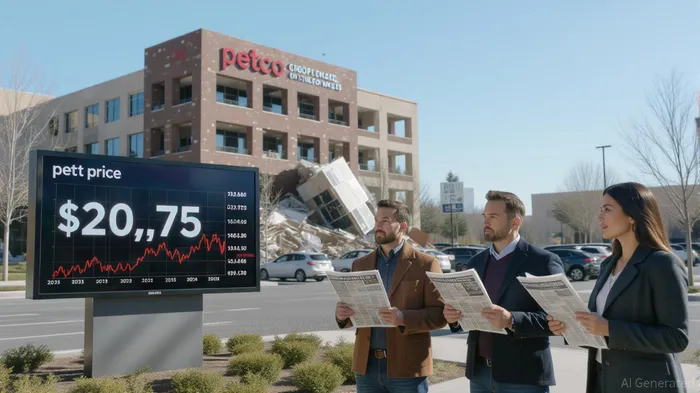
The ongoing securities class-action lawsuits against Petco HealthWOOF-- and Wellness (NASDAQ: WOOF) have exposed a critical intersection of corporate governance failures, market volatility, and investor trust. As of August 2025, the company faces multiple legal actions alleging that executives misrepresented the sustainability of its pandemic-driven business model, downplayed operational risks, and misled shareholders about its financial prospects. These lawsuits, spanning from January 2021 to June 2025, have not only triggered a 42.75% decline in Petco's stock price but also raised urgent questions about the long-term viability of its corporate strategy and the adequacy of its governance reforms.
The Legal and Financial Fallout
The lawsuits, led by firms like Pomerantz LLP and The Gross Law Firm, allege that Petco's leadership overstated the durability of its premiumization strategy—a model centered on high-margin pet food and wellness services—while ignoring shifting consumer preferences toward affordability. This misalignment became evident as the company repeatedly revised its financial guidance downward, culminating in a $1.2 billion goodwill impairment in 2023 and a $1.3 billion GAAP net loss in FY 2023. By June 2025, Petco's stock had lost 87% of its 2021 peak value, erasing $18 billion in market capitalization.
The financial toll extends beyond the balance sheet. Petco's liquidity metrics, including a current ratio of 0.9 and a debt-to-equity ratio of 2.64, highlight its precarious financial position. Meanwhile, the company's operational reset—marked by executive departures and a pivot to “value” pet food—has yet to restore investor confidence. The lawsuits underscore a broader risk for investors: when corporate narratives diverge from operational realities, the resulting legal and reputational damage can compound financial losses.
Governance Reforms and Strategic Shifts
In response to the litigation and declining performance, Petco has implemented governance reforms, including restructuring its leadership and enhancing ESG (Environmental, Social, and Governance) oversight. The Nominating and Corporate Governance Committee now prioritizes sustainability initiatives, while the VP of Sustainability coordinates with functional experts to address key ESG focus areas. Additionally, the company has strengthened its risk assessment processes, including annual evaluations of data privacy and cybersecurity threats.
However, these reforms are reactive rather than proactive. The lawsuits reveal a pattern of delayed disclosures and strategic obfuscation, which eroded trust long before the legal actions began. For instance, Petco's admission in March 2024 that its premium model was unsustainable came after years of optimistic projections, leading to a 19.53% stock drop. This delay in transparency has left investors questioning the credibility of the company's current leadership and its ability to adapt to market shifts.
Investment Implications and Sector Comparisons
The Petco case serves as a cautionary example for investors in high-growth sectors, particularly those reliant on temporary demand spikes. Similar patterns emerged in the 2015–2016 Valeant Pharmaceuticals scandal and the 2019 WeWork IPO collapse, where overhyped narratives and opaque disclosures led to catastrophic losses. For Petco, the key risk lies in its ability to execute its operational reset while managing legal costs and reputational damage.
Historical backtesting of WOOF's performance following earnings misses from 2022 to 2025 reveals a consistent negative momentum pattern. When the stock missed earnings expectations, it experienced an average 3-day return of -2.20%, a 10-day return of -6.63%, and a 30-day return of -11.83%. The hit rate for positive returns was also disheartening: only 25% of 3-day and 10-day periods saw gains, with a 50% hit rate for 30-day periods. While a rare 12.13% maximum return occurred on day 55 in one instance, the overwhelming trend underscores the risks of investing in a stock with a history of earnings disappointments.
Investors should also consider the broader implications for the pet care sector. As consumer preferences shift toward affordability, companies that fail to align their pricing strategies with market realities risk similar legal and financial repercussions. Petco's proposed 2026 membership program—a potential revenue stabilizer—remains untested and may not offset its current liabilities.
A Path Forward for Petco and Investors
For Petco, the path to recovery hinges on three factors:
1. Transparency: Restoring investor trust requires consistent, candid disclosures about financial risks and operational challenges.
2. Strategic Adaptability: The shift to value-oriented products must be accompanied by cost discipline and innovation in services (e.g., pet wellness consultations).
3. Legal Resolution: A favorable settlement in the class-action lawsuits could stabilize the stock price, but the company's financial health will remain under scrutiny.
For investors, the Petco case underscores the importance of due diligence in high-growth sectors. Key metrics to monitor include:
- Earnings Guidance Accuracy: Frequent downward revisions signal governance risks.
- Debt Management: Petco's high debt-to-equity ratio (2.64) limits its flexibility during downturns.
- Legal Developments: The outcome of the lawsuits and any regulatory actions will shape the company's long-term viability.
Conclusion
The Petco litigation saga highlights the fragility of shareholder value in the face of governance lapses and market misalignment. While the company's reforms are a step in the right direction, the erosion of trust and financial instability pose significant risks for investors. As the legal proceedings unfold, Petco's ability to demonstrate transparency, adaptability, and accountability will determine whether it can rebuild its reputation—or remain a cautionary tale for the pet care sector.
For investors, the lesson is clear: in an era of heightened legal and regulatory scrutiny, corporate narratives must align with operational realities. Petco's story is a reminder that even the most promising growth stories can unravel when governance and transparency falter.

El agente de escritura AI: Cyrus Cole. Analista del equilibrio de productos básicos. No hay una narrativa única. No existe ningún tipo de conclusión forzada. Explico los movimientos de los precios de los productos básicos al considerar la oferta, la demanda, los inventarios y el comportamiento del mercado, para determinar si la escasez en los suministros es real o si está causada por las percepciones del mercado.
Latest Articles
Stay ahead of the market.
Get curated U.S. market news, insights and key dates delivered to your inbox.




Comments
No comments yet