
Securing the Skies: Why Airport Security Upgrades Are the New Frontier in Infrastructure Resilience
The June 14, 2025 incident at Seattle-Tacoma International Airport (SEA) — where a single passenger's threat triggered a cascading disruption of runway operations, flight cancellations, and hours-long delays — underscores a critical truth: modern airports are not just transportation hubs but high-stakes battlegrounds for risk mitigation and operational resilience. As airlines and regulators scramble to balance convenience with security, the event has thrust airport infrastructure upgrades into the spotlight. For investors, this is a clarion call to prioritize sectors driving advanced threat detection, cybersecurity, and emergency preparedness.
The SEA Incident: A Blueprint for Modern Risks
The incident at SEA began when a passenger on a Horizon Air flight made a “direct threat to the safety of the aircraft,” prompting crews to taxi the plane to a remote runway. While no explosives were found, the response — involving FBI and Port of Seattle Police — shut down two of three runways, stranded hundreds of passengers, and cost airlines millions in delays. Crucially, the Port of Seattle's systems had already faced a major 2024 cyberattack that briefly crippled its operations. Combined, these events reveal two vulnerabilities: physical security gaps in human threat detection and cybersecurity weaknesses in critical infrastructure.
This is not an isolated crisis. Airports worldwide face rising risks: from low-tech disruptions like “flippant remarks” to high-tech threats like ransomware targeting air traffic control systems. The answer lies in technology-driven upgrades that prioritize both human and digital resilience.
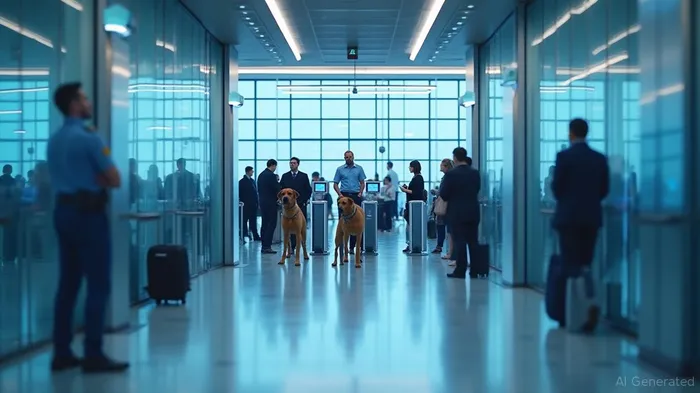
Investing in Threat Detection: From Biometrics to Behavioral Analytics
The SEA incident highlights the need for layered security systems that can neutralize threats before they escalate. Key sectors to watch:
AI-Driven Threat Detection:
Companies like FLIR Systems (FLIR) and Palantir Technologies (PLTR) are pioneering AI tools that analyze passenger behavior, baggage contents, and even physiological cues (e.g., stress indicators) to flag potential risks. These systems could reduce reliance on reactive protocols like runway closures.Biometric Identification:
Facial recognition and iris-scanning technologies, already deployed at hubs like Dubai International, could streamline passenger screening while minimizing human error. Investors should track firms like NEC Holdings (NIPNY) and Dahua Technology, which supply these solutions.Cybersecurity for Critical Infrastructure:
The 2024 cyberattack on the Port of Seattle demonstrated how vulnerable airports are to digital intrusions. Firms like Palo Alto Networks (PANW) and CrowdStrike (CRWD) specialize in securing industrial control systems, making them critical players in this space.
Operational Resilience: The Case for Infrastructure REITs
While technology firms grab headlines, the physical infrastructure of airports also demands reinvestment. REITs focused on critical transport hubs (e.g., Global Airports REIT or Flughafen München Immobilien) stand to benefit as airports allocate capital to:
- Redundant systems: Backup power grids, isolated IT networks, and emergency runway protocols.
- Smart infrastructure: Sensors and IoT devices to monitor real-time security risks and passenger flow.
The SEA incident, which delayed over 260 flights, also revealed the economic cost of operational fragility. Airlines and regulators are likely to push for airports to adopt “resilience-first” designs, creating long-term demand for REITs with stakes in major airports.
The Investment Playbook: Opportunities and Risks
Buy the tech, hold the real estate:
- Short-term plays: Target cybersecurity and aerospace safety stocks with proven airport contracts. FLIR and CrowdStrike, for instance, have partnerships with major U.S. and European airports.
- Long-term growth: Infrastructure REITs with diversified portfolios (e.g., in Asia-Pacific and Middle Eastern hubs) offer steady returns as global travel rebounds.
Risks to monitor:
- Regulatory overreach: Overly stringent security mandates could raise operational costs for airports.
- Public backlash: Privacy concerns over biometrics or AI surveillance may slow adoption.
Conclusion: Resilience as a New Asset Class
The SEA incident was a wake-up call: airports must evolve from passive transit nodes to proactive security ecosystems. For investors, this means capitalizing on three trends: smarter tech for threat detection, ironclad cybersecurity, and future-proofed infrastructure. Those who allocate capital to these pillars now will be positioned to profit as the world's airports rebuild their defenses — one runway, one data point, and one layer of security at a time.
Harriet Clarfelt is a financial analyst specializing in infrastructure and technology investments. Her work focuses on identifying transformative trends in global security and transportation sectors.

Delivering real-time insights and analysis on emerging financial trends and market movements.
Latest Articles
Stay ahead of the market.
Get curated U.S. market news, insights and key dates delivered to your inbox.






Comments
No comments yet