
Secure Blockchain, Deceptive Contracts: Spoofing Rises on Monad


 Aime Summary
Scam alerts have surged on the newly launched Monad mainnet following reports of spoofed ERC-20 token transfers designed to mimic legitimate activity and confuse users. The EVM-compatible blockchain, which went live on November 24, 2025, has seen over 76,000 wallets claim 3.33 billion MON tokens in its initial airdrop, creating a high-traffic environment that bad actors have exploited. James Hunsaker, Monad's co-founder and CTO, confirmed on social media that scammers are broadcasting fabricated transfers that appear to originate from his wallet, using smart contracts to emit false logs without actually moving funds. "ERC-20 is just a token interface standard," he explained, noting that malicious contracts can be written to mimic real transactions while inserting unauthorized address entries .
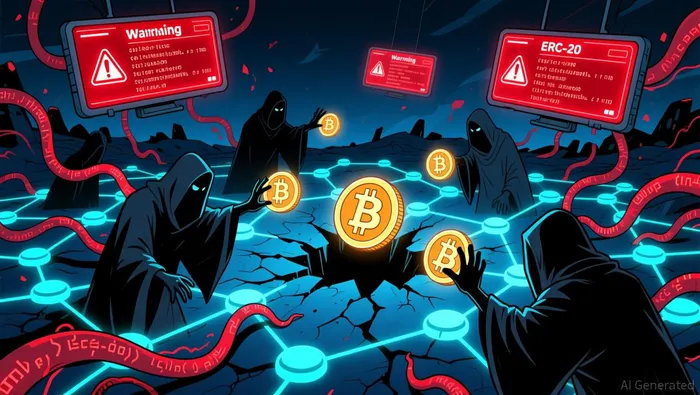
The spoofing incidents emerged within 48 hours of the mainnet launch, as users began accessing their airdropped and publicly sold MON tokens . Hunsaker emphasized that the network itself remains secure and that the issue stems from external contracts attempting to deceive users. "These are not bugs in Monad's blockchain but rather spoofing within their smart contracts to trick people," he stated . The fake transfers, which include fabricated swap calls and artificial signatures, leverage the visibility of blockchain explorers to create the illusion of legitimate activity .
Monad's launch has been one of the most high-profile in 2025, with its token sale raising $269 million from 85,820 participants via Coinbase's new ICO platform. The project locked 50.6% of its total MON supply - comprising allocations for the team, investors, and treasury - with gradual unlocks scheduled from 2026 to 2029. Despite the spoofing concerns, MON's price has surged over 100% in 24 hours, reaching a $525 million market cap and $1.36 billion in daily trading volume . Analysts attribute the token's volatility to its rapid adoption, with over 280 projects already deployed on the network.
The spoofing attacks highlight broader vulnerabilities in EVM-based ecosystems, where the open nature of smart contracts allows bad actors to exploit user naivety. Security experts advise users to verify contract sources, avoid urgent prompts, and use trusted blockchain explorers to confirm transactions. Hunsaker reiterated that no funds have been lost in the incident, but the network's leadership is urging caution as the ecosystem scales. "Users should remain vigilant when interacting with new contracts and report suspicious activity," he stated in a recent post.
The surge in scam alerts follows a challenging year for crypto security, with high-profile breaches at exchanges like Upbit and BalancerBAL--, as well as malicious browser extensions targeting SolanaSOL-- users https://cointelegraph.com/news/upbit-freezes-deposits-and-withdrawals-after-36m-hot-wallet-breach. Monad's rapid rise and the immediate emergence of spoofing attempts underscore the ongoing tension between innovation and risk in the blockchain space. While the project's developers maintain that the network is performing as intended, the incident serves as a cautionary tale for users navigating new and high-traffic chains.

Stay ahead of the market.
Get curated U.S. market news, insights and key dates delivered to your inbox.






Comments
No comments yet