
Sector Rotation Strategies in a Softening Labor Market: Navigating Demand Shifts and Economic Risks
The latest U.S. Challenger Job Cuts report, revealing 47,999 announced layoffs in June 2025, has intensified concerns about labor market softness. For investors, this data is a critical signal to reevaluate sector allocations, as rising job cuts in consumer-facing industries amplify demand volatility and reshape equity performance. The divergence between Consumer Discretionary (Durables) and Staples sectors offers a prime opportunity for strategic portfolio shifts—prioritizing defensive assets while capitalizing on cyclical dislocations.
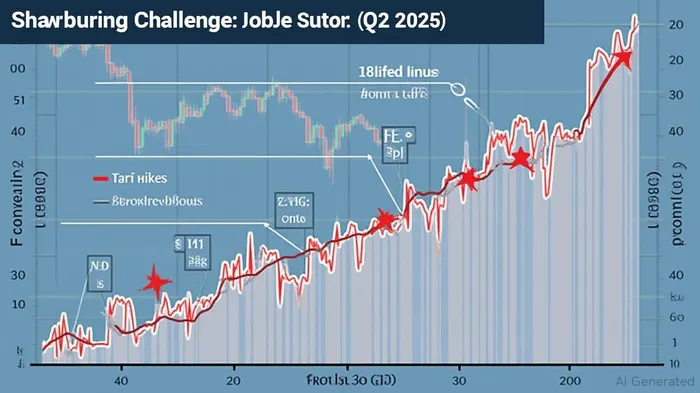
The Job Cuts Data: A Sector-Specific Warning Bell
The June job cuts reflect a deepening divide between industries. Retail alone accounted for 274% more job losses year-over-year, with sectors like automotive and durable goods (appliances, furniture) also under pressure. Meanwhile, utilities and healthcare firms remain largely insulated, cutting jobs at a fraction of the rate. This pattern underscores the short-term demand shift: consumers are prioritizing essentials over discretionary spending, a trend that could persist through late 2025.
The data reveals a stark contrast: Staples ETFs (XLP) have outperformed the S&P 500 by 8% YTD, while Discretionary (XLY) stocks have slumped 15% since mid-2024. This divergence is no anomaly—it aligns with historical precedents during slowdowns, such as the 2008 crisis, when Staples and Utilities delivered stable returns amid economic uncertainty.
Short-Term Play: Capitalize on Discretionary Volatility
While Staples offer a defensive hedge, investors should not dismiss Consumer Durables entirely. The backtest data shows that sectors like autos and appliances can experience short-term rallies as companies clear excess inventory through discounts. For example, a 3.8% decline in Q1 2025 durable goods spending may lead to aggressive pricing strategies in Q3, creating volatility-driven opportunities.
This chart highlights that auto sales often rebound within six months of job cut announcements, as manufacturers slash prices to stabilize margins. Investors might consider a tactical overweight in auto stocks (e.g., GMGM--, Ford) for speculative positions, but with strict stop-loss parameters.
Long-Term Risks: Staples Resilience Faces Structural Tests
Despite their stability, Staples are not immune to structural pressures. Tariffs, inflation, and supply chain bottlenecks are squeezing margins for food and beverage companies. Coca-ColaKO-- and Procter & Gamble have already warned of pricing headwinds, even as demand remains steady. Utilities (XLU) emerge as a safer bet, benefiting from regulatory insulation and dividend stability.
Utilities now offer a 3.2% average yield versus Staples' 2.1%, reflecting investor preference for sectors with pricing power and recession-resistant cash flows.
Portfolio Strategy: Defensive Tilt with Selective Cyclicals
- Rotate into Staples and Utilities: Maintain an overweight in XLP and XLU for their defensive characteristics, but monitor margin pressures in food products.
- Tactical Discretionary Exposure: Use pullbacks in auto stocks (e.g., GM) to capture inventory-clearing discounts, but avoid overcommitting.
- Inflation Hedging: Allocate to gold (GLD) and commodity ETFs (DBC) to offset potential Fed easing, which could weaken the U.S. dollar and boost commodity prices.
- Avoid Tech and Services: Job cuts in tech (35% YOY rise) and non-profits signal broader economic pessimism—these sectors face prolonged underperformance.
Conclusion: Position for a Slower Growth Reality
The surge in job cuts is a clear warning that the economy is entering a phase of uneven contraction. Investors must balance short-term gains in cyclicals like Consumer Durables with long-term safety in Staples and Utilities. The Fed's pause on rate hikes, likely after August's nonfarm payrolls, will further favor defensive assets.
Final Takeaway: Prioritize sectors with pricing power, stable demand, and dividend resilience. For now, let the job cuts guide you—defensive is definitive, but selective cyclicals offer fleeting rewards.
The analysis assumes no material changes to fiscal policy or external shocks. Always conduct independent research before making investment decisions.

Stay ahead of the market.
Get curated U.S. market news, insights and key dates delivered to your inbox.


AInvest
PRO
AInvest
PRO



Comments
No comments yet