
Sector Rotation Strategies in a Cooling Manufacturing Economy: Betting on Banks, Avoiding Airlines
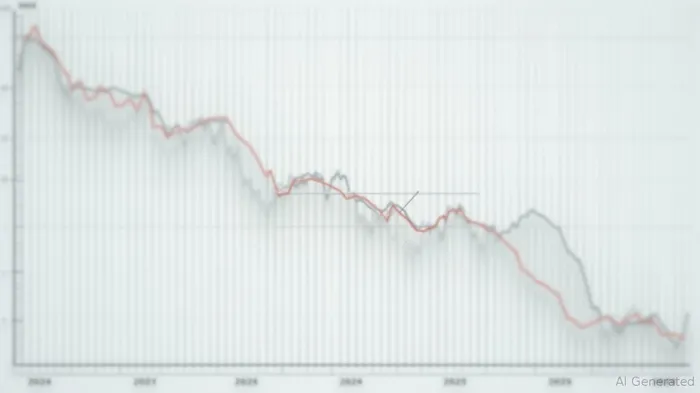
The Kansas City Federal Reserve's Manufacturing Index for June 2025, at -2, marks the 22nd consecutive month of contraction—a stark reminder of the manufacturing sector's prolonged slump. While this reading represents a slight improvement from May's -3, the persistent negativity underscores deeper economic fragility. For investors, this data is a clarion call to pivot toward sectors that thrive in a Fed-easing environment while avoiding those tied to cyclical demand.
The Macro Backdrop: Fed Policy and Manufacturing's Crossroads
The KC Fed data signals that manufacturing remains mired in a multiyear slump, driven by declines in metal and transportation equipment production, while sectors like nonmetallic minerals and petroleum products show modest resilience. The report's bright spot is the future composite index rising to 9 in June, up from 5 in May—a cautious but tangible sign of optimism.
This mixed picture sets the stage for monetary policy shifts. With inflation cooling and manufacturing weakness spilling into broader economic sentiment, the Fed faces pressure to ease monetary conditions sooner than expected. A dovish pivot would stabilize credit demand and support rate-sensitive sectors like banking, even as it undermines airlines reliant on consumer and corporate spending.
Sector Rotation: Banks Win, Airlines Lose
Banks: Benefiting from Credit Demand and Fed Policy
The banking sector stands to gain as manufacturing firms seek financing to navigate uncertainty. The KC Fed survey noted that 32% of firms paused capital investments and 21% cut headcount, signaling potential demand for corporate loans. Even as the Fed holds rates steady in the near term, the expectation of eventual easing will buoy banks' net interest margins.
Actionable Play: Overweight regional banks (e.g., KEY, ZION) and large-cap lenders (JPM, BAC). These institutions are less exposed to international trade disruptions and more insulated by domestic credit demand.
Airlines: The Casualty of Demand Contraction
Passenger airlines face a double whammy: weaker business travel tied to manufacturing slowdowns and rising operational costs. The KC Fed report highlighted that 52% of firms engaged in international trade faced tariff-related disruptions, with some canceling contracts outright. This translates to fewer cargo shipments and less corporate travel demand.
Actionable Play: Underweight airlines (DAL, AAL, UAL) in the short term. Their valuations are stretched relative to cyclical downturns, and cargo revenue—a major profit driver—will suffer as manufacturing orders decline.
Timing the Rotation: Short-Term vs. Long-Term
Short-Term (Next 3–6 Months):
Focus on banks as a defensive play. The Fed's “wait-and-see” stance in Q3 2025 creates a “sweet spot” for financials: rates remain elevated enough to support margins, while easing expectations lift equity multiples.Long-Term (1–2 Years):
If the Fed eases meaningfully, banks could outperform further, but airlines might recover if manufacturing stabilizes. However, structural challenges like labor shortages and tariff costs may keep airline margins under pressure.
Risks and Considerations
- Geopolitical Risks: Tariffs and trade wars remain a wildcard. A sudden escalation could worsen manufacturing conditions and amplify airline pain.
- Oil Prices: The KC Fed's petroleum product sub-sector resilience hinges on stable energy prices. A spike could hurt both airlines and consumer discretionary stocks.
- Regional Bias: The KC Fed survey covers the Tenth District (e.g., Colorado, Kansas), which may not fully reflect the broader U.S. economy.
Conclusion: Position for a Fed Pivot, Avoid the Fragile
The KC Fed Manufacturing Index at -2 is a clear signal to rotate toward sectors insulated from demand shocks. Banks, with their defensive balance sheets and Fed-sensitive valuations, are the prime beneficiaries. Airlines, meanwhile, face a perfect storm of contracting demand and operational headwinds.
Investors should ** overweight financials and underweight airlines**, while monitoring Fed communications and the KC Fed's future index releases for confirmation of stabilization. In this environment, macro data isn't just a backdrop—it's a roadmap.
Final Take: The manufacturing downturn is here to stay—but so is the opportunity to profit from its ripple effects. Rotate wisely.

Stay ahead of the market.
Get curated U.S. market news, insights and key dates delivered to your inbox.


AInvest
PRO
AInvest
PRO



Comments
No comments yet