
Sector Rotation Strategies: Why Bank Stocks Are Outperforming ASML Amid Volatility
The semiconductor sector, once the darling of growth investors, faces a critical crossroads. ASML HoldingASML-- (ASML), the Dutch giant supplying the world's most advanced chipmaking tools, issued a growth warning in July 2025, sparking a 11% single-day stock plunge. Meanwhile, the banking sector has emerged as a bastion of stability, offering investors refuge from the tech sector's geopolitical and macroeconomic storms. This divergence creates a compelling opportunity for sector rotation—shifting capital from volatile tech stocks like ASML to resilient financial institutionsFISI--.
ASML's Growth Warning: A Canary in the Semiconductor Coal Mine
ASML's Q2 2025 results were strong: net sales hit €7.7 billion, with EUV systems accounting for €2.3 billion of bookings. However, CEO Christophe Fouquet tempered optimism by citing “macroeconomic and geopolitical uncertainties” that made 2026 growth projections impossible to confirm. The primary risks?
- U.S.-EU Tariffs: Proposed 30% tariffs on European imports threaten to raise costs for ASML's customers, particularly American chipmakers reliant on its equipment.
- China's Semiconductor Ambitions: Despite contributing 27% of ASML's sales, U.S. export restrictions limit its ability to capitalize on China's $1.7 trillion chip investment plan.
- Demand Volatility: While AI-driven logic chip demand is robust (accounting for 69% of ASML's sales), memory chip markets face overcapacity risks.
The market's reaction was swift: ASML's stock dropped 11%, wiping $30 billion from its valuation. This volatility reflects broader fears about the semiconductor supercycle's sustainability.
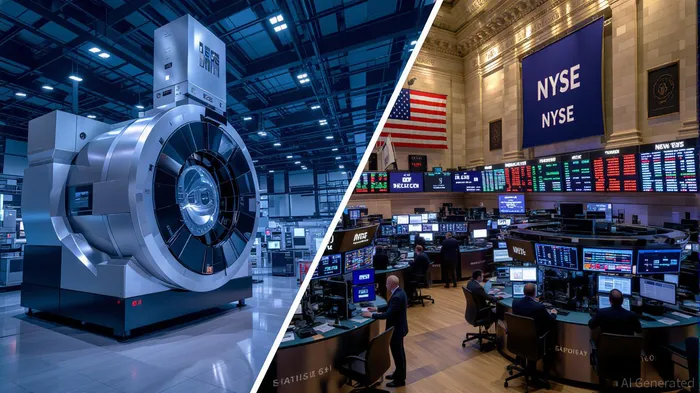
Banking Sector Resilience: Steady Profits in an Unsteady World
While ASML's shares tumbled, banks like JPMorgan ChaseJPM-- (JPM) and CitigroupC-- (C) posted steady performance. Key drivers of resilience:
- Stable Net Interest Margins (NIM):
- The banking sector's NIM held steady at 3.25% in Q2 2025, with community banks outperforming at 3.46%. Federal Reserve rate stability (4.25-4.5%) curbed deposit cost inflation.
Cost Discipline:
- Banks like Bank of AmericaBAC-- (BAC) grew non-interest-bearing deposits by 27.5% year-over-year, reducing reliance on expensive wholesale funding.
U.S. Bancorp (USB) leveraged its low-cost deposit base to maintain strong margins despite a flattening yield curve.
Modest Loan Growth:
Commercial and industrial lending expanded 5%, driven by sectors like renewable energy and tech infrastructure. JPMorganJPM-- emphasized disciplined risk management, avoiding overexposure to volatile industries.
Capital Returns:
- Citigroup raised its dividend by 7.1% to $0.60/share, while JPMorgan maintained steady payouts. Citigroup also targeted $1.75 billion in buybacks, signaling confidence in balance sheet strength.
Why Rotate to Banks Now?
The ASML warning underscores a critical truth: semiconductors are a geopolitical battleground, while banks thrive on stability. Here's how to capitalize:
1. Shift from ASML to JPMorgan
- Risk-Return Trade: ASML's 10%+ volatility contrasts with JPM's 5% historical volatility.
- Valuation: JPM trades at 1.3x book value, below its 5-year average of 1.5x, offering a margin of safety.
2. Focus on NIM Leaders
- U.S. Bancorp: Its 3.46% NIM and 9.2% ROE make it a top pick for income investors.
- Capital One (COF): Its 3.3% NIM and 8.5% loan growth position it to benefit from rising commercial demand.
3. Hedge Tech Exposure with Bank ETFs
- The KBW Bank Index (BKX) has outperformed the Philadelphia Semiconductor Index (SOX) by 12% year-to-date.
4. Consider Defensive Plays
- Citigroup: Its $1.75 billion buyback and 1.2x book value valuation make it a compelling value play.
Risks and Caveats
- Tariff-Driven Inflation: Banks aren't immune to geopolitical risks—wholesale deposit costs could rise if tariffs disrupt global supply chains.
- Fed Policy Shifts: A surprise rate cut could compress NIMs, though the Fed's July 2025 hold suggests stability.
Conclusion: Rotate to Banks, but Stay Alert
ASML's warning signals a broader slowdown in the semiconductor supercycle, while banks offer steady returns in turbulent times. Investors should:
- Reduce tech allocations: Trim holdings in ASML and other chipmakers exposed to trade wars.
- Increase bank exposure: Prioritize institutions with strong NIMs and diversified loan portfolios (e.g., JPM, USB).
- Monitor policy developments: U.S.-EU tariff negotiations and Fed rate signals will dictate sector dynamics in 2026.
In a market defined by uncertainty, sector rotation isn't just a strategy—it's a necessity. Shift capital to banks now, and let them navigate the storm.

Stay ahead of the market.
Get curated U.S. market news, insights and key dates delivered to your inbox.
AInvest
PRO
AInvest
PRO



Comments
No comments yet