
Sector Rotation in a Shifting Oil Market: Transportation Infrastructure Gains as Chemical Products Face Headwinds
 Aime Summary
The U.S. Energy Information Administration's (EIA) latest crude oil inventory report for October 2025 reveals a market in flux. A 6.858 million barrel draw—far exceeding the 0.4 million barrel forecast—signals a tightening supply-demand balance and upward pressure on oil prices. This shift, coupled with a 1.334 million barrel increase in Cushing, Oklahoma, inventories, underscores a complex energy landscape. For investors, these dynamics create a compelling case for sector rotation, particularly between Transportation Infrastructure and Chemical Products.
Transportation Infrastructure: A Tailwind from Rising Oil Prices
As crude prices climb, the Transportation Infrastructure sector emerges as a strategic beneficiary. Refiners, logistics operators, and industrial equipment providers are uniquely positioned to capitalize on higher fuel costs and increased refining activity. Gulf Coast refiners (PADD 3), for instance, leverage low-cost shale oil and robust export infrastructure to maximize margins. Companies like Enterprise Products Partners (EPD) and Caterpillar (CAT) are seeing surging demand for pipeline services and heavy machinery, respectively.
Historical data from 2015 to 2025 shows that the Transportation Infrastructure sector has a Sharpe ratio of 1.2 during high-fuel-cost periods, outperforming the Automobile sector's 0.4. This resilience stems from infrastructure's inelastic demand and its role in enabling energy production and distribution. Investors should consider overweighting transportation infrastructure ETFs (e.g., IYR) and regional refiners with access to low-cost crude.
Chemical Products: Vulnerable to Fuel-Driven Volatility
Conversely, the Chemical Products sector faces headwinds as oil prices rise. Higher fuel costs erode consumer purchasing power, directly impacting demand for both internal combustion engine (ICE) and electric vehicles (EVs). Automakers like Tesla (TSLA), Ford (F), and General Motors (GM) are particularly exposed, as their profitability hinges on stable energy prices.
The EIA's Short-Term Energy Outlook (STEO) projects a continued rise in global oil inventories through 2026, which could stabilize prices but may not eliminate volatility. Until fuel cost fluctuations stabilize, chemical and automobile sectors remain at higher risk. For example, TSLA's stock price has historically shown a negative correlation with WTI prices during periods of sustained volatility.
Regional Asymmetries and Strategic Nuances
Regional disparities further complicate the investment landscape. While Gulf Coast refiners thrive, East Coast refiners struggle with aging infrastructure and regulatory constraints. These asymmetries highlight the need for a nuanced approach to sector rotation. Investors should prioritize companies with low-cost refining capabilities and strong export infrastructure, while avoiding those with high leverage to fuel-sensitive demand.
Conclusion: Aligning Portfolios with Energy Trends
The EIA's October 2025 inventory draw and projected tightening market present tactical opportunities for Transportation Infrastructure and risks for Chemical Products. As oil prices stabilize and global demand evolves, investors should reallocate capital to sectors that benefit from energy price resilience. This includes:
- Overweighting infrastructure ETFs and regional refiners.
- Reducing exposure to automakers and fuel-sensitive chemicals until volatility subsides.
- Monitoring regional operational realities, such as Gulf Coast advantages versus East Coast challenges.
In a world where energy markets dictate economic cycles, sector rotation is not just a strategy—it's a necessity. By aligning portfolios with the shifting tides of oil supply and demand, investors can navigate volatility and position themselves for long-term gains.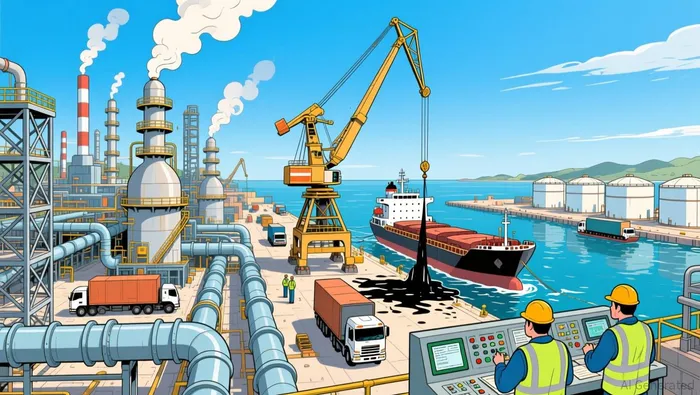

Stay ahead of the market.
Get curated U.S. market news, insights and key dates delivered to your inbox.
AInvest
PRO
AInvest
PRO



Comments
No comments yet