
Sector Rotation in the Shadows of Crude: Capital Markets vs. Automobiles in a Shifting Energy Landscape
 Aime Summary
The U.S. (EIA) Crude Oil Inventories report for the week ending November 7, 2025, . crude oil stocks—the largest since July 25. This surge, far exceeding the 2 million barrel forecast, signals a growing supply glut amid slowing demand. For investors, this data acts as a catalyst for sector rotation, forcing a strategic reevaluation of capital allocations between energy-linked capital markets and fuel-dependent automobile industries.
The Crude Conundrum: Oversupply and Price Pressures
The EIA's data underscores a critical imbalance: U.S. , while exports and imports declined, leading to a domestic surplus. Global oil prices, already pressured by fears of oversupply, retreated to a three-week low. The EIA forecasts further downward pressure, projecting an average Brent crude price of $51 per barrel in 2026—a 30% drop from 2024 levels. This trajectory threatens energy sector valuations, particularly for integrated oil majors and exploration & production (E&P) firms.
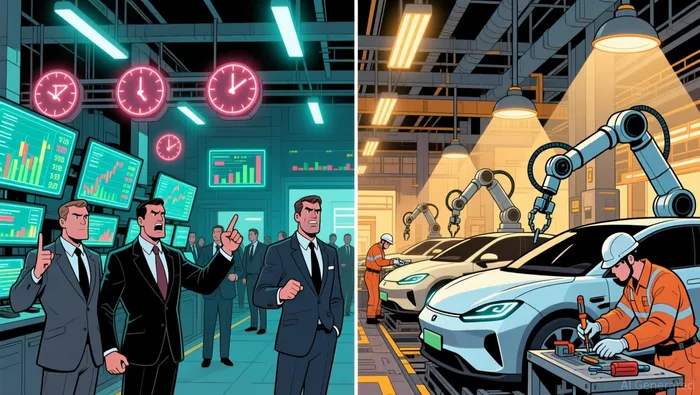
: Capital Markets vs. Automobiles
Capital Markets:
Energy stocks, long a staple of capital market portfolios, face headwinds as lower oil prices erode margins. E&P companies may cut capital expenditures, while refiners could see reduced throughput as crude costs fall. Investors may rotate into sectors less sensitive to energy prices, such as technology or consumer discretionary, which benefit from lower fuel costs.
Automobiles:
Conversely, the automobile sector stands to gain from cheaper gasoline. The EIA projects U.S. , . Lower fuel costs could boost vehicle sales, particularly for internal combustion engine (ICE) models, and accelerate adoption of electric vehicles (EVs) as charging infrastructure becomes more economically viable. Automakers like TeslaTSLA-- and FordF-- are poised to benefit from both demand tailwinds and supply chain cost reductions.
Strategic Positioning: Balancing the Scales
Energy Sector Exposure:
Investors should consider reducing direct exposure to energy equities and hedging against further price declines. ETFs like the Energy Select Sector SPDR (XLE) may underperform, while inverse energy ETFs could offer short-term gains.:
Allocate capital to automakers and EV manufacturers, which are likely to see improved margins and demand. The S&P 500 Automotive Index and EV-specific ETFs (e.g., KARS) present compelling opportunities.Capital Markets Diversification:
Shift toward sectors insulated from energy price volatility, such as healthcare or software-as-a-service (SaaS) providers. These industries thrive in low-interest-rate environments and benefit from broader economic stability.
The Road Ahead: Monitoring Key Indicators
The EIA's Short-Term Energy Outlook (STEO) predicts 2.1 million barrels per day of inventory builds in the second half of 2025, which will likely persist into 2026. Investors should closely track weekly EIA reports and OPEC+ production decisions, as these will dictate the pace of price declines. Additionally, geopolitical risks—such as Middle East tensions or U.S.-China trade disputes—could introduce volatility, necessitating agile portfolio adjustments.
Conclusion: Navigating the Energy Transition
The current energy landscape demands a nuanced approach to sector rotation. While capital markets grapple with energy sector underperformance, the automobile industry emerges as a beneficiary of lower fuel costs. Investors who strategically rebalance their portfolios—reducing energy exposure while amplifying positions in automotive and consumer discretionary sectors—can capitalize on the shifting dynamics of supply, demand, and global economic trends. As the EIA's data continues to shape market sentiment, agility and foresight will be paramount in navigating this transformative period.

Stay ahead of the market.
Get curated U.S. market news, insights and key dates delivered to your inbox.
AInvest
PRO
AInvest
PRO



Comments
No comments yet