
Sector Rotation in Focus: Construction's Resilience vs. Airlines' Volatility Amid Labor Market Shifts
 Aime Summary
The U.S. labor market in late 2025 presents a paradox: while continuing jobless claims hover near 2021 levels, signaling prolonged unemployment, initial claims have dipped to historically low levels. This duality underscores a "no hire, no fire" environment, where businesses tread cautiously amid policy uncertainty and economic headwinds. For investors, the divergence between sectors—particularly construction and airlines—offers a compelling case for strategic rotation.
Labor Market Resilience: A Mixed Bag
The latest data reveals a labor market in transition. Continuing claims for the week ending December 13, 2025, rose to 1.923 million, a 38,000 increase from the prior week. This aligns with a broader trend of stagnant hiring, as the unemployment rate held at 4.6% in November, masking deeper challenges for specific demographics. Meanwhile, initial claims fell to 191,000 in late November, the lowest since 2022, suggesting short-term stability. The Federal Reserve's December rate cut to 3.50%-3.75% reflects its acknowledgment of this fragile balance, though further easing is unlikely without clearer signs of recovery.
Construction: A Sector Anchored by Policy and Demand
The construction industry has emerged as a relative bright spot. In Q3 2025, nonresidential construction added 16,300 jobs, driven by data center and infrastructure projects. Hourly wages for nonsupervisory workers rose 4% year-over-year to $37.64, reflecting labor shortages and policy tailwinds. The passage of permitting reform bills (H.R. 3898 and H.R. 4776) in late 2025 is expected to accelerate infrastructure spending, addressing a critical bottleneck in project timelines.
However, challenges persist. Material costs, inflated by tariffs on steel and copper, have pushed nonresidential input prices up 3.5% year-over-year. Labor shortages remain acute, with 213,000 job openings in October 2025. Yet, the sector's resilience is bolstered by long-term demand from aging infrastructure and the energy transition.
Airlines: Cargo Growth vs. Passenger Woes
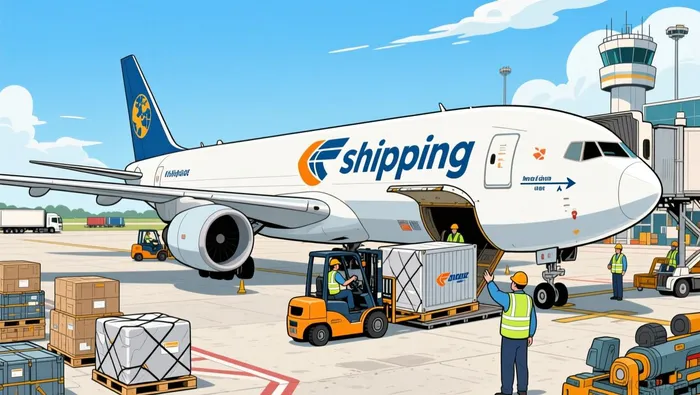
The U.S. airlines sector tells a different story. As of September 2025, cargo airlines added 10,662 jobs, with FedEx leading the charge, while passenger carriers lost 1,793 employees. This divergence reflects the post-pandemic surge in e-commerce and supply chain reorganization, which has prioritized cargo capacity over leisure travel. Full-time equivalents (FTEs) for passenger airlines fell by 1,357, signaling a shift toward part-time and contract labor.
The sector's volatility is compounded by macroeconomic risks. Tariff uncertainty, rising fuel costs, and a potential slowdown in consumer spending could pressure passenger demand. Meanwhile, cargo growth is expected to persist, supported by global trade dynamics and corporate inventory strategies.
Strategic Rotation: Balancing Stability and Growth
For investors, the contrast between construction and airlines highlights opportunities for sector rotation. Construction's policy-driven tailwinds and stable demand make it a defensive play, particularly in a low-growth environment. Conversely, airlines—especially cargo-focused firms—offer exposure to global trade cycles but carry higher volatility.
- Overweight Construction: Position in construction ETFs or individual stocks with exposure to nonresidential and infrastructure projects. Companies benefiting from permitting reforms and energy transition projects (e.g., data center builders) could outperform.
- Selective Exposure to Airlines: Cargo airlines like FedEx and UPS may benefit from sustained e-commerce growth, but passenger carriers remain vulnerable to economic cycles. Consider hedging with short-term options or sector ETFs.
- Monitor Policy Catalysts: The implementation of permitting reforms and potential changes to tariff policies could unlock near-term gains in construction. For airlines, watch for shifts in global trade dynamics and fuel price trends.
Conclusion: Navigating a Polarized Labor Market
The U.S. labor market's duality—resilient wages in construction versus fragile hiring in airlines—reflects broader structural shifts. As policymakers grapple with inflation, tariffs, and workforce shortages, investors must prioritize sectors with durable demand and policy support. Construction's alignment with long-term infrastructure needs and energy transition goals positions it as a cornerstone for defensive portfolios, while airlines require a more nuanced approach to capture growth without overexposure to macroeconomic risks.
In this environment, agility and sector-specific insight will be key. By leveraging divergent trends, investors can balance stability and growth, positioning portfolios to thrive amid uncertainty.

Stay ahead of the market.
Get curated U.S. market news, insights and key dates delivered to your inbox.
AInvest
PRO
AInvest
PRO



Comments
No comments yet