
Sector Rotation in Construction and Utilities: Navigating Mortgage Rate Shifts for 2025
 Aime Summary
The U.S. MBA 30-Year Mortgage Rate has long served as a barometer for housing market sentiment and broader economic activity. As of August 20, 2025, the rate edged up to 6.68%, a marginal increase from 6.67% the prior week, signaling continued affordability challenges for homebuyers. This subtle shift, however, masks a deeper narrative of sector rotation opportunities in construction materials and energy utilities. By analyzing historical correlations and current market dynamics, investors can position portfolios to capitalize on these evolving trends.
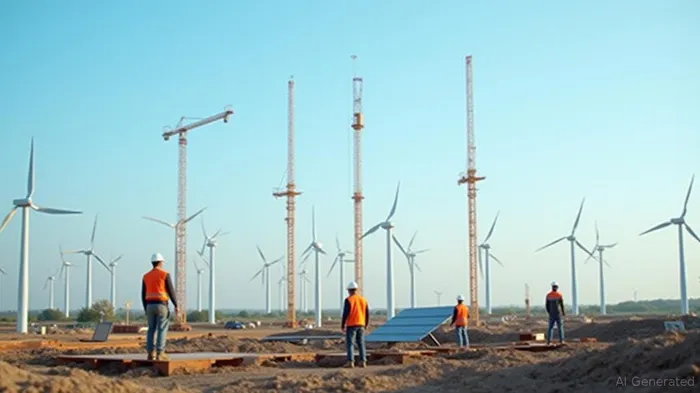
Construction Materials: A Reawakening in Housing Demand
The construction materials sector has historically exhibited a strong inverse relationship with mortgage rate fluctuations. When rates decline, borrowing costs fall, spurring homebuyer activity and housing starts. For instance, a 0.47% drop in the 30-Year Mortgage Rate to 6.77% on August 1, 2025, triggered a 3.1% surge in mortgage applications—a four-week high for the Refinance Index. While rates remain elevated compared to the 2.85% lows of 2020, even modest declines can reignite demand.
Construction-tech innovators like Autodesk (ADSK) and Trimble (TRMB) are poised to benefit. These firms provide software solutions that optimize building efficiency, reducing labor and material costs—a critical advantage in an era of post-pandemic labor shortages and tariffs on imported materials. Traditional players such as Lowe's (LOW) and USG (USG) also stand to gain as housing starts rebound, though their performance remains tied to raw material price volatility.
Historical backtests from 2000 to 2025 reveal that construction materials firms averaged +7% gains over 28 days following unexpected rate declines. With mortgage rates projected to dip to 6.30% by 2026, investors should consider overweighting this sector, particularly companies with exposure to infrastructure modernization and green building incentives under the Inflation Reduction Act.
Energy Utilities: The Electrification Divide
The utility sector's response to mortgage rate changes is more complex. Gas utilities have historically underperformed during rate declines, averaging -5% over 42 days after unexpected drops. This is driven by shifting consumer behavior: as mortgage rates fall and home construction accelerates, new homes tend to be smaller and more energy-efficient, reducing per-unit gas consumption.
Conversely, electric utilities and renewable infrastructure firms have demonstrated resilience. Companies like NextEra Energy (NEE) and Dominion Energy (D) benefit from regulated demand and long-term contracts, insulating them from short-term rate volatility. Structural tailwinds—including the electrification of transportation and data centers—further bolster their growth trajectories.
Policy also plays a pivotal role. The Infrastructure Investment and Jobs Act, alongside state-level clean energy mandates, has locked in growth for electric utilities. Recent regulatory approvals, such as rate hikes for DTE Energy and WEC Energy Group, have further strengthened margins. In contrast, gas utilities face existential risks as households and businesses transition to cleaner alternatives.
Strategic Allocation: Balancing Cyclical and Structural Trends
For investors, the key lies in aligning portfolios with both cyclical and structural shifts. Overweighting construction-tech innovators like AutodeskADSK-- and TrimbleTRMB-- offers exposure to housing demand without the volatility of raw material prices. Traditional homebuilders and materials firms should be approached cautiously, given their sensitivity to rate fluctuations.
In the utilities space, underweighting gas utilities and focusing on electric infrastructure firms with grid modernization and renewable integration exposure is advisable. The electrification of the economy is not a temporary trend but a structural shift, and utilities with robust regulatory frameworks and diversified energy portfolios will outperform.
Conclusion: Positioning for a Low-Rate Future
The U.S. MBA 30-Year Mortgage Rate remains a critical lens for analyzing sectoral dynamics. While construction stands to gain from rate-driven housing booms, utilities must adapt to a world where affordability and sustainability redefine energy consumption. By leveraging historical insights and current policy tailwinds, investors can navigate these shifts with confidence, capturing outperformance in both cyclical and durable sectors.
As the market anticipates further rate declines in 2026, the time to act is now. Construction materials and electric utilities offer a dual pathway to capitalize on the next phase of economic and environmental transformation.

Stay ahead of the market.
Get curated U.S. market news, insights and key dates delivered to your inbox.
AInvest
PRO
AInvest
PRO



Comments
No comments yet