
Sector ETFs Surge as Bond Inflows Hint at Tactical Shift
Generated by AI AgentAinvest ETF Daily BriefReviewed byAInvest News Editorial Team
Friday, Feb 13, 2026 7:02 pm ET1min read
 Aime Summary
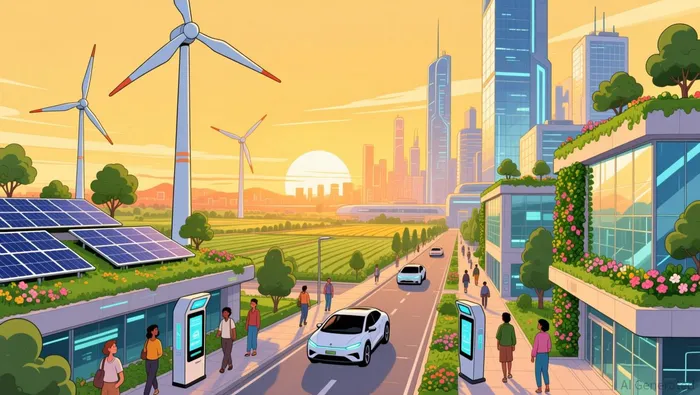
The future of renewable energy looks increasingly promising as governments and corporations set ambitious targets for reducing carbon emissions. With advancements in solar, wind, and hydroelectric technologies, the cost of generating clean energy has dropped significantly over the past decade. Many experts predict that by 2030, renewables will account for a majority of global electricity production.
 As nations invest heavily in green infrastructure, the demand for skilled workers in the renewable sector is surging. Universities and vocational schools are adapting their curricula to meet this growing need, offering specialized programs in engineering, project management, and environmental science.
The transition to renewable energy is not without its challenges. Grid stability, energy storage, and supply chain constraints remain significant hurdles. However, breakthroughs in battery technology and smart grid systems are helping to address these issues. Public-private partnerships are playing a critical role in accelerating innovation and scaling up deployment.
In the financial markets, companies that lead in renewable energy and sustainable technologies have attracted strong investor interest. Shares of firms specializing in solar power, wind generation, and energy storage have outperformed broader market indices in recent years. Analysts attribute this performance to a combination of favorable policy environments and strong long-term growth potential.
The renewable energy sector is also creating new opportunities for job creation and economic development. Rural areas, in particular, are benefiting from the installation of large-scale wind and solar farms. These projects not only provide clean energy but also stimulate local economies by generating employment and tax revenue.
As the world moves toward a low-carbon future, the importance of international cooperation cannot be overstated. Agreements such as the Paris Climate Accord and the UN Sustainable Development Goals provide a framework for collective action. By sharing knowledge, technology, and best practices, countries can work together to achieve a more sustainable and equitable global energy system.
As nations invest heavily in green infrastructure, the demand for skilled workers in the renewable sector is surging. Universities and vocational schools are adapting their curricula to meet this growing need, offering specialized programs in engineering, project management, and environmental science.
The transition to renewable energy is not without its challenges. Grid stability, energy storage, and supply chain constraints remain significant hurdles. However, breakthroughs in battery technology and smart grid systems are helping to address these issues. Public-private partnerships are playing a critical role in accelerating innovation and scaling up deployment.
In the financial markets, companies that lead in renewable energy and sustainable technologies have attracted strong investor interest. Shares of firms specializing in solar power, wind generation, and energy storage have outperformed broader market indices in recent years. Analysts attribute this performance to a combination of favorable policy environments and strong long-term growth potential.
The renewable energy sector is also creating new opportunities for job creation and economic development. Rural areas, in particular, are benefiting from the installation of large-scale wind and solar farms. These projects not only provide clean energy but also stimulate local economies by generating employment and tax revenue.
As the world moves toward a low-carbon future, the importance of international cooperation cannot be overstated. Agreements such as the Paris Climate Accord and the UN Sustainable Development Goals provide a framework for collective action. By sharing knowledge, technology, and best practices, countries can work together to achieve a more sustainable and equitable global energy system.
As nations invest heavily in green infrastructure, the demand for skilled workers in the renewable sector is surging. Universities and vocational schools are adapting their curricula to meet this growing need, offering specialized programs in engineering, project management, and environmental science.
The transition to renewable energy is not without its challenges. Grid stability, energy storage, and supply chain constraints remain significant hurdles. However, breakthroughs in battery technology and smart grid systems are helping to address these issues. Public-private partnerships are playing a critical role in accelerating innovation and scaling up deployment.
In the financial markets, companies that lead in renewable energy and sustainable technologies have attracted strong investor interest. Shares of firms specializing in solar power, wind generation, and energy storage have outperformed broader market indices in recent years. Analysts attribute this performance to a combination of favorable policy environments and strong long-term growth potential.
The renewable energy sector is also creating new opportunities for job creation and economic development. Rural areas, in particular, are benefiting from the installation of large-scale wind and solar farms. These projects not only provide clean energy but also stimulate local economies by generating employment and tax revenue.
As the world moves toward a low-carbon future, the importance of international cooperation cannot be overstated. Agreements such as the Paris Climate Accord and the UN Sustainable Development Goals provide a framework for collective action. By sharing knowledge, technology, and best practices, countries can work together to achieve a more sustainable and equitable global energy system.
Delivering concise, data-driven ETF insights every morning to keep you ahead of the market.
Latest Articles
Stay ahead of the market.
Get curated U.S. market news, insights and key dates delivered to your inbox.


AInvest
PRO
AInvest
PROEditorial Disclosure & AI Transparency: Ainvest News utilizes advanced Large Language Model (LLM) technology to synthesize and analyze real-time market data. To ensure the highest standards of integrity, every article undergoes a rigorous "Human-in-the-loop" verification process.
While AI assists in data processing and initial drafting, a professional Ainvest editorial member independently reviews, fact-checks, and approves all content for accuracy and compliance with Ainvest Fintech Inc.’s editorial standards. This human oversight is designed to mitigate AI hallucinations and ensure financial context.
Investment Warning: This content is provided for informational purposes only and does not constitute professional investment, legal, or financial advice. Markets involve inherent risks. Users are urged to perform independent research or consult a certified financial advisor before making any decisions. Ainvest Fintech Inc. disclaims all liability for actions taken based on this information. Found an error?Report an Issue


ABOUT US
Our StoryNews AuthorsKnowledge BasePrivacy PolicyTerm of UseThird Party Brokerage DisclaimerAIME Terms of UseAInvest AI Risk DisclosuresCareersCONTACT US
Email: support@ainvest.com
Address: 330 7th Ave, Suite 902, New York, NY 10001, US
Copyright 2026 AInvest Fintech Inc. All rights reserved.


Comments
No comments yet