
SEC's Token Taxonomy Aims to Balance Innovation and Investor Protection


 Aime Summary
The U.S. Securities and Exchange Commission (SEC) is advancing plans to establish a "token taxonomy" under the Howey Test framework, aiming to clarify which digital assets qualify as securities and which fall outside its regulatory purview. In remarks delivered at the Federal Reserve Bank of Philadelphia's Fintech Conference on Nov. 12, SEC Chairman Paul Atkins outlined a four-tier classification system designed to distinguish between securities and non-securities tokens, a move that could reshape the crypto market's regulatory landscape, as reported by CryptoBriefing.
Atkins emphasized that the taxonomy would categorize tokens into distinct groups: digital commodities or network tokens tied to decentralized systems, digital collectibles (e.g., art or in-game items), digital tools like memberships or tickets, and tokenized securities representing financial ownership. The latter—tokens representing investment contracts—would remain under securities regulation, while the others would not, according to a Benzinga report. This approach aligns with the Howey Test, which defines an investment contract as an investment of money in a common enterprise with profits derived from the efforts of others.
A key aspect of the proposal is the recognition that tokens initially sold as securities may lose that classification as projects decentralize and issuers' roles diminish. 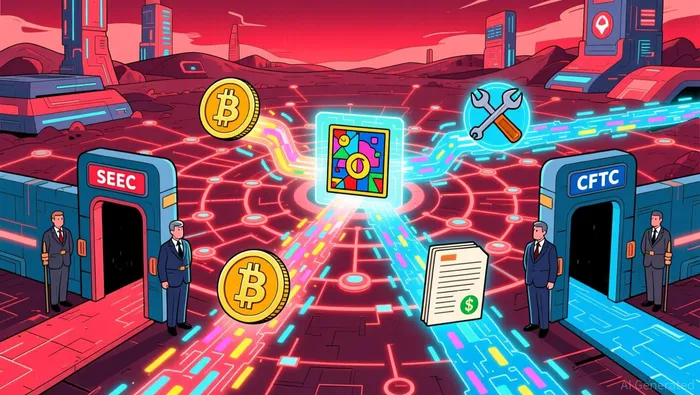 "Once the investment contract can be understood to have run its course, the token may continue to trade, but those trades are no longer 'securities transactions' simply by virtue of the token's origin story," Atkins stated, as TradingView reported. This aligns with long-standing debates in crypto circles about the lifecycle of tokens and their regulatory status post-decentralization.
The framework also includes exemptions for certain tokens, allowing them to trade on platforms overseen by the Commodity Futures Trading Commission (CFTC) or state regulators, rather than exclusively on SEC-regulated markets. Atkins argued this would foster innovation while maintaining investor protections. "We should not hamstring innovation and investor choice by requiring the underlying assets to trade in one regulated environment versus another," he said, according to a Seeking Alpha report.
The initiative complements broader legislative efforts in Congress, including the Digital Asset Market Structure Bill, which seeks to establish a clear division of oversight between the SEC and CFTC. The bill, currently progressing through the Senate and House, would classify major cryptocurrencies like BitcoinBTC-- and EthereumETH-- as digital commodities under CFTC jurisdiction while requiring exchanges to separate trading, custody, and brokerage functions, as Yahoo Finance reported.
Atkins stressed that the taxonomy is not a signal of lax enforcement. Fraud and manipulation will still face strict penalties, he cautioned, reiterating the SEC's commitment to "integrity and intelligibility" in crypto markets, as noted in a CoinDesk article. The agency's Project Crypto, launched to modernize digital asset oversight, will support the implementation of these guidelines.
Industry stakeholders have welcomed the move as a step toward regulatory clarity. By creating a structured framework, the SEC aims to balance innovation with investor protection, a challenge that has defined crypto regulation since its inception. The finalization of the taxonomy could influence global standards, as other jurisdictions grapple with similar classification issues.

Stay ahead of the market.
Get curated U.S. market news, insights and key dates delivered to your inbox.


AInvest
PRO
AInvest
PRO



Comments
No comments yet