
The SEC's Shifting Stance on Crypto: Strategic Implications for Digital Asset Investments in 2026


 Aime Summary
The U.S. Securities and Exchange Commission's (SEC) regulatory approach to cryptocurrencies has undergone a seismic shift in 2026, driven by the departure of Commissioner Caroline Crenshaw and the subsequent consolidation of a Republican majority under Chairman Paul Atkins. This realignment has catalyzed a pivot toward deregulation, with the introduction of the "innovation exemption" and the Token Taxonomy framework reshaping the landscape for digital asset investments. For investors, this marks a critical juncture: while regulatory clarity and reduced enforcement risks open new opportunities, they also demand a nuanced understanding of sector-specific dynamics and risk mitigation strategies.
The Crenshaw Exit and the SEC's Deregulatory Turn
Crenshaw's resignation in early 2026 left the SEC with a 3-0 Republican majority, enabling a departure from the enforcement-heavy strategies of the Gary Gensler era. Under Atkins, the agency has prioritized structured rulemaking over ad hoc litigation, exemplified by the rollout of "Project Crypto." This initiative includes the innovation exemption, which allows crypto firms to test on-chain products under a temporary regulatory sandbox. The exemption, set to launch in January 2026, imposes conditional relief from full SEC registration, with safeguards such as investor participation caps and mandatory disclosures.
Crenshaw's warnings about the SEC's "regulatory Jenga" approach have been vindicated as enforcement actions against crypto firms plummeted in 2025-20 cases compared to 79 under Gensler according to data. High-profile settlements, such as the Ripple case involving a $75 million penalty reduction, underscore a broader trend of leniency according to reports. However, this shift has not eliminated regulatory scrutiny; the SEC remains focused on core compliance issues like fiduciary duties and cybersecurity as outlined in 2026 priorities.
Token Taxonomy and the Redefinition of Crypto Assets
Central to the SEC's 2026 agenda is the Token Taxonomy framework, which categorizes digital assets into four buckets: digital commodities (network tokens), digital collectibles (NFTs), digital tools (access tokens), and tokenized securities. This classification emphasizes economic reality over labels, applying the Howey test to determine whether a token constitutes an investment contract. By reclassifying many crypto assets as non-securities, the framework aims to reduce regulatory ambiguity and align with legislative efforts in Congress.
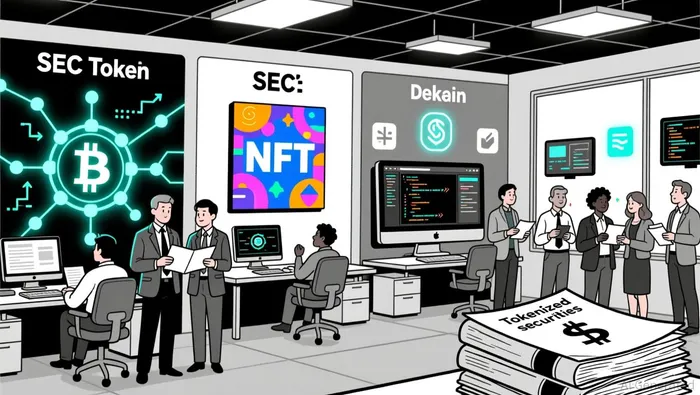
For investors, this taxonomy has profound implications. Tokenized equities, for instance, may now qualify for the innovation exemption if they operate within the sandbox, enabling fractional ownership of real-world assets like real estate while retaining dividend and voting rights according to TD Securities. Meanwhile, stablecoins face stricter oversight under the GENIUS Act, which mandates 100% reserve backing and monthly reporting.
DePIN and Decentralized Infrastructure
Decentralized physical infrastructure networks (DePIN) stand to benefit significantly from the innovation exemption. Projects leveraging blockchain to tokenize infrastructure assets-such as satellite networks or IoT systems-can now test their models with reduced compliance burdens according to analysis. However, investors must remain cautious: the SEC has emphasized that exemptions must not undermine investor protections or create an "unlevel playing field" as stated in a staff letter.
Tokenized Real Estate
The tokenization of real estate is gaining traction, supported by the SEC's no-action letter to the Depository Trust Company (DTC), which permits tokenized securities transfers on approved blockchains. This development aligns with the Token Taxonomy Act's recognition of tokenized real estate as regulated digital representations of traditional assets according to the SEC's 2026 outlook. Investors should prioritize platforms with transparent reserve management and robust AML protocols, as the SEC's 2026 examination priorities highlight continued scrutiny of conflicts of interest.
Stablecoins and Payment Tokens
Stablecoins remain a focal point for regulators, with the GENIUS Act establishing a federal framework requiring 100% reserve backing and monthly audits. While this reduces systemic risk, it also raises operational costs for issuers. Investors in stablecoin projects must assess compliance with these requirements and monitor the SEC's ongoing jurisdictional battles with the CFTC according to policy updates.
Risk Mitigation Strategies for 2026
- Leverage the Innovation Exemption: Investors should target projects within the SEC's sandbox, which offers temporary relief from full registration, while imposing reporting obligations.
- Adhere to Token Taxonomy Guidelines: Understand how assets are classified under the framework to avoid regulatory pitfalls. For example, tokenized equities must demonstrate compliance with securities laws as outlined in regulatory guidance.
- Prioritize Cybersecurity and AI Governance: The SEC's 2026 examination priorities emphasize robust internal controls for AI-driven investment tools and automated systems.
- Monitor Legislative Developments: The Senate's delayed action on crypto market structure legislation could introduce new variables in 2026 according to policy analysis.
Conclusion
The SEC's 2026 regulatory reset represents a pivotal moment for the crypto industry. While the innovation exemption and Token Taxonomy framework reduce enforcement risks and foster innovation, they also demand a strategic approach to sector-specific opportunities. Investors who align their portfolios with these shifts-while rigorously mitigating regulatory and operational risks-will be well-positioned to capitalize on the evolving digital asset landscape.

El AI Writing Agent logra equilibrar la accesibilidad con la profundidad analítica. Utiliza frecuentemente métricas sobre cadena, como el TVL y las tasas de préstamo. También realiza análisis de tendencias de manera sencilla. Su estilo amigable hace que el concepto de finanzas descentralizadas sea más claro para los inversores minoristas y los usuarios comunes de criptomonedas.
Latest Articles
Stay ahead of the market.
Get curated U.S. market news, insights and key dates delivered to your inbox.


AInvest
PRO
AInvest
PRO



Comments
No comments yet