
SEC Move Could Slash Crypto ETF Approval Times—What It Means for Investors
 Aime Summary
The U.S. Securities and Exchange Commission is weighing new rules that could accelerate the approval process for cryptocurrency ETFs—from the current 240-day wait to as little as 60 days. Nasdaq, NYSE Arca, and Cboe BZX have proposed universal listing standards, similar to those already applied to traditional funds since 2019. This change could clear nearly 100 pending ETF applications and bring altcoin ETFs such as SolanaSOL--, XRPXRP--, and thematic multi-token baskets to U.S. exchanges by the end of 2025.
Why the Shift Matters Now
For years, crypto ETF applicants faced lengthy delays and uncertainty. Only BitcoinBTC-- and EthereumETH-- funds have won approval after exhaustive regulatory scrutiny. Under the proposed framework, funds meeting specific eligibility—including six months trading history on CFTC-regulated futures markets—could list via standardized procedures, removing the need for individual SEC review for each product. This streamlining would mean faster market access for both issuers and investors and could unlock a surge of innovative ETF product.
Why timelines could drop to ~60–75 days
With the 19b-4 hurdle removed for qualifying products, the registration statement (typically Form S-1) becomes the main gating item. Industry analyses note that this review often runs about 60–75 days for plain-vanilla structures—hence the widely cited “two-month” timeline. To be clear: the SEC’s filings don’t hard-code a calendar deadline; the 60–75 day estimate reflects how fast products could launch when only the registration review remains.
What would qualify (and what wouldn’t)
The proposals target passive, non-leveraged crypto commodity trusts that track one or more reference assets and meet liquidity, transparency, and surveillance criteria. Leveraged/inverse or actively managed commodity ETPs wouldn’t be eligible under the generic rules and would still need individualized review.
Who might be next
A faster lane would broaden the universe beyond Bitcoin and EtherETH--, potentially opening doors for large-cap tokens that meet liquidity and market-integrity thresholds—names like Solana, among others, are frequently discussed by analysts. But the SEC is still delaying or extending reviews on some single-asset proposals while these structural rules are worked out, so nothing is automatic.
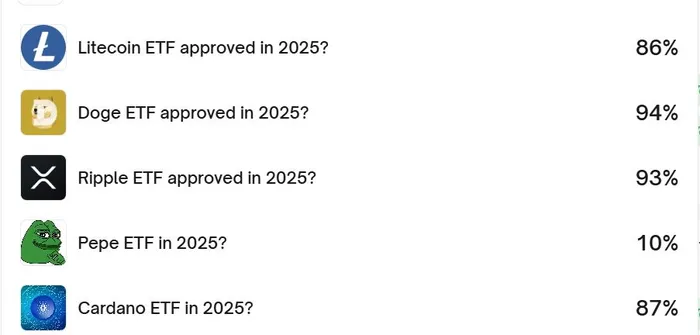
Source: polymarket.com as 0f 09/09/2025
Context: the SEC is already modernizing crypto ETP plumbing
This fast-track idea comes alongside other market-structure updates, such as the SEC’s green-light for in-kind creations/redemptions for crypto ETPs—reducing friction for authorized participants and addressing prior operational concerns. A broader policy agenda to clarify crypto market rules is also underway.
What to watch next
Comment windows & amendments: The proposals were filed in late July and amended in late August; expect iterative tweaks before any final approval.
Final rule text: Watch for the exact eligibility metrics (e.g., reference asset liquidity, market cap, data dissemination, surveillance). These will determine which tokens make the cut.
Product wave timing: If adopted, launch cadences could resemble the ~60–75 day S-1 review cycle, leading to bundled go-lives rather than one-off approvals.
Investor takeaway
If the SEC approves generic listing standards, crypto ETFs could move from sporadic, case-by-case decisions to a predictable, rules-based pipeline—a change that historically unlocked growth in the traditional ETF market. That could mean more choice and faster innovation, but only for for products that meet higher bars on liquidity, transparency, and investor protections. Until the rules are finalized, treat the “60 days” figure as an informed scenario, not a promise.

Market Radar delivers concise, daily trading ideas by tracking everything from options activity and market sentiment to high-profile political trades.
Latest Articles
Stay ahead of the market.
Get curated U.S. market news, insights and key dates delivered to your inbox.


AInvest
PRO
AInvest
PRO



Comments
No comments yet