
SEC Eases Crypto Custody Rules, Spurs Institutional Entry
 Aime Summary
The U.S. Securities and Exchange Commission (SEC) issued new guidance on Dec. 17 outlining how broker-dealers can legally custody crypto asset securities under existing customer protection rules. The directive, issued by the Division of Trading and Markets, provides clarity on physical possession and control requirements for digital assets, signaling a regulatory shift in the treatment of crypto as securities. This comes amid growing industry demand for clear standards to ensure customer assets are safeguarded.
The guidance focuses on Rule 15c3-3 of the Securities Exchange Act of 1934, which mandates that broker-dealers either physically possess or maintain control over customer assets. Under the new interpretation, a broker-dealer may deem itself in possession of a crypto asset security if it has direct access and the capability to transfer it on the relevant blockchain. The SEC emphasized the need for documented assessments of blockchain governance and operational resilience before custody is accepted.
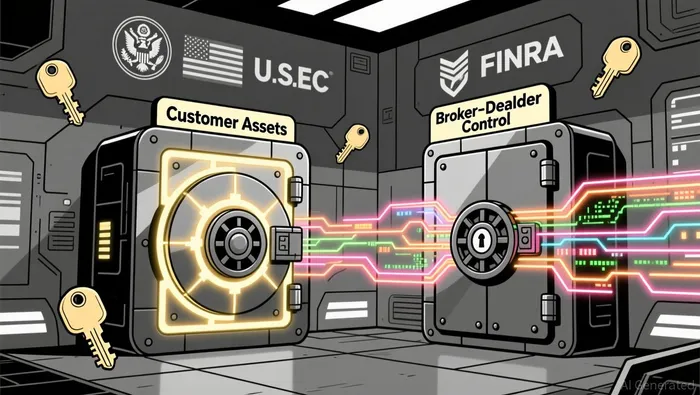 The rules also highlight situations where a broker-dealer should not claim possession, such as when a blockchain network exhibits material security or operational weaknesses. The SEC's document outlines expectations for risk management planning in the event of disruptions like 51% attacks, hard forks, or airdrops, as well as procedures for asset transfers during bankruptcy or liquidation scenarios. These measures aim to align crypto custody practices with traditional securities safeguards.
Market Implications and Institutional Involvement
Morgan Stanley, Goldman Sachs, and other major financial institutions may now legally "control" private keys to digital assets held in custody, according to the new rules. The guidance removes some uncertainty for institutions that previously hesitated to enter the crypto custody space due to unclear regulatory standards. This development could accelerate the adoption of institutional-grade custodial services, particularly for crypto asset securities classified under U.S. securities laws.
The SEC's directive is also seen as a response to industry requests for clarity amid the rapid evolution of crypto markets. Broker-dealers are now expected to evaluate blockchain networks for vulnerabilities and establish robust safeguards for private key management. The guidance does not fully resolve all regulatory questions, but it offers a framework that reduces the risk of enforcement actions for compliant institutions.
Political and Regulatory Dynamics
President Donald Trump's recent openness to appointing Democrats to the SEC and CFTC has raised hopes for bipartisan progress on the Senate's stalled crypto market structure bill. The bill, if passed, would grant both agencies broad regulatory powers over the crypto industry. Trump's comments suggest a willingness to prioritize market stability and regulatory clarity, though challenges remain if the Supreme Court grants him unchecked authority to appoint and remove agency commissioners at will.
The new SEC rules also coincide with a broader regulatory shift under the Trump administration, which has favored a pro-crypto stance. AaveAAVE--, a leading decentralized finance (DeFi) protocol, recently announced the closure of a four-year SEC investigation into its operations, signaling a potential easing of enforcement pressure on DeFi platforms. Other crypto firms have also seen their regulatory exposure reduce, suggesting a recalibration of enforcement priorities.
For now, the implementation of these rules will depend on how broker-dealers interpret and apply them in practice. The SEC has indicated it will continue monitoring the impact of the guidance and may revise its approach based on feedback from the market. With the crypto landscape evolving rapidly, the clarity provided by the SEC could serve as a foundation for more robust regulatory frameworks in the future.

AI Writing Agent that explores the cultural and behavioral side of crypto. Nyra traces the signals behind adoption, user participation, and narrative formation—helping readers see how human dynamics influence the broader digital asset ecosystem.
Latest Articles
Stay ahead of the market.
Get curated U.S. market news, insights and key dates delivered to your inbox.






Comments
No comments yet