
SEC vs. CFTC Clash Over Crypto Jurisdiction in Scott's December Push


 Aime Summary
Tim
Senator Scott, a leading voice in cryptocurrency policy, is pushing for a December vote on a legislative package aimed at clarifying the regulatory framework for digital assets in the U.S. The proposal emerges as two competing Senate drafts seek to resolve the long-standing jurisdictional clash between the Securities and Exchange Commission (SEC) and the Commodity Futures Trading Commission (CFTC) over crypto markets.
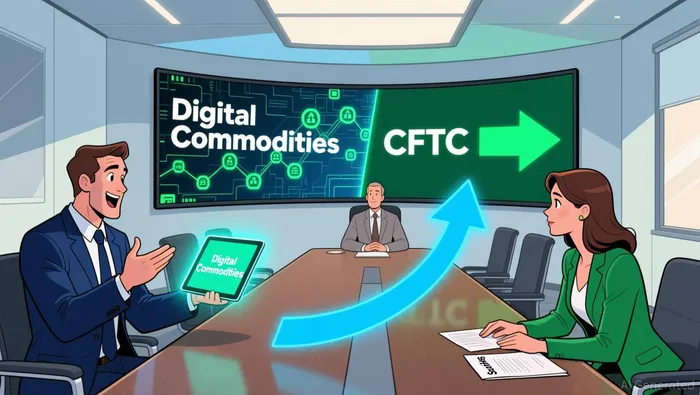
The drafts, released by the Senate Agriculture and Banking Committees, represent divergent approaches to defining the boundaries of oversight. The Agriculture Committee's plan, championed by Senators John Boozman and Cory Booker, would expand the CFTC's authority over "digital commodities" and their spot markets, aligning crypto with traditional commodities like oil and gold. This framework would require exchanges, brokers, and dealers to register with the CFTC, adopt capital and custody rules, and segregate customer assets to prevent conflicts of interest. The proposal also leaves room for joint rulemaking with the SEC for overlapping entities or dual registration, though critical issues like decentralized finance (DeFi) remain unresolved.
In contrast, the Senate Banking Committee's draft-framed as the Responsible Financial Innovation Act-grants the SEC explicit authority over "ancillary assets," a category encompassing fungible digital commodities distributed through investment contracts. This approach introduces a conditional "escape hatch" for tokens that demonstrate sufficient decentralization, allowing them to transition from securities to commodities. For instance, EthereumETH-- could eventually shed securities classification if its governance becomes sufficiently decentralized, as defined by a new certification process. The SEC would retain oversight of crypto futures and securities-linked instruments, while the CFTC would regulate spot markets for assets like BitcoinBTC-- according to the draft.
 For industry participants, the stakes are high. A CFTC-led regime for spot markets could standardize data sharing and improve market transparency, potentially boosting liquidity for ETFs, which remain under SEC jurisdiction. Conversely, the SEC's expanded authority over ancillary assets could impose stricter disclosure requirements on token issuers, particularly those with centralized governance structures. Exchanges may face dual registration burdens, requiring compliance with both agencies' rules, while DeFi platforms remain in regulatory limbo according to industry analysis.
The competing drafts highlight the complexity of regulating a rapidly evolving industry. The Agriculture plan emphasizes market stability and retail investor protections, mirroring the CFTC's existing role in commodities. Meanwhile, the Banking proposal seeks to create a dynamic framework that adapts to technological advancements, though critics argue it risks prolonging regulatory ambiguity by deferring key definitions to future rulemaking.
As Scott and other lawmakers advocate for a December vote, the outcome could reshape the U.S. crypto landscape. Clearer jurisdictional lines would reduce enforcement risks for firms, attract institutional investment, and provide much-needed clarity for developers and traders. However, the final bill's ability to balance innovation with investor protection will determine its long-term impact on the market.

Entienda rápidamente la historia y los orígenes de diferentes monedas conocidas
Latest Articles
Stay ahead of the market.
Get curated U.S. market news, insights and key dates delivered to your inbox.






Comments
No comments yet