
SEC Announces Crypto Custody Roundtable for April 2025 Russia Pushes for Domestic Stablecoins After USDT Freeze US Senators Propose Clean Cloud Act to Cut Crypto Mining Emissions Canada Approves First Spot Solana ETFs with Staking Capabilities
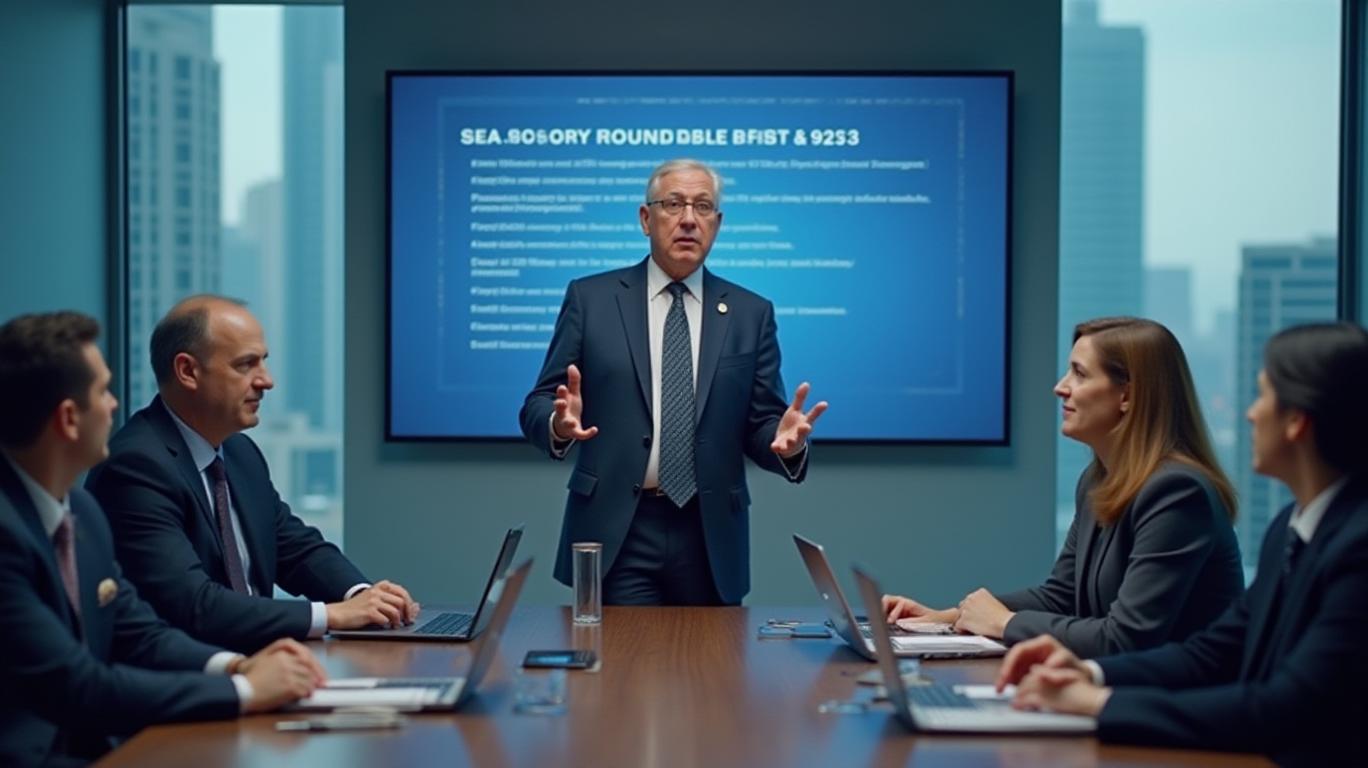
The U.S. Securities and Exchange Commission (SEC) has announced a roundtable discussion scheduled for April 25, 2025, focusing on the regulation of crypto custody. The event will address how custodians of crypto assets should be regulated under U.S. securities laws, with a particular emphasis on broker-dealers and investment advisers. The roundtable will be moderated by Zach Zweihorn, a partner at Davis Polk & Wardwell LLP, and will feature opening remarks from senior SEC officials, including Acting Chairman Mark Uyeda, Commissioner Caroline Crenshaw, and Commissioner Hester Peirce. The discussions are expected to influence future SEC guidance on custody rules, especially as crypto continues to blend with traditional finance through broker-dealer models and investment advisers.
In Russia, a senior finance official has called for the development of domestic stablecoins following a clampdown on USDT wallets linked to the country. The statement comes after U.S.-based stablecoin issuer Tether froze several wallets associated with Russian users, causing disruptions in cross-border digital payments. Osman Kabaloev, deputy head of the Financial Policy Department at Russia’s Finance Ministry, emphasized the need for Russia to build its own stablecoin infrastructure to maintain financial sovereignty and reduce external dependencies. This pivot toward sovereign digital tools could reshape the country’s approach to crypto regulation in the years ahead.
In the United States, environmental concerns surrounding cryptocurrency mining have prompted new legislative action. Senators Sheldon Whitehouse and John Fetterman introduced the “Clean Cloud Act of 2025,” a bill aimed at reducing emissions from crypto mining and data center operations. The proposed law would fine mining facilities that continue to use non-renewable energy sources beyond 2035 and require facilities consuming more than 100 kilowatts of power to report energy usage, electricity sources, and emissions data annually. If passed, the bill would alter the cost structures and operational models of crypto mining firms in the United States, pushing them toward cleaner energy sources or out of the country altogether.
In Canada, the Ontario Securities Commission (OSC) has approved North America’s first spot Solana exchange-traded funds (ETFs) that incorporate staking. These ETFs will include staking capabilities, a feature that allows investors to earn rewards by locking up their tokens to support blockchain operations. The OSCOSCV-- approved four issuers—Purpose Investments, Evolve ETFs, CI Financial, and 3iQ—to list Solana ETFs, with trading set to begin on April 16, 2025. The funds will hold physical Solana (SOL) and offer staking, making them a rare blend of passive investment and yield-generating blockchain participation. The decision may encourage additional crypto-based investment products in traditional markets and reinforces Canada’s proactive stance on crypto oversight.
These developments highlight the growing global momentum toward clearer crypto regulation. The SEC’s custody talks show traditional regulators are no longer avoiding digital assets. In Russia, token infrastructure is being treated as a matter of national security. And in Canada, the approval of Solana ETFs reflects financial normalization. Crypto’s next chapter won’t be defined by innovation alone—it will depend on who sets the rules, how they’re enforced, and how global approaches to crypto regulation evolve from here.

Comprender rápidamente la historia y el antecedente de distintas monedas muy conocidas
Latest Articles
Stay ahead of the market.
Get curated U.S. market news, insights and key dates delivered to your inbox.


AInvest
PRO
AInvest
PRO



Comments
No comments yet