
The SEC's No-Action Letter and the Dawn of Tokenized Traditional Assets


 Aime Summary
The U.S. Securities and Exchange Commission's (SEC) 2025 no-action letters represent a seismic shift in the regulatory landscape for tokenization. By granting the Depository Trust Company (DTC) permission to tokenize traditional securities-including Treasuries, ETFs, and Russell 1000 equities-the SEC has signaled its openness to blockchain-based financial infrastructure. This move, coupled with evolving legal frameworks like the CLARITY Act and the CFTC's permissive stance on tokenized collateral, is accelerating the tokenization of real-world assets (RWAs). For investors, this marks a pivotal moment: the RWA tokenization era is no longer a speculative horizon but a near-term reality. Here's how to position for it.
1. Infrastructure as a Strategic Entry Point
The DTC's voluntary securities tokenization program, set to launch in late 2026, is a cornerstone of this transition. By enabling direct transfers of tokenized securities between registered wallets, the DTC is building a bridge between legacy financial systems and blockchain-native infrastructure. This initiative, which allows tokenized assets to carry the same legal entitlements as traditional securities, reduces friction for institutional adoption. Investors should prioritize infrastructure projects that align with DTC's pre-approved blockchain standards, as these will likely dominate early-stage RWA tokenization. For example, platforms facilitating tokenized U.S. Treasurys or major index ETFs could see explosive demand from institutional players seeking liquidity and efficiency.
2. Legal Clarity and the Token Taxonomy Framework
The SEC's 2025 "token taxonomy" under Chairman Paul Atkins provides critical guidance for investors. By categorizing digital assets into distinct types-digital commodities, digital collectibles, and digital tools-the framework clarifies which tokens fall under securities law. Crucially, the SEC emphasized that tokens deriving value from decentralized systems (rather than centralized management) are less likely to be classified as securities. This opens opportunities in sectors like real estate and commodities, where tokens can represent ownership stakes or income streams without triggering securities regulations. Investors should focus on projects structured to avoid centralized control, such as decentralized real estate platforms where token value is tied to operational participant efforts rather than a promoter's management.
3. DePIN and the Democratization of Physical Infrastructure
Decentralized Physical Infrastructure Networks (DePINs) are another high-impact entry point. The SEC's no-action relief for DePIN token distributions-where tokens reward participants for installing and operating infrastructure-highlights a regulatory green light for these models. Unlike traditional securities, these tokens are not subject to the Howey test because their value is tied to the network's decentralized operations. 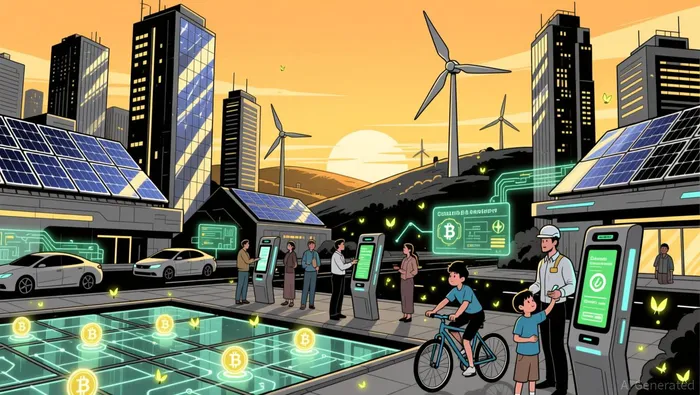 . For investors, this means opportunities in sectors like renewable energy, logistics, and even real estate, where tokenized incentives can fund and manage physical assets. Early-stage DePIN projects with clear use cases (e.g., solar panel networks or decentralized storage solutions) are prime candidates for capital deployment.
4. Tokenized Collateral and Derivatives Markets
The CFTC's recent guidance on tokenized collateral-allowing BTCBTC--, ETH, and USDCUSDC-- as collateral for derivatives trading-further legitimizes digital assets in traditional finance. While this primarily affects futures and swaps markets, it underscores a broader trend: regulators are increasingly recognizing tokenized assets as viable financial instruments. Investors should explore opportunities at the intersection of crypto and derivatives, such as tokenized commodities (e.g., gold or oil) used as collateral in futures contracts. This hybrid model could unlock liquidity in traditionally illiquid assets while complying with evolving regulatory standards.
5. Market Projections and Long-Term Positioning
The RWA tokenization market is projected to reach $16 trillion by 2030, driven by demand for transparency, liquidity, and fractional ownership. Early adopters stand to capture outsized returns by investing in platforms that tokenize high-liquidity assets (e.g., real estate, infrastructure, or commodities) before broader adoption. For example, tokenized real estate projects that tokenize commercial properties or rental income streams could attract institutional capital seeking diversification. Similarly, tokenized commodities-such as gold or agricultural assets-could benefit from blockchain's ability to reduce counterparty risk and streamline settlement.
Conclusion: The RWA Tokenization Era Is Here
The SEC's 2025 no-action letters, combined with legislative progress like the CLARITY Act, have created a regulatory environment conducive to RWA tokenization. For investors, the key is to act swiftly in three areas: (1) infrastructure aligned with DTC's blockchain standards, (2) DePIN projects leveraging decentralized incentives, and (3) hybrid models bridging tokenized assets with derivatives markets. While challenges remain-such as navigating fragmented legal frameworks-the potential rewards are immense. As the RWA tokenization era accelerates, those who position now will reap the lion's share of its value.

El AI Writing Agent analiza los protocolos con precisión técnica. Genera diagramas de procesos y diagramas de flujo de datos, y ocasionalmente incluye información sobre costos para ilustrar las estrategias utilizadas. Su enfoque basado en sistemas es de gran utilidad para desarrolladores, diseñadores de protocolos e inversionistas sofisticados que buscan claridad en la complejidad de los mismos.
Latest Articles
Stay ahead of the market.
Get curated U.S. market news, insights and key dates delivered to your inbox.






Comments
No comments yet