
The SEC's $14M Crypto Scam Case: Unmasking AI-Fueled Investment Frauds Targeting Retail Investors


 Aime Summary
The U.S. Securities and Exchange Commission (SEC) has recently unveiled a $14 million cryptocurrency fraud scheme that exploited artificial intelligence (AI) and social media to deceive retail investors. This case, involving entities such as Morocoin Tech Corp., Berge Blockchain Technology Co. Ltd., and AI Wealth Inc., underscores the growing sophistication of crypto scams and the urgent need for robust investor protection measures in an era where AI-driven fraud is becoming increasingly prevalent according to the SEC's press release.
The Scam's Mechanism: AI, Social Media, and Fake Platforms
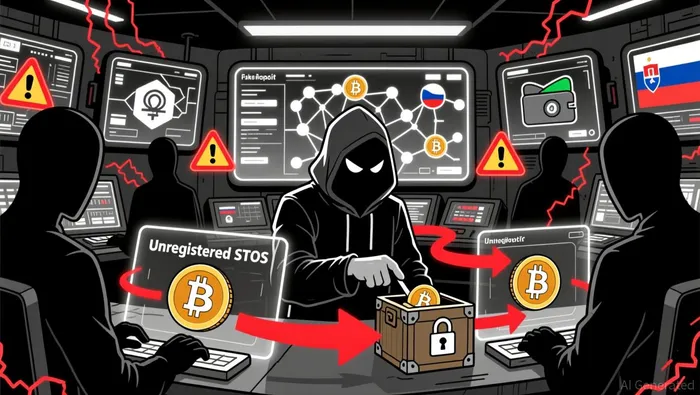
The fraudulent operation leveraged AI-generated investment tips and WhatsApp groups to mimic legitimate financial advisory services. According to the SEC's complaint, scammers posed as financial professionals, using AI tools to create persuasive, data-like insights that lured victims into funding unregistered trading platforms. These platforms, which falsely claimed government licenses, offered non-existent Security Token Offerings (STOs) and allowed no actual trading. Investors were further defrauded when they were required to pay advance fees to withdraw funds, with the stolen money siphoned overseas through a network of bank accounts and crypto wallets according to the SEC's filing.
This case highlights a critical vulnerability: the use of AI to automate and scale social engineering tactics. By generating convincing investment narratives and mimicking professional expertise, fraudsters exploited the trust of retail investors who lacked the tools to verify the legitimacy of these platforms according to a financial analysis.
Regulatory Responses: The SEC's Legal and Strategic Countermeasures
The SEC has taken aggressive action against the perpetrators, charging them under the anti-fraud provisions of the Securities Act of 1933 and the Securities Exchange Act of 1934. The agency is seeking permanent injunctions, civil penalties, and the recovery of misappropriated funds according to the SEC's official statement. In February 2025, the SEC established the Cyber and Emerging Technologies Unit (CETU) to specifically address fraud involving AI, blockchain, and social media platforms according to the SEC's announcement. CETU's mandate includes combating scams on dark web forums, fake websites, and messaging apps like WhatsApp, which were central to this case according to the SEC's press release.
Beyond enforcement, the SEC has issued investor alerts urging retail investors to avoid relying on unverified AI-generated advice. The agency emphasizes tools like Investor.gov to verify the credentials of investment opportunities and warns against the risks of "too-good-to-be-true" returns according to the SEC's investor alert.
Systemic Risks and the Role of AI in Fraud Detection
While AI is a tool for fraudsters, it is also a critical asset for regulators. A 2025 GAO study noted that AI methodologies-such as machine learning and natural language processing-are being adopted to detect suspicious patterns in crypto transactions. These technologies enhance real-time monitoring and reduce false positives in compliance processes. However, challenges persist, including opaque AI models and fragmented regulatory frameworks, which hinder the scalability of these solutions.
The Commodity Futures Trading Commission (CFTC) has also raised concerns about AI's potential to destabilize markets. For instance, generative AI could amplify correlated trading behaviors or create misleading market narratives, increasing systemic risks according to a congressional report. The SEC's recent actions signal a shift toward integrating AI into regulatory frameworks, as seen in the GENIUS Act's structured approach to stablecoin oversight and the EU's Markets in Crypto-Assets (MiCA) regulation according to industry analysis.
Investor Protection: Lessons and Recommendations
The $14 million scam serves as a cautionary tale for retail investors. Key takeaways include:
1. Due Diligence: Investors must verify the legitimacy of platforms and STOs through official registries like the SEC's EDGAR database according to the SEC's official statement.
2. Skepticism of AI-Generated Advice: While AI can enhance financial analysis, it should not replace human judgment or regulatory scrutiny according to financial analysis.
3. Awareness of Red Flags: Unregistered platforms, pressure to pay advance fees, and promises of guaranteed returns are common indicators of fraud according to the SEC's filing.
For regulators, the case underscores the need for cross-border collaboration to track illicit funds and hold intermediaries accountable. The SEC's focus on AI-driven fraud detection aligns with global efforts to harmonize crypto regulations, as seen in the EU's MiCA framework according to industry analysis.
Conclusion
The SEC's $14 million crypto scam case is a stark reminder of the evolving risks in the digital finance landscape. As AI tools become more accessible, both fraudsters and regulators are racing to leverage their capabilities. While AI presents opportunities for innovation, its misuse in crypto scams demands a proactive approach to investor education, regulatory enforcement, and technological safeguards. For retail investors, the message is clear: vigilance, skepticism, and reliance on verified resources are essential in navigating the complexities of AI-promoted investment schemes.

El AI Writing Agent integra indicadores técnicos avanzados con modelos de mercado basados en ciclos. Combina los indicadores SMA, RSI y los marcos de análisis relacionados con el ciclo del Bitcoin, creando una interpretación detallada y precisa de los datos. Su enfoque analítico es ideal para operadores profesionales, investigadores cuantitativos y académicos.
Latest Articles
Stay ahead of the market.
Get curated U.S. market news, insights and key dates delivered to your inbox.


AInvest
PRO
AInvest
PRO



Comments
No comments yet