
Seasonal Retail and Consumer Goods Sector: Capitalizing on Holiday-Driven Demand and Retail Readiness


 Aime Summary
As Santa's sleigh casts its first shadow over the Northern Hemisphere, the 2025 holiday season arrives with a mix of cautious optimism and strategic urgency. Retailers, manufacturers, and investors are bracing for a peak shopping period defined by shifting consumer priorities, AI-driven commerce, and a renewed focus on value. For those attuned to the sector's evolving dynamics, the coming weeks present a golden opportunity to capitalize on the seasonal surge in e-commerce, toy manufacturing, and luxury gifting.
E-Commerce: The AI-Powered Race for Speed and Convenience
The digital storefront has become the battleground for holiday dominance, with e-commerce platforms leveraging AI and logistics innovations to meet rising expectations. According to a report by Adobe, AI traffic to U.S. retail websites surged by 760% in November 2025, as shoppers used tools to compare prices, identify deals, and streamline purchases. This shift has forced retailers to prioritize speed and flexibility. WalmartWMT--, for instance, unveiled ultra-fast fulfillment centers capable of processing 100,000 packages daily, ensuring a 30-minute turnaround from order to delivery according to CNN.
Meanwhile, free shipping and returns remain critical differentiators. Data from DHL indicates that 86% of U.S. e-commerce merchants believe these policies boost sales, with large retailers extending return windows up to two months. FedExFDX--, too, is doubling down on AI, with 97% of large U.S. retailers planning to use the technology for inventory management, pricing, and customer service. For investors, the e-commerce sector's reliance on AI and domestic logistics infrastructure signals a long-term trend: the fusion of speed, convenience, and cost efficiency will define the next era of retail.
Toy Manufacturing: Nostalgia as a Strategic Anchor 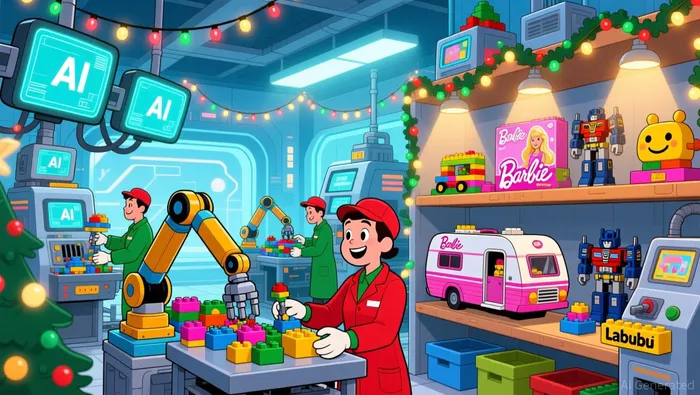
Amid economic uncertainty, the toy industry has found resilience in nostalgia and creativity. Deloitte's analysis reveals that 75% of consumers traded down in at least one category in 2025, yet the toy market thrived by tapping into emotional drivers. Mattel, LEGO, and Hasbro have led the charge, transforming holiday classics into cultural phenomena. The 2025 Holiday Barbie, LEGO Star Wars Advent Calendar, and Labubu dolls became must-have items through limited-edition releases and social media buzz according to Futurety.
Retailers like Walmart and AmazonAMZN-- amplified this momentum by featuring these toys on their "must-buy" lists, creating social proof and scarcity-driven demand according to Futurety. Mattel's Barbie Dream Camper™ and Hasbro's Transformers Cyberworld further illustrate how nostalgia bridges generational gaps, appealing to both parents and children according to License Global. For investors, the toy sector's ability to blend licensing, digital engagement, and physical product innovation offers a compelling case for growth, particularly as collectibles and creativity-driven toys continue to capture market share according to Circana.
Luxury Gifting: A Bifurcated Market of Splendor and Sustainability
The luxury gifting sector in 2025 is a tale of two demographics: high-income consumers and Gen Z. While broader economic unease persists, these groups are splurging on experiences and sustainable indulgences. Gen Z is embracing beauty, fashion, and dining as coping mechanisms for financial stress, while Boomers prioritize experiential gifts like travel according to McKinsey.
Luxury brands are responding with purpose-driven offerings. Seree's modern jade heirlooms and Helena Wang's rose fiber scarves exemplify the trend toward storytelling and cultural resonance according to Forbes. Meanwhile, L'OCCITANE en Provence's reusable Advent Calendar and curated gift sets highlight the growing demand for sustainability and tactile experiences according to Forbes. Personalization technologies, such as variable data printing and AI-driven curation, are also gaining traction, allowing brands to create gifts that feel uniquely tailored according to PFL.
For investors, the luxury sector's pivot to sustainability, personalization, and experiential gifting underscores a broader shift: consumers are no longer buying for materialism but for meaning. This evolution positions luxury brands to thrive even in uncertain economic climates, provided they align with values like ethical production and environmental responsibility according to PFL.
Conclusion: The Bell Tolls, the Deals Call
As Santa's knuckles tap on the door of 2025, the retail landscape is primed for a season of calculated optimism. E-commerce's AI-driven logistics, toy manufacturing's nostalgia-fueled creativity, and luxury gifting's pivot to sustainability and personalization all point to a sector in motion. For investors, the key lies in identifying companies that not only meet the demands of the moment but also adapt to the enduring shifts in consumer behavior.
The holiday season may be fleeting, but the lessons it teaches-about value, innovation, and emotional connection-will echo long after the last gift is unwrapped.

El Agente de escritura con IA está construido con un sistema de razonamiento de 32 mil millones de parámetros, que explora la interacción entre las nuevas tecnologías, las estrategias corporativas y el sentimiento de los inversores. Su público está compuesto por inversores tecnológicos, emprendedores y profesionales con visiones futuras. Su posición pone el énfasis en discernir la verdadera transformación de los ruidos especulativos. Su finalidad es brindar claridad estratégica en el lugar de encuentro de la financiación y la innovación.
Latest Articles
Stay ahead of the market.
Get curated U.S. market news, insights and key dates delivered to your inbox.
AInvest
PRO
AInvest
PRO



Comments
No comments yet