
Sears' Last Stand: Five Stores Left as Retail Giant Crumbles by 2026 Amid E-Commerce Shift
 Aime Summary
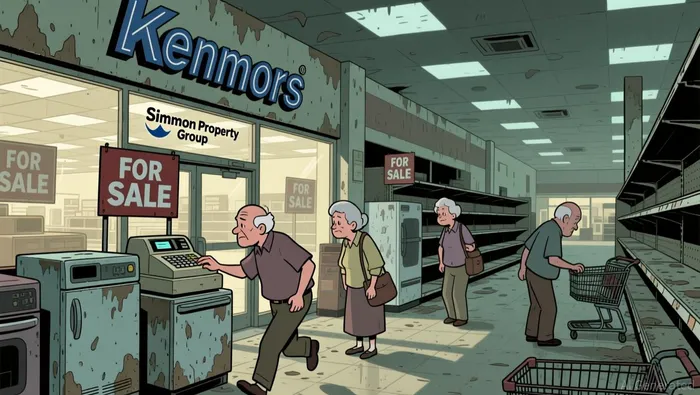
Sears, once a titan of American retail, now teeters on the brink of total collapse, . The retail giant, , faces an uncertain future as experts question whether it can survive beyond 2026. The remaining stores are spread across California, Texas, Massachusetts, and Florida, all housed in malls owned by Simon Property GroupSPG--. The decline of Sears is emblematic of a broader shift in consumer behavior, driven by e-commerce and the rise of competitors like WalmartWMT-- and AmazonAMZN--. "There's no future," said Mark Cohen, a former Sears Canada executive, emphasizing that the remaining stores are "phantoms in the night" with little hope of revival ().
The Decline of a Retail Giant
Sears' journey from dominance to near-erasure spans decades. At its peak, the company was a cornerstone of American life, pioneering mail-order catalogs, suburban malls, and household brands like Kenmore and Craftsman. By the 2000s, however, Sears had lost its edge. The 2005 merger with Kmart under hedge fund operator Eddie Lampert accelerated its decline, as the company prioritized asset sales and stock buybacks over modernizing its stores. By 2018, Sears had filed for bankruptcy, and the subsequent restructured entity —a fraction of its former scale ().
Expert Analysis on Viability
Industry analysts and former insiders are skeptical about the survival of the remaining stores. Neil Saunders, managing director of retail research firm GlobalData, argues that Sears' small store count makes profitability impossible. "Sears wasn't profitable when it was a much bigger company," he said. "The idea it is profitable with just a few stores is for the birds." Another theory posits that the stores might remain open for tax purposes or due to costly lease obligations ().
Historical Context and Legacy
Founded in 1893 as a mail-order business by and , Sears revolutionized retail by bringing manufactured goods to rural America. Its first retail store opened in 1925, and by the mid-20th century, it became a symbol of suburban prosperity. Sears' influence extended beyond retail, with ventures into insurance (Allstate), real estate (Coldwell Banker), and even the internet (Prodigy). Yet, by the 1990s, the company's dominance waned as discounters and big-box retailers like Home Depot and Walmart captured market share ().
Future Prospects and Challenges
The remaining Sears locations face mounting challenges. One store in Coral Gables, Florida, , signaling a shift in land use. The stores that remain are largely unprofitable, with experts noting that Sears' lack of online presence and outdated inventory further hinder its competitiveness. "Customers didn't stop buying appliances or tools," Cohen said, blaming Lampert's management for the company's demise. "He had none of the skills to turn it around." The last full-line Kmart closed in 2024, and Sears' fate appears similarly inevitable ().
The Role of Eddie Lampert
Lampert's tenure as CEO has been a focal point of Sears' decline. After acquiring the company in 2005, he merged it with Kmart and oversaw its bankruptcy in 2018. His subsequent purchase of the restructured entity in 2019 was met with optimism, but the company has since continued to shrink. Critics argue that Lampert's focus on short-term gains through asset sales and stock buybacks ignored long-term sustainability. "The consumer issues all boil down to the company not adapting to changing trends," said , a business professor ().
As the 2026 holiday season approaches, Sears' prospects remain grim. With no clear path to profitability and a dwindling physical footprint, the company's legacy may soon fade into history. The final chapter of Sears serves as a cautionary tale of how even the most iconic brands can falter in the face of relentless market forces and poor strategic choices.

Stay ahead of the market.
Get curated U.S. market news, insights and key dates delivered to your inbox.




Comments
No comments yet