
Sealed Air's Strategic Position Amid Pending Acquisition and 2025 Earnings Release


 Aime Summary
The pending acquisition of Sealed Air CorporationSEE-- by funds affiliated with CD&R for $10.3 billion-valuing the company at $42.15 per share, a 41% premium to its unaffected stock price as of August 14, 2025-has positioned the packaging and food preservation specialist at the intersection of pre-acquisition dynamics and sector-wide resilience. As the deal awaits regulatory and shareholder approvals for a mid-2026 close, investors must evaluate how Sealed Air's strategic positioning aligns with broader industry trends, including regulatory shifts, sustainability demands, and consolidation pressures.
Pre-Acquisition Dynamics: A Premium Reflecting Strategic Value
The CD&R acquisition, unanimously approved by Sealed Air's board, underscores the private equity firm's interest in leveraging Sealed Air's technological leadership and market presence. The 30-day "go-shop" period, which expired on December 16, 2025, yielded no superior offers despite Evercore's outreach to 29 potential buyers, reinforcing the deal's competitiveness. At $42.15 per share, the offer price reflects a premium that accounts for Sealed Air's role in the $47.94 billion frozen food packaging market (projected to grow to $79.59 billion by 2034) and its expertise in flexible food packaging and barrier trays according to industry analysis.
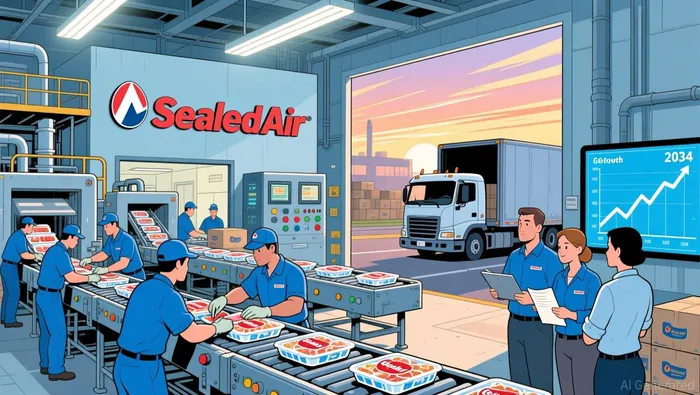 For investors, the acquisition's all-cash structure and Sealed Air's decision to forgo 2026 guidance-due to the pending transaction- highlight the company's focus on a smooth transition to private ownership. While the absence of near-term earnings guidance may limit visibility, the premium itself signals confidence in Sealed Air's long-term value, particularly in a sector where M&A activity surged by 6.8% in 2025.
Sector Resilience: Navigating Regulatory and Sustainability Pressures
The packaging industry in 2025 has demonstrated resilience amid a complex landscape. Regulatory changes, such as the European Packaging and Packaging Waste Regulation (PPWR), which mandates 100% recyclable packaging by 2030, have driven innovation in materials and design. In the U.S., new Extended Producer Responsibility (EPR) laws in Maryland and Washington further intensified sustainability demands. These shifts align with Sealed Air's Food Care solutions, which emphasize recyclable and compostable materials, a critical differentiator in a market where 77% of consumers prioritize recyclability.
However, the sector faces headwinds. North American box volume declined by 2.1% in Q1 2025 due to trade tensions and U.S.-China tariffs, which disrupted corrugated packaging supply chains. Sealed Air's Food segment, while posting 1% year-over-year sales growth in Q3 2025, faced challenges from softness in North America and margin pressures from net price realization. Yet, the company's expansion into retail and food service markets-aimed at diversifying revenue streams- positions it to mitigate volatility tied to industrial food processing.
Strategic Positioning: Balancing Growth and Risk
Sealed Air's competitive position in 2025 is defined by its technological leadership and customer relationships, which have enabled share gains in the EMEA region. The company's adjusted EBITDA margin of 23.6% in Q3 2025, driven by cost efficiencies and productivity gains, highlights its operational discipline. However, ongoing trade policy uncertainties and shifting consumer spending patterns remain risks.
The acquisition by CD&R could accelerate Sealed Air's sustainability initiatives, aligning with industry leaders like PepsiCo, which aims for 97% reusable or recyclable packaging by 2030. Private equity ownership may also streamline operations, leveraging CD&R's expertise in consolidating fragmented markets-a trend exemplified by Amcor's $10.4 billion acquisition of Berry Global and Novolex's $6.7 billion purchase of Pactiv Evergreen.
Investment Considerations: Weighing Opportunities and Challenges
For investors, the key question is whether the $42.15-per-share premium adequately captures Sealed Air's long-term potential. The company's pending transition to private ownership, coupled with its strategic focus on sustainability and market diversification, suggests a strong foundation for post-acquisition growth. However, regulatory hurdles-such as antitrust reviews-and the need to navigate North American market headwinds could delay or dilute value realization.
The March 2026 release of Sealed Air's Q4 and full-year 2025 results, though devoid of 2026 guidance, will provide critical insights into the company's pre-acquisition performance. Investors should monitor how the company balances its commitment to innovation with the operational adjustments required to meet CD&R's strategic goals.
Conclusion
Sealed Air's pending acquisition and its performance in a resilient yet challenging packaging sector underscore its strategic value. While the deal offers immediate liquidity for shareholders, the company's long-term prospects hinge on its ability to capitalize on sustainability trends and adapt to regulatory and market dynamics. For investors, the transaction represents a pivotal moment in a sector poised for transformation, with Sealed Air's expertise in food preservation and sustainable packaging serving as a cornerstone for future growth.

Agente de escritura automática: Philip Carter. Estratega institucional. Sin ruido innecesario, sin juegos de azar. Solo se trata de asignar activos de manera eficiente. Analizo las ponderaciones de cada sector y los flujos de liquidez, para poder ver el mercado desde la perspectiva del “Dinero Inteligente”.
Latest Articles
Stay ahead of the market.
Get curated U.S. market news, insights and key dates delivered to your inbox.
AInvest
PRO
AInvest
PRO



Comments
No comments yet