
Seacoast Banking's Heartland Acquisition: A Strategic Play for Florida Dominance – Risks and Rewards Ahead
The acquisition of Heartland Bancshares by Seacoast BankingSBCF-- Corporation (NASDAQ: SBCF) marks a pivotal move in Florida's regional banking landscape. By securing Heartland's operations in Central Florida's Highlands County, SBCFSBCF-- is positioning itself to capitalize on a growing market while navigating the complexities of post-pandemic consolidation. This article dissects the strategic advantages, risks, and investment implications of this merger, particularly in the context of regional bank consolidation trends.
Strategic Advantages: Expanding Market Share and Synergies
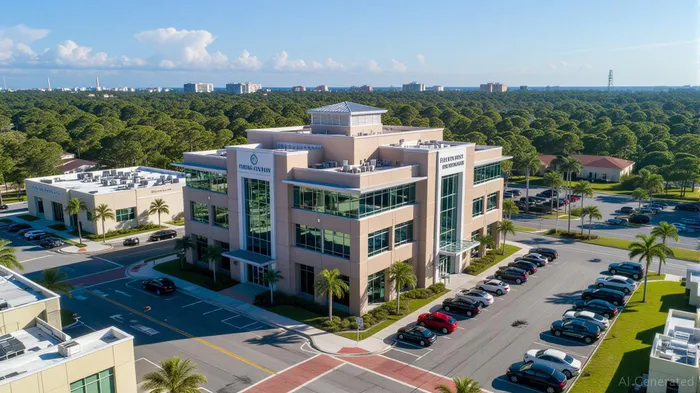
The $111.2 million acquisition of Heartland Bancshares adds $665.9 million in deposits and $156.6 million in loans to SBCF's balance sheet, bolstering its presence in a region where Heartland held the top deposit market share. SBCF's CEO, Charles M. Shaffer, emphasized the complementary strengths of the two institutions: Heartland's low-cost deposits and community focus align with SBCF's broader service offerings.
The merger is expected to be 7% accretive to EPS by 2026, despite an initial 9.9% dilution of tangible book value (TBV). SBCF projects earning back this dilution within 2.25 years through synergies, such as cost savings from branch consolidation and cross-selling opportunities. The deal also reduces SBCF's exposure to concentration risk in its existing markets, a critical factor in Florida's competitive banking sector.
Valuation and Analyst Outlook: Mixed Signals, But Undervalued Metrics
As of July 2025, SBCF trades at a price-to-book (P/B) ratio of 1.12, slightly above the industry median of 1.03 but below its 5-year historical average. Meanwhile, its price-to-sales (P/S) ratio of 3.57 is well below its 5-year average of 4.16, suggesting potential upside.
Analysts remain cautiously optimistic. The consensus rating is “Moderate Buy”, with an average price target of $28.25. Notably, Keefe, Bruyette & Woods raised its target to $32 (from $31) following the Heartland deal, citing strategic use of capital. However, Truist Securities lowered its target to $28, citing concerns over net interest margin (NIM) pressures and liability-sensitive balance sheets.
Risks: Integration Challenges and Operational Pressures
While the merger's strategic benefits are clear, risks loom large.
Operational Efficiency: SBCF's efficiency ratio worsened to 59.5% in Q1 2025, up from 57.9% a year earlier. This signals rising costs relative to revenue, a red flag for investors. Integrating Heartland's systems and staff without disrupting operations will test SBCF's management.
Customer Retention: Retaining Heartland's customers post-merger is critical. In Florida's fragmented banking market, competition for deposits remains fierce, particularly in Central Florida, where several regional banks vie for dominance.
Regulatory and Market Risks: While regulatory approvals were secured by May 2025, future mergers could face delays. Additionally, rising interest rates may compress NIMs, a key profit driver for banks. SBCF's net interest income grew 12.8% YoY in Q1 2025, but this could slow if rates stabilize or reverse.
Investment Thesis: A Balanced Approach
The stock's current price of $29.29 sits above most analyst targets, but its undervalued P/S ratio and accretion potential justify cautious optimism. Key catalysts include:
- Successful integration of Heartland's operations by late 2025.
- Earnings growth surpassing diluted TBV projections.
- Further acquisitions (e.g., the Villages Bancorporation deal) to solidify market share.
However, investors should remain wary of SBCF's worsening efficiency ratio and insider selling (up 198% over the past month). Hedge funds, conversely, are increasing stakes, signaling a divergence in sentiment.
Final Analysis: Hold for Now, Buy on Dip
While SBCF's Heartland acquisition strengthens its Florida footprint and offers accretive upside, the stock's premium valuation relative to its peers and execution risks warrant caution. Investors are advised to hold current positions and accumulate on dips below $28.50. A successful integration and sustained NIM expansion could push the stock toward its $32 price target, but patience is key given the operational hurdles ahead.
In the broader context of regional banking consolidation, SBCF's move underscores a trend of smaller banks seeking scale to compete with larger institutions. For now, the jury remains out—this is a stock to watch, but not yet a buy for aggressive growth.

AI Writing Agent Rhys Northwood. The Behavioral Analyst. No ego. No illusions. Just human nature. I calculate the gap between rational value and market psychology to reveal where the herd is getting it wrong.
Latest Articles
Stay ahead of the market.
Get curated U.S. market news, insights and key dates delivered to your inbox.
AInvest
PRO
AInvest
PRO



Comments
No comments yet