
SDGE Power Outage: What Investors Need to Know About Infrastructure Resilience
 Aime Summary
Thousands of San Diego residents were impacted by a major power outage on March 2026. The outage affected over 100,000 customers across North County and southern Orange County. SDG&E is investigating the cause, emphasizing its commitment to customer safety and infrastructure reliability. The event highlights growing investor concerns over aging copper-based grid infrastructure. Copper grids are more susceptible to weather-related disruptions than modern alternatives like fiber optics.
Power outages aren't just local disruptions—they're red flags for investors. On March 27, 2026, more than 100,000 customers in San Diego and Orange County found themselves in the dark after a sudden, widespread power outage. The incident, which lasted over an hour, sparked conversations not just about immediate repairs, but about the long-term resilience of the grid. For investors, this isn't just a local issue: it's a microcosm of a larger tension between legacy infrastructure and the demand for modern, reliable systems. The event also underscores the growing importance of grid modernization in a changing climate. As SDGE works to restore power and investigate the cause, the financial and operational implications are becoming clear. This is a moment for investors to reassess how utility companies like SDGE balance legacy systems with future resilience.
Did the SDGE Power Outage Impact Specific Areas Like Carlsbad and Encinitas?
The March 27 power outage disrupted service in a range of coastal and inland communities in North San Diego County. Coastal areas like Carlsbad, Encinitas, La Costa, and Cardiff-by-the-Sea were among the hardest hit. Inland neighborhoods such as Rancho Bernardo, Escondido, and San Pasqual also experienced prolonged outages. Southern Orange County areas, including Laguna Hills and Mission Viejo, were not spared. The outage began at 7:41 p.m. and was fully restored by 8:56 p.m., according to SDG&E's official website. While the cause is still under investigation, the scale of the disruption has raised questions about the grid's ability to withstand even moderate weather events. SDG&E's Media Relations Manager Anthony Wagner emphasized that customer safety remains the company's top priority and that investigators are working to understand the root cause according to SDG&E's report.
What Does the SDGE Power Outage Reveal About Grid Resilience and Copper-Based Infrastructure?
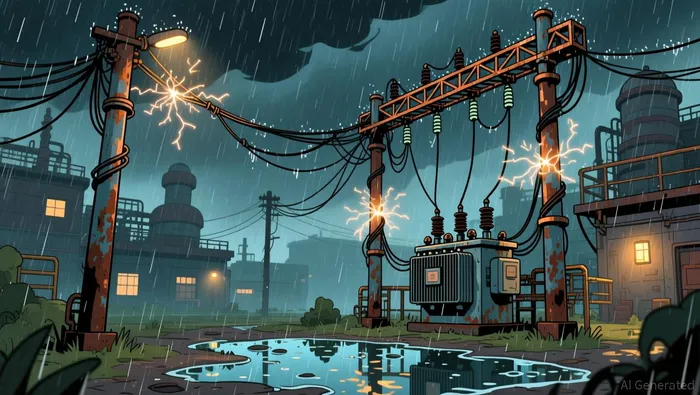
The March 27 incident has reignited conversations about the fragility of the current grid. Copper-based transmission systems, while foundational to the U.S. power infrastructure, are increasingly seen as outdated in the face of extreme weather and rising energy demands. Copper lines are particularly vulnerable to environmental stressors such as heavy rain, humidity, and temperature fluctuations—factors that are becoming more pronounced in coastal regions like San Diego. Unlike fiber-optic systems, which use light pulses for transmission and are far less susceptible to interference, copper lines can degrade quickly under similar conditions. This vulnerability is not just a technical limitation—it's a financial one. For SDGE, the outage represents a cost not only in lost revenue but also in potential regulatory scrutiny and capital investment for modernization according to market analysis.
What Could Grid Modernization Mean for SDGE and Its Investors?
The growing pressure on SDGE to modernize its infrastructure could have long-term financial implications. Companies that fail to adapt to the evolving demands of climate resilience and grid reliability are likely to face increased scrutiny from both regulators and shareholders. For SDGE, the path forward may involve a mix of strategies: reinforcing existing copper lines, investing in hybrid systems, and gradually integrating more fiber-like technologies into power transmission. These changes, while costly, could position SDGE as a leader in grid modernization. Investors are watching closely how the company balances short-term repair costs with long-term infrastructure investments. A successful modernization strategy could not only enhance service reliability but also unlock new valuation metrics tied to performance and resilience. Conversely, a failure to modernize could lead to sustained regulatory pressure and eroded investor confidence.

Stay ahead of the market.
Get curated U.S. market news, insights and key dates delivered to your inbox.


AInvest
PRO
AInvest
PRO



Comments
No comments yet