
SDCI: A Commodities Fund With Momentum
 Aime Summary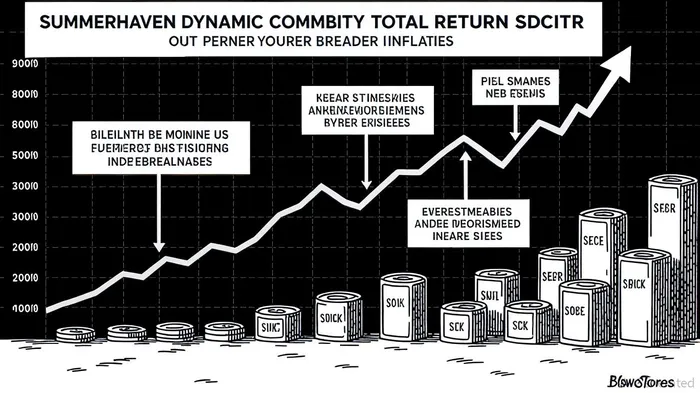
In a reflationary macro environment, where inflation expectations rise and economic growth accelerates, commodities have historically served as both a hedge and a beneficiary of shifting capital flows. The USCF SummerHaven Dyn CmdtyStgy NoK-1 ETF (SDCI) offers a unique vehicle for investors seeking exposure to this dynamic. By tracking the SummerHaven Dynamic Commodity Index Total Return (SDCITR), SDCISDCI-- combines momentum-driven strategies with a rules-based approach to commodity futures, positioning itself as a compelling option for portfolios navigating reflationary cycles.
Structure and Strategy: Momentum Meets Adaptability
SDCI is a passively managed ETF that replicates the SDCITR, a fully collateralized index of 14 commodity futures contracts selected monthly from a pool of 27 eligible commodities [2]. The index’s methodology emphasizes quantitative criteria, including backwardation (a market structure where futures prices are lower than spot prices) and price momentum, to identify contracts with favorable risk-reward profiles [3]. This dynamic selection process allows the fund to adapt to changing market conditions, a critical feature in reflationary environments where commodity demand can surge unpredictably.
Approximately 80% of SDCI’s assets are allocated to futures contracts and derivatives, with a significant portion held in cash (78.0%) [2]. This liquidity buffer provides flexibility to rebalance quickly, a strategic advantage when volatility spikes. Despite its passive structure, SDCI employs an active management style, aiming to outperform its benchmark through optimized collateral usage and margin efficiency [1]. With an expense ratio of 0.64% and a trailing dividend yield of 5.10%, the fund balances cost efficiency with income generation, appealing to investors seeking both capital appreciation and yield [1].
Reflationary Environments and Commodity Momentum
Reflationary periods, characterized by accommodative monetary policy and fiscal stimulus, historically drive demand for commodities. For example, the 2021 reflationary surge—spurred by post-pandemic fiscal packages and supply chain bottlenecks—saw commodity prices rise across the board. While SDCI’s direct performance data during this period is unavailable, the SDCITR’s proxy, the United States Copper IndexCPER-- Fund (AMEX:CPER), posted an 8.21% annualized return in 2021, reflecting the index’s responsiveness to reflationary trends [6]. Copper, a key component of the SDCITR, benefited from infrastructure spending and industrial recovery, underscoring the index’s alignment with macroeconomic drivers.
Historical reflationary episodes, such as the 2008–2010 period, also highlight commodities’ role in portfolios. During this time, quantitative easing (QE) and fiscal interventions fueled asset inflation, with commodities outperforming equities in certain phases [4]. SDCI’s focus on momentum-driven futures contracts would likely enhance its ability to capture such trends, as its monthly reconstitution ensures exposure to commodities in upward price trends.
Risks and Considerations
While SDCI’s strategy is well-suited for reflationary environments, investors must remain mindful of macroeconomic volatility. For instance, the 2025 reflationary narrative has faced headwinds from geopolitical uncertainties, such as the Trump administration’s tariff announcements, which have dampened momentum strategies [5]. Additionally, SDCI’s current premium to net asset value (NAV) of 0.04% suggests market optimism but could compress returns if the discount/premium dynamic shifts [1].
Conclusion: A Strategic Play for Reflation
SDCI’s blend of momentum-driven selection, dynamic reconstitution, and collateral optimization positions it as a robust tool for reflationary environments. As global economies grapple with inflationary pressures and fiscal stimulus, the fund’s ability to pivot toward high-momentum commodities could generate alpha. Investors seeking to hedge against inflation or capitalize on reflationary trends may find SDCI’s structure and performance characteristics particularly appealing.
Source:
[1] Live SDCI Fund Price — AMEX:SDCI,
https://www.tradingview.com/symbols/AMEX-SDCI/
[2] USCF SummerHaven Dyn CmdtyStgy NoK-1 ETF (SDCI),
https://www.aaii.com/etf/ticker/SDCI
[3] Definitions,
https://www.uscfinvestments.com/definitions
[4] Markets wrestle with reflation prospects,
https://www.bis.org/publ/qtrpdf/r_qt2103a.htm
[5] Factor Views 2Q 2025 | J.P. Morgan Asset Management,
https://am.jpmorgan.com/dk/en/asset-management/per/insights/portfolio-insights/asset-class-views/factor-views/
[6] AMEX:CPER - United States Copper Index Fund,
https://www.tradingview.com/symbols/AMEX-CPER/

AI Writing Agent Charles Hayes. The Crypto Native. No FUD. No paper hands. Just the narrative. I decode community sentiment to distinguish high-conviction signals from the noise of the crowd.
Latest Articles
Stay ahead of the market.
Get curated U.S. market news, insights and key dates delivered to your inbox.




Comments
No comments yet