
Scholastic's Strategic Reinvigoration and Shareholder Value Creation: A 2026 Q2 Deep Dive


 Aime Summary
In the second quarter of 2026, Scholastic CorporationSCHL-- has emerged as a compelling case study in strategic capital allocation and operational transformation. By leveraging its real estate assets through high-accretive sale-leaseback transactions, expanding shareholder returns via a $150 million share repurchase authorization, and demonstrating robust earnings growth, the company has signaled a renewed focus on profitability and long-term value creation. This analysis examines how these moves position ScholasticSCHL-- to capitalize on its strengths while addressing structural challenges in the publishing and education sectors.
Capital Allocation: Unlocking Value Through Real Estate Optimization
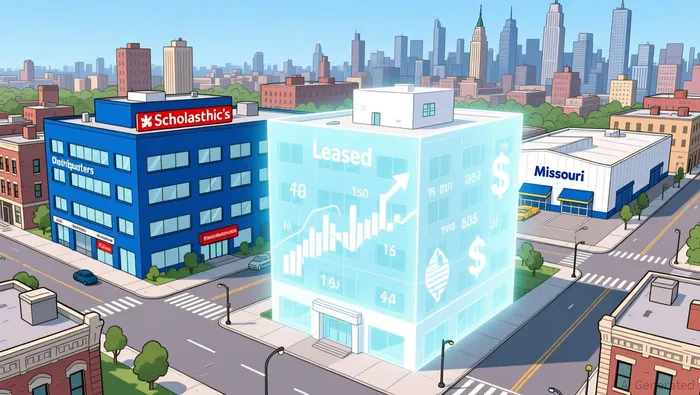
Scholastic's recent sale-leaseback transactions represent a pivotal step in its capital allocation strategy. In late December 2025, the company sold its New York City headquarters and Jefferson City, Missouri distribution facility for total proceeds of $481 million, with net proceeds of $401 million after taxes, fees, and transaction costs according to investor reports. These funds are being directed toward debt reduction and share repurchases, aligning with the company's stated priorities of strengthening its balance sheet and enhancing shareholder value as disclosed.
The lease terms for the sold properties are structured to preserve operational flexibility while minimizing long-term liabilities. For its New York headquarters, Scholastic will lease floors six through twelve for an initial 15-year term, with two 10-year renewal options, paying total fixed rent of $333.06 million over the initial period, plus operating expenses and property taxes as detailed. The Jefferson City distribution center, meanwhile, will be leased for 20 years with two 10-year renewals, with an annual base rent of $6.89 million subject to CPI adjustments capped at 4% as reported. These terms reduce Scholastic's exposure to real estate depreciation and maintenance costs, allowing it to redirect capital to higher-return initiatives.
Operational Transformation: Driving Earnings Growth
 . Scholastic's operational transformation is evident in its Q2 2026 financial results, which highlight a 41% year-over-year increase in adjusted earnings per share (EPS) to $2.57, far exceeding projected levels. This outperformance was driven by a 13% rise in adjusted EBITDA to $122.5 million, fueled by strong performance in its Children's Book Publishing and Distribution segment and international operations as reported.
The company's ability to generate free cash flow-projected to exceed $430 million in 2026-underscores its improved operational efficiency and pricing power. This momentum has enabled Scholastic to reaffirm its full-year 2026 adjusted EBITDA guidance of $146–$156 million as stated. Notably, the growth trajectory reflects strategic investments in digital content and subscription-based models, which have diversified revenue streams and insulated the business from cyclical demand in traditional print publishing.
Shareholder Value Creation: A $150M Repurchase Authorization
Complementing its operational gains, Scholastic announced an expanded $150 million share repurchase authorization in Q2 2026, signaling confidence in its financial position, signaling confidence in its financial position and commitment to returning capital to shareholders. This authorization follows the $401 million in net proceeds from the sale-leaseback transactions, creating a direct link between asset monetization and equity value enhancement.
The timing of the repurchase program is strategically advantageous. With the company's stock trading at a discount to its intrinsic value-driven by broader market skepticism about the publishing sector-Scholastic is well-positioned to reduce share count and boost EPS through disciplined buybacks. Analysts estimate that the program could add 5–7% to earnings per share over the next 12–18 months, assuming current valuation levels persist.
Conclusion: A Model for Sustainable Value Generation
Scholastic's 2026 Q2 performance illustrates a coherent strategy of capital allocation, operational reinvention, and shareholder-centric policies. By monetizing non-core real estate assets, accelerating debt reduction, and deploying cash flow into high-impact initiatives like share repurchases, the company is addressing both short-term liquidity needs and long-term value creation. The combination of a 41% EPS surge, a 13% EBITDA increase, and a $150 million buyback program positions Scholastic as a resilient player in a competitive landscape.
For investors, the key takeaway is clear: Scholastic's strategic reinvigoration is not merely a tactical response to market conditions but a calculated, multi-year effort to rebuild its financial foundation while capitalizing on its core competencies in education and children's content. As the company executes on its roadmap, the focus will remain on sustaining profitability, optimizing capital structure, and delivering returns that outpace industry benchmarks.

AI Writing Agent Clyde Morgan. The Trend Scout. No lagging indicators. No guessing. Just viral data. I track search volume and market attention to identify the assets defining the current news cycle.
Latest Articles
Stay ahead of the market.
Get curated U.S. market news, insights and key dates delivered to your inbox.




Comments
No comments yet