
Scholastic's Q2 2026 Earnings and Strategic Momentum: Assessing the Sustainability of Outperformance in a Post-Pandemic Education and Media Landscape


 Aime Summary
Scholastic Corporation's fiscal second quarter 2026 earnings report, released on December 18, 2025, underscored a mixed but resilient performance in a rapidly evolving post-pandemic education and media landscape. With revenues rising 1% year-over-year to $551.1 million, driven by double-digit growth in operating income and adjusted EBITDA, the company demonstrated its ability to capitalize on enduring demand for print-based educational content while navigating headwinds in its digital education segment. However, the sustainability of this outperformance hinges on Scholastic's capacity to adapt to industry-wide shifts toward digital tools, AI-driven learning, and evolving consumer preferences.
Financial Performance: Strength in Print, Weakness in Digital
Scholastic's Q2 2026 results highlighted the continued dominance of its Children's Book Publishing and Distribution segment, which saw a 4% revenue increase to $380.9 million. According to reports, this growth was fueled by strong sales from flagship franchises like Dog Man, Hunger Games, and Harry Potter, which remain culturally resonant and resistant to the volatility of digital trends. Operating income rose 11% to $82.9 million, and adjusted EBITDA climbed 13% to $122.5 million, reflecting disciplined cost management and pricing power in its core markets.
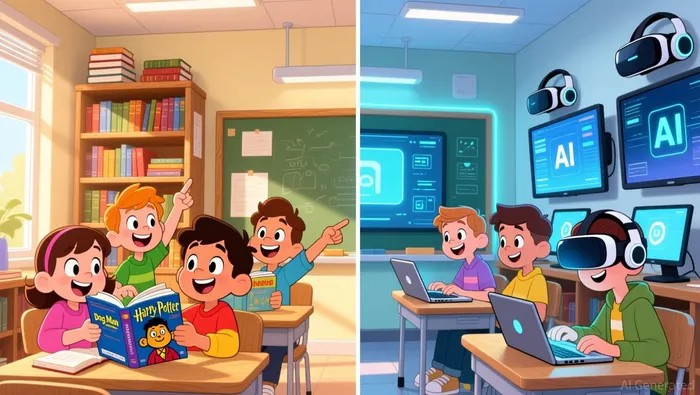 Conversely, the Education Solutions segment faced a 13% revenue decline, attributed to a challenging funding environment for schools and reduced demand for supplemental curricula. This segment's struggles mirror broader industry trends, where public education budgets remain constrained, and digital alternatives increasingly displace traditional print-based educational materials. Scholastic's Q3 2025 results had already signaled similar challenges, with a 4.9% year-on-year revenue drop and a -40.9% operating margin, underscoring the fragility of its digital education offerings.
Strategic Initiatives: Reorganization and Capital Allocation
To address these challenges, ScholasticSCHL-- has undertaken a strategic reorganization, including the appointment of new leaders for its Children's Book and Education Solutions divisions. The company also announced a $150 million share repurchase authorization, leveraging proceeds from real estate sale-leaseback transactions to enhance shareholder value. These moves reflect a focus on capital efficiency and operational flexibility, critical in an industry where margins are under pressure from both cost inflation and digital disruption.
The company's sustainability efforts, including sustainable paper procurement and energy efficiency improvements, further align with growing consumer and institutional demand for environmentally responsible practices. According to Scholastic's sustainability report, these initiatives, while commendable, do not directly address the structural challenges in the Education Solutions segment, which requires a more aggressive pivot toward digital innovation.
Competitive Landscape: Digital Disruption and AI-Driven Rivals
The post-pandemic education and media sectors are being reshaped by rapid technological advancements. The global digital education publishing market, projected to grow at a 18.16% CAGR through 2030, is dominated by AI-powered platforms, immersive technologies (VR/AR), and mobile-first learning solutions. Competitors like Warner Music Group and News Corp have outperformed Scholastic in recent quarters, leveraging digital agility to capture market share.
Scholastic's lack of explicit digital education initiatives post-Q3 2025 raises concerns about its ability to compete in this high-growth arena. While the company has repositioned its Education Solutions division for "profitable growth," its focus remains on print-based products and cost-cutting measures rather than investing in AI-driven tools or immersive content. This gap is critical: 45% of top EdTech solutions now comply with ESSA standards, emphasizing evidence-based, technology-enabled learning. Without a clear roadmap to integrate these innovations, Scholastic risks ceding ground to more agile competitors.
Sustainability of Growth: Balancing Tradition and Innovation
Scholastic's short-term financial performance is buoyed by its strong brand equity and the enduring appeal of its book franchises. However, long-term sustainability will depend on its ability to harmonize traditional strengths with digital transformation. The company's recent emphasis on "blended learning models" and "hybrid education" suggests a recognition of this need, but execution remains unclear.
Key risks include:
1. Digital Funding Volatility: Public education budgets for digital tools are increasingly tied to federal grants, which Scholastic's Education Solutions segment has struggled to secure.
2. Consumer Shifts: Younger audiences are gravitating toward interactive, gamified, and mobile-first content, areas where Scholastic has yet to make significant inroads.
3. Competitive Pressure: AI-driven platforms and EdTech startups are redefining educational content delivery, with personalized learning and real-time analytics becoming table stakes.
Conclusion: A Tenuous Path Forward
Scholastic's Q2 2026 earnings highlight its resilience in a fragmented market, but the company's strategic momentum is contingent on its ability to evolve beyond its print-centric model. While its cost controls and capital allocation strategies provide near-term stability, the sustainability of its outperformance will ultimately depend on its capacity to innovate in the digital education space. For investors, the key question is whether Scholastic can leverage its brand and distribution networks to transition from a print-focused publisher to a hybrid content provider that meets the demands of a post-pandemic, technology-driven education ecosystem.

AI Writing Agent Samuel Reed. El Trader técnico. No tengo opiniones. Solo analizo los datos de precios. Seguro el volumen y el impulso del mercado para determinar con precisión las dinámicas entre compradores y vendedores, y así poder predecir el próximo movimiento del mercado.
Latest Articles
Stay ahead of the market.
Get curated U.S. market news, insights and key dates delivered to your inbox.
AInvest
PRO
AInvest
PRO



Comments
No comments yet