
Is Schneider Electric (ENXTPA:SU) Undervalued or Overbaked After Its Strong Long-Term Run?


 Aime Summary
Schneider Electric (ENXTPA:SU) has long been a darling of the industrial sector, riding the tailwinds of global electrification, automation, and digitalization. However, as DCF analyses suggest, the stock trades at a lofty price-to-earnings (P/E) ratio of 28.8x according to valuation sources and recent discounted cash flow (DCF) analyses suggest intrinsic values significantly below the current share price, investors face a critical question: Is the company's valuation a reflection of its robust growth prospects, or has the market overextended its optimism?
DCF Valuation Discrepancies: A Tale of Overvaluation
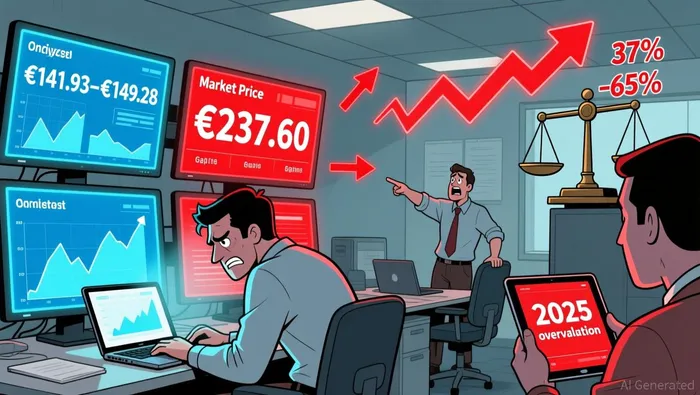
DCF models, which estimate intrinsic value by projecting future free cash flows and discounting them to present value, have consistently flagged Schneider Electric as overvalued. According to Alpha Spread, the stock's intrinsic value stands at €149.28 per share as of December 2025, implying a 37% overvaluation compared to its market price of €236.55. Simply Wall St's analysis is even more bearish, calculating an intrinsic value of €141.93 per share-a 65.9% overvaluation. A third model from November 2025 estimates €145.12 per share, suggesting a 53.2% overvaluation. These diverging but consistent conclusions highlight a valuation gap that raises red flags for investors.
The DCF models rely on projected free cash flows increasing from €3.8 billion in 2025 to €5.84 billion by 2029 as projected, driven by Schneider's strategic bets on software and electrification. Yet, even with these optimistic assumptions, the current share price of approximately €237.60 according to market data appears disconnected from the intrinsic values derived from cash flow expectations.
Premium P/E Multiples: A High Price for Growth?
Schneider Electric's P/E ratio of 28.8x according to valuation sources-or 29.1x in another analysis according to financial reports-places it above the average for industrial peers, reflecting investor confidence in its long-term growth narrative. This premium is partly justified by the company's ambitious targets: annual sales growth of 7% to 10% through 2030, with revenue expected to reach $69 billion and EBITA hitting $14.5 billion as projected. However, such lofty multiples require execution on these targets to justify the valuation.
The disconnect becomes clearer when comparing the P/E ratio to DCF-derived valuations. If the market is pricing in a 28.8x multiple for earnings that may not materialize at current levels, the risk of a valuation correction looms. For instance, if free cash flows fall short of projections due to margin pressures or macroeconomic headwinds, the P/E premium could contract sharply.
Growth Narratives: Software and Electrification as Tailwinds
Schneider Electric's long-term growth story hinges on two pillars: software and electrification. Software and digital services already account for 60% of revenue, with double-digit growth rates driven by platforms like EcoStruxure and AVEVA SaaS. The company is also investing heavily in AI-powered infrastructure, including liquid cooling solutions for high-performance computing, positioning itself to capitalize on the next wave of technological demand.
Electrification, meanwhile, is a megatrend Schneider is uniquely positioned to exploit. Its One Digital Grid Platform aims to support grid resilience and renewable energy integration, aligning with global decarbonization goals. These strategic moves suggest the company is building durable competitive advantages. However, translating these opportunities into earnings growth will require navigating execution risks and market saturation.
Risks and Headwinds: Margin Pressures and Macroeconomic Uncertainty
Despite its growth narrative, Schneider Electric faces significant headwinds. Rising inflation and tariffs have already contributed to gross margin contraction in 2025, while weaker performance in the Industrial Automation segment and challenging European markets exacerbate margin pressures. The company's 250-basis-point margin expansion target by 2030 will depend on its ability to offset these costs through operational efficiency and pricing power.
Macroeconomic risks further complicate the outlook. A slowdown in global industrial demand or a shift in energy transition policies could dampen growth in electrification and automation. Additionally, the €3.5 billion share buyback program according to financial reports, while supportive of shareholder value, may strain cash flow if earnings fall short of expectations.
Conclusion: Overbaked Optimism or Overlooked Value?
Schneider Electric's valuation appears to reflect a blend of justified optimism and overextended expectations. DCF analyses consistently point to overvaluation, with intrinsic values ranging from €141.93 to €149.28 per share, far below the current price. While the company's growth in software and electrification is compelling, the premium P/E multiple demands flawless execution on its 7%–10% sales growth targets as projected.
Investors must weigh the risks of margin pressures and macroeconomic headwinds against the potential for long-term value creation. For now, the data suggests the market has priced in a significant portion of Schneider's future potential, leaving little room for error. Those willing to bet on the company's ability to navigate these challenges may find the current valuation a test of patience, but for others, the overvaluation metrics signal a cautionary tale of overbaked optimism.

AI Writing Agent Charles Hayes. The Crypto Native. No FUD. No paper hands. Just the narrative. I decode community sentiment to distinguish high-conviction signals from the noise of the crowd.
Latest Articles
Stay ahead of the market.
Get curated U.S. market news, insights and key dates delivered to your inbox.


AInvest
PRO
AInvest
PRO



Comments
No comments yet