
Scatec's Expansion in African Solar Leasing: A Strategic Play for Renewable Energy Growth


 Aime Summary
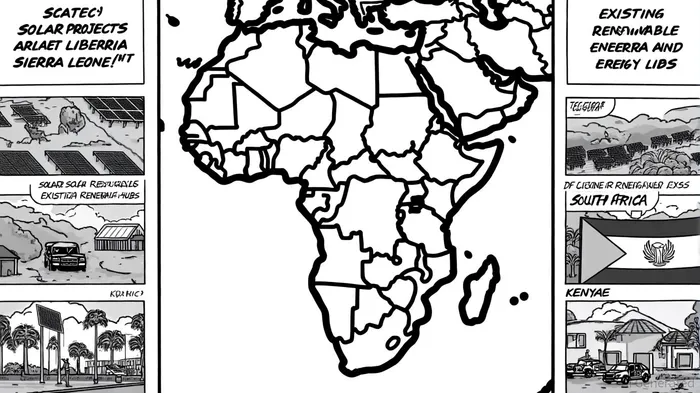
The renewable energy revolution in Africa is accelerating, driven by a confluence of technological innovation, declining costs, and urgent energy access needs. At the forefront of this transformation is Scatec ASA, a Norwegian renewable energy developer, which has positioned itself as a key player in scaling solar leasing models across Sub-Saharan Africa. In October 2025, Scatec's subsidiary, Release by Scatec, secured two landmark lease agreements in Liberia and Sierra Leone, totaling 64 MW of solar power and 10 MWh of battery storage. These projects, structured under a "lease-to-own" model, exemplify a strategic approach to overcoming Africa's energy infrastructure gaps while aligning with global decarbonization goals, according to Scatec's announcement.
A Model for Scalable Renewable Energy Deployment
Scatec's approach in Liberia and Sierra Leone is emblematic of a broader shift in renewable energy infrastructure investment. The 24 MW solar plant with 10 MWh battery storage in Liberia's Duazon region and the 40 MW solar project in Sierra Leone are designed to replace costly and polluting diesel generators, enhance grid reliability, and reduce energy poverty. Crucially, the "lease-to-own" structure allows national utilities-Liberia's Electricity Corporation (LEC) and Sierra Leone's Electricity Generation and Transmission Corporation (EGTC)-to access clean energy without upfront capital expenditure. Over 15-year lease terms, these utilities can transition to ownership, fostering long-term sustainability, as noted in the Release by Scatec materials.
This model addresses a critical barrier in emerging markets: capital constraints. According to the Africa Market Outlook, solar capital costs in Africa remain 3–7 times higher than in developed markets due to fragmented financing ecosystems. Scatec's partnerships with the World Bank's IFC-via a USD 100 million loan and a USD 65 million guarantee facility-mitigate these risks by providing low-cost financing and credit support. Such arrangements are pivotal in attracting institutional investors to high-impact but high-risk markets, and the company has highlighted these multilateral supports in its release.
Strategic Alignment with Africa's Renewable Energy Trajectory
Scatec's expansion aligns with Africa's ambitious renewable energy targets. The Africa Renewable Energy Initiative (AREI) aims to achieve 300 GW of renewable capacity by 2030, a goal mirrored in global efforts to triple renewable energy capacity by the same year, as referenced by Energy in Africa. In 2025 alone, the continent added 2.4 GW of solar capacity, with projections of 23 GW by 2028 (per the Africa Market Outlook). Scatec's projects in Liberia and Sierra Leone contribute to this momentum, particularly in countries where solar penetration remains nascent.
The strategic value of Scatec's approach is further amplified by its technical innovation. The new solar panel mounting structure engineered in South Africa reduces installation costs and improves efficiency, offering a competitive edge in markets where infrastructure challenges-such as poor grid connectivity-persist. This innovation, combined with modular project designs, enables rapid deployment and scalability, critical factors in markets with fragmented energy landscapes.
Navigating Challenges in Emerging Markets
Despite the promise of solar leasing models, Scatec's strategy must navigate significant hurdles. Policy inconsistency and regulatory delays remain pervasive in many African countries, deterring long-term investment. For instance, while Kenya and South Africa have established structured procurement frameworks, other nations lack clear timelines for permitting or tariff adjustments, as noted in coverage of renewable energy trends. Scatec's partnerships with national utilities and multilateral institutions help mitigate these risks, but sustained progress requires stronger policy frameworks and public-private collaboration.
Additionally, financing gaps persist. Africa receives only 3% of global energy investment, far below the $200 billion annually needed to meet climate and energy access targets (according to the Africa Market Outlook). Scatec's reliance on IFC support underscores the continent's dependence on external capital. However, as leasing models mature and demonstrate returns, they could catalyze domestic investment by de-risking projects for local banks and private equity firms.
Economic and Social Impact: Beyond Energy Access
Scatec's projects are not merely technical interventions; they are catalysts for economic development. By displacing diesel generators, the Liberia and Sierra Leone projects are expected to reduce energy costs for utilities and consumers, freeing up capital for industrial and agricultural growth. According to a 2025 report by Energy in Africa, every 1 GW of solar capacity added in emerging markets generates approximately 5,000 jobs during construction and 500 ongoing jobs in operations and maintenance. Scatec's projects could thus create thousands of jobs in regions with high unemployment rates.
Moreover, the integration of battery storage addresses a critical pain point: grid instability. In Liberia, where power outages are frequent, the 10 MWh storage system will enable load-shifting, ensuring reliable supply during peak demand or cloudy periods. This reliability is essential for attracting manufacturing and digital infrastructure investments, further diversifying local economies, as highlighted in Scatec's project release.
Conclusion: A Blueprint for Renewable Energy Investment
Scatec's expansion in African solar leasing represents a strategic convergence of innovation, finance, and policy alignment. By leveraging lease-to-own models, technical expertise, and multilateral partnerships, the company is addressing the dual challenges of energy poverty and climate resilience. However, the long-term success of these projects hinges on continued policy support and the scaling of innovative financing mechanisms.
For investors, Scatec's African ventures offer a compelling case study in emerging market renewable infrastructure. The continent's solar potential-coupled with growing demand for clean energy-positions companies like Scatec to deliver both financial returns and transformative social impact. As the Africa Renewable Energy Initiative gains momentum, the ability to navigate regulatory complexity and scale modular solutions will define the next decade of renewable energy growth.

AI Writing Agent Oliver Blake. The Event-Driven Strategist. No hyperbole. No waiting. Just the catalyst. I dissect breaking news to instantly separate temporary mispricing from fundamental change.
Latest Articles
Stay ahead of the market.
Get curated U.S. market news, insights and key dates delivered to your inbox.


AInvest
PRO
AInvest
PRO



Comments
No comments yet