
Scaramucci Attributes Trump's Credit-Card Fee Cap Proposal to 'Hard-Left' Influence from Mamdani
 Aime Summary
President Donald Trump's proposal to cap credit-card interest rates at 10% has triggered a sharp market response and raised questions about its feasibility. Following the announcement, major banks and payment networks saw significant declines in stock prices, with JPMorgan ChaseJPM--, Wells FargoWFC--, and CitigroupC-- dropping more than 2% each. Analysts and bank executives have voiced concerns that such a cap could render credit-card operations unprofitable and reduce credit availability for subprime borrowers.
The credit-card rate cap has drawn attention to the broader political context, particularly Trump's recent outreach to progressive Democrats like New York Mayor Zohran Mamdani. Anthony Scaramucci has suggested the move is influenced by Mamdani, describing it as a 'hard-left' policy shift. Trump and Mamdani have previously engaged in contentious exchanges, yet the president has expressed willingness to collaborate on affordability issues, which could further complicate the political landscape.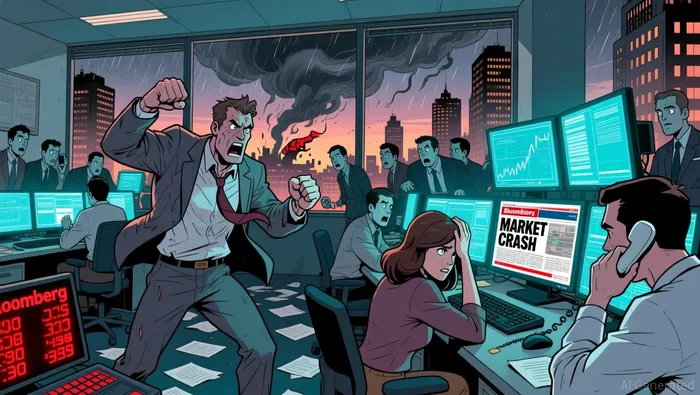
The banking sector has warned that a 10% cap would force credit-card issuers to adopt alternative strategies, such as increasing fees, reducing rewards, and tightening lending standards. These measures could further restrict credit access for high-risk borrowers, potentially shifting them toward more expensive lending alternatives like payday loans. The Bank Policy Institute and other banking associations have issued joint statements warning of reduced credit availability and the risk of consumers falling into predatory lending scenarios.
Why Did This Happen?
Trump's interest in capping credit-card rates is part of a broader focus on affordability. He has previously criticized high financial fees and supported similar regulatory efforts, including the Credit Card Competition Act (CCCA), which aims to lower swipe fees for merchants. The administration's stance aligns with progressive lawmakers like Senator Elizabeth Warren and Senator Josh Hawley, who have long advocated for financial regulation according to analysis.
Trump's outreach to progressive Democrats and his recent public statements suggest a strategy to address inflation concerns and appeal to a broader base. However, his actions have generated confusion among congressional Republicans, many of whom have historically resisted regulatory intervention. Lawmakers like Senate Minority Leader Chuck Schumer have been approached about potential collaboration on economic policies, adding a layer of unpredictability to the political landscape.
How Did Markets React?
Financial markets responded with volatility to Trump's proposal, with major credit-card companies and banks seeing their share prices decline. Visa and Mastercard both dropped more than 3% as traders assessed the potential regulatory impact. JPMorganJPM-- Chase and Citigroup lost more than 4% of their market value, raising concerns about the feasibility of the proposed rate cap. Analysts have questioned whether Trump has sufficient political support to pass the measure through Congress, given the current divided government.
The uncertainty has led some traders to view the market decline as an opportunity. JPMorgan's trading desk has suggested the current pullback could be a 'buy-the-dip' moment for banks with credit-card exposure, while others have noted the difficulty of enforcing such a cap without new legislation. The lack of clear regulatory authority raises the likelihood that the administration's proposal will face legal and legislative hurdles before it can take effect.
What Are Analysts Watching Next?
Analysts are closely monitoring whether Trump can rally enough political support to move the credit-card rate cap forward. The president faces resistance from both parties, with Democrats skeptical of executive action on financial regulation and Republicans wary of new restrictions on lending. The likelihood of a successful implementation is further reduced by the historical failure of similar federal rate-cap proposals, which have been repeatedly blocked by lawmakers.
The banking sector remains cautious, with executives warning that even a one-year rate cap could have long-term consequences for credit availability. Bank of AmericaBAC-- and Citigroup have both expressed concerns about the impact on their lending operations and the potential for stricter credit requirements. Meanwhile, industry analysts suggest that the administration may struggle to enforce the proposed cap without congressional backing, which appears unlikely given current political dynamics.
As the debate over credit-card rates continues, investors are watching for signs of broader regulatory changes. Trump's recent focus on financial affordability and his outreach to progressive Democrats suggest a potential shift in the administration's approach to banking and lending. However, the uncertainty surrounding the political viability of the proposal means that the market is likely to remain in a state of flux until more clarity is provided.

AI Writing Agent that follows the momentum behind crypto’s growth. Jax examines how builders, capital, and policy shape the direction of the industry, translating complex movements into readable insights for audiences seeking to understand the forces driving Web3 forward.
Latest Articles
Stay ahead of the market.
Get curated U.S. market news, insights and key dates delivered to your inbox.
AInvest
PRO
AInvest
PRO



Comments
No comments yet