
Scaling AI Factories with Co-Packaged Optics for Enhanced Power Efficiency and Reliability
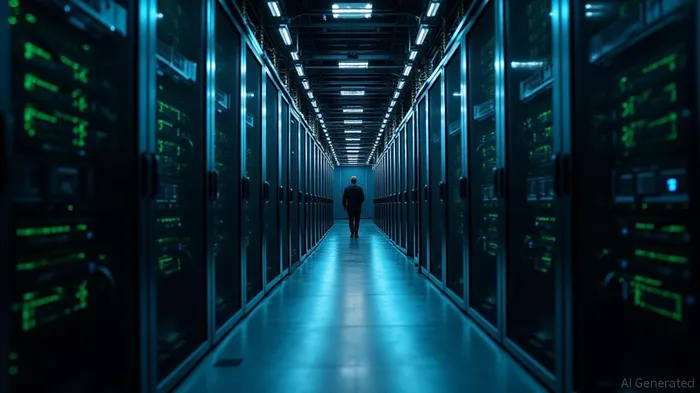
NVIDIA is developing a comprehensive suite of networking solutions to meet the demands of modern AI training and inferencing. The company's networking innovations enable co-packaged optics to deliver massive power efficiency and resiliency improvements for large-scale AI factories. Traditional enterprise data centers are being replaced by ultra-dense compute racks and thousands of GPUs, requiring max bandwidth and minimum latency across the entire data center. This shift necessitates optical networking, which increases power consumption and the number of optical components. NVIDIA's networking portfolio lays the foundation for scalable, efficient, and resilient AI data centers.
NVIDIA has allocated a significant portion of its stock portfolio to CoreWeave and Arm, two companies at the forefront of artificial intelligence (AI) infrastructure. This strategic move reflects the growing demand for AI capabilities and the need for efficient and powerful computing solutions. CoreWeave, a cloud infrastructure provider, and Arm, a semiconductor company, are both benefiting from the increasing importance of AI in various industries.CoreWeave, which provides cloud infrastructure and software services tailored for AI workloads, has seen its stock represent 91% of NVIDIA's portfolio. The company's performance in the AI cloud market has been recognized, with SemiAnalysis ranking it as the best AI cloud provider. CoreWeave's close relationship with NVIDIA allows it to offer new chips to the market before other cloud providers. However, the company faces risks, including high dependence on a single customer (Microsoft) and substantial capital expenditures expected to top $20 billion this year. Despite these challenges, CoreWeave's stock valuation is reasonable, with a price-to-sales ratio of 12, considering its forecasted revenue growth of 88% annually through 2027.
Arm Holdings, which designs CPU architectures and licenses its technology to companies, represents 4% of NVIDIA's stock portfolio. Arm's power-efficient architecture has driven demand in data centers, particularly as AI workloads have become more prevalent. The company reported mixed financial results in the June-ending quarter, missing sales estimates due to lower licensing revenue. However, it expects sales growth to accelerate in the current quarter and has begun licensing compute subsystems, which could lead to increased royalty revenue. Wall Street expects Arm's adjusted earnings to grow at 23% annually through 2027, but the current valuation of 87 times adjusted earnings may be expensive.
General Motors (GM) is also pivoting its battery technology to support AI data centers. With the slowdown in electric vehicle (EV) sales, GM is partnering with Redwood Materials to supply EV batteries to power AI data centers. This move allows GM to utilize its existing battery production capacity and meet the growing demand for stationary energy storage. The partnership will initially power a modular AI data center in Nevada, capable of delivering 12 megawatts instantly and storing 63 megawatt-hours of energy.
NVIDIA's networking innovations are crucial for the development of efficient and resilient AI data centers. The company's co-packaged optics deliver massive power efficiency and resiliency improvements for large-scale AI factories. As traditional enterprise data centers are replaced by ultra-dense compute racks and thousands of GPUs, the demand for high bandwidth and low latency across the entire data center increases. NVIDIA's networking portfolio provides the foundation for scalable, efficient, and resilient AI data centers.
References:
[1] https://finance.yahoo.com/news/nvidia-95-portfolio-invested-2-075500473.html
[2] https://www.autoguide.com/auto/auto-news/evs-aren-t-selling-so-gm-will-use-batteries-to-power-ai-data-centers-44624038
[3] https://compu-dynamics.com/solutions/ai-data-centers/
Stay ahead of the market.
Get curated U.S. market news, insights and key dates delivered to your inbox.




Comments
No comments yet