
SBI and Chainlink Tackle Compliance Hurdles in Global Token Transfers


 Aime Summary
SBI Digital Markets, the digital asset arm of Japan's SBI Group, has solidified its partnership with ChainlinkLINK--, selecting the blockchain infrastructure provider as its exclusive cross-chain solutions partner to power tokenized assets. With $78.65 billion in assets under management, SBI aims to leverage Chainlink's Cross-Chain Interoperability Protocol (CCIP) to enable seamless, compliant, and private transfers of tokenized real-world assets across both public and private blockchains, according to a BeInCrypto report. This collaboration marks a pivotal step in SBI's broader strategy to develop a comprehensive digital asset ecosystem for issuance, settlement, and secondary trading, as noted in a Crypto.news report.
The integration of CCIP will allow SBI Digital Markets to implement private transactions that shield sensitive data such as trade volumes and counterparty details from public view, as the BeInCrypto report explained. 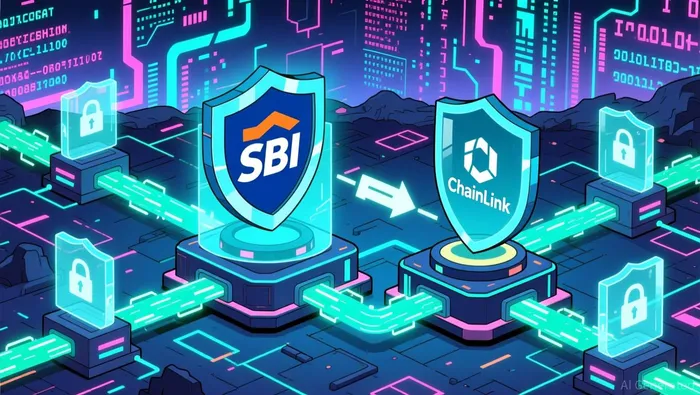 Additionally, SBI is exploring Chainlink's Automated Compliance Engine (ACE), a policy-based system designed to enforce regulatory rules across jurisdictions, ensuring tokenized assets comply with local laws during cross-border transfers, the Crypto.news coverage added. This aligns with SBI's goal of creating a global hub for regulated digital assets, bridging custodians, asset managers, and blockchain-native liquidity venues, according to a Coinpedia article.
The partnership builds on prior collaborations between SBI and Chainlink, including their work under Singapore's Project Guardian alongside UBS Asset Management. That initiative demonstrated how blockchain automation could streamline fund management processes traditionally handled by administrators and transfer agents, as previously reported by BeInCrypto. Now, the companies are extending their efforts to institutional-grade tokenization, reflecting growing demand for regulated digital securities in Asia and Europe.
Chainlink's recent infrastructure upgrades further bolster the partnership. In November 2025, the network launched the Chainlink Runtime Environment (CRE), an orchestration layer connecting its core services, including Oracles, CCIP, and Proof of Reserve. Meanwhile, Chainlink Confidential Compute, set to debut in 2026, will introduce privacy-preserving capabilities for enterprise use cases, the BeInCrypto coverage noted. These advancements position Chainlink as a critical infrastructure provider for global financial institutions, including SWIFT, Mastercard, and Euroclear.
The collaboration underscores a broader trend of traditional finance (TradFi) institutions embracing blockchain to enhance efficiency and compliance. SBI's move follows similar initiatives by other firms, such as HashKey Group and Kraken's partnership to accelerate institutional adoption of tokenized assets. By combining HashKey's regulatory expertise with Kraken's global liquidity network, the duo aims to unlock the trillion-dollar potential of tokenized real-world assets (RWAs) and foster interoperability between digital and traditional systems, according to a FinanceFeeds report.
For SBI and Chainlink, the partnership represents a strategic alignment with the evolving needs of institutional markets. As tokenization gains traction, the ability to ensure compliance, privacy, and interoperability across chains becomes paramount. With Chainlink's infrastructure and SBI's market reach, the collaboration could catalyze wider adoption of tokenized assets, particularly in regions where regulatory frameworks are maturing.

Stay ahead of the market.
Get curated U.S. market news, insights and key dates delivered to your inbox.






Comments
No comments yet