
SBF's Appeal Challenges Judge's Impartiality in High-Stakes FTX Case


 Aime Summary
Sam Bankman-Fried, the disgraced founder of collapsed crypto exchange FTX, is set to argue for a retrial before the U.S. Second Circuit Court of Appeals on November 4, 2025, nearly two years after his conviction on seven counts of fraud and conspiracy, according to a CoinDesk report. His defense team contends that District Judge Lewis Kaplan, who presided over the trial, exhibited bias and conducted the proceedings in a manner that prejudiced the former CEO. The appeal represents a pivotal moment in Bankman-Fried's legal battle, as appellate courts typically uphold convictions unless significant procedural errors are demonstrated, according to CryptoNews.
The defense's core argument centers on Kaplan's alleged impartiality. In its September 2024 filing, the team asserted that the judge "made little pretense of objectivity" and "repeatedly made biting comments undermining the defense," including during a pre-trial "dry run" where Bankman-Fried's testimony was reviewed without jury input, the filing states. 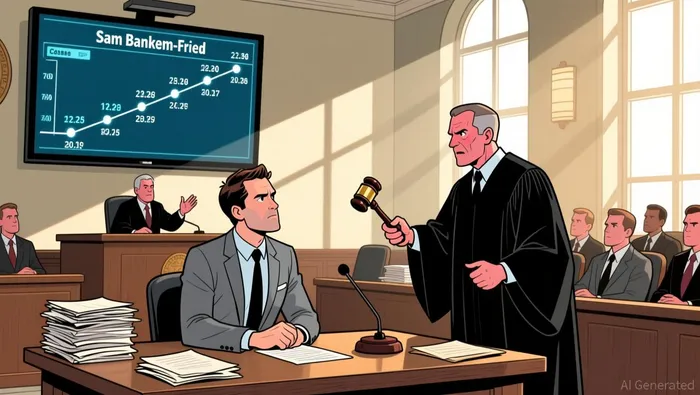 Legal experts, such as Etherealize General Counsel Steve Yelderman, note that appellate courts are "reluctant to disturb" trial conduct unless fairness is fundamentally compromised, observers have said. However, defense attorneys argue that Kaplan's pre-trial scrutiny of their arguments and the judge's public skepticism during proceedings created an unfair atmosphere.
Prosecutors, led by former SEC Chair Jay Clayton, have countered that the trial was conducted lawfully and that Bankman-Fried's 25-year sentence reflects justice for a scheme that defrauded investors of $8 billion, the prosecution argues. The U.S. Department of Justice (DOJ) emphasized in its brief that judges routinely assess evidence admissibility, a standard practice not warranting reversal, the DOJ wrote.
Complicating Bankman-Fried's case is a recent Supreme Court ruling in Kousisis et. al. v. United States (2025), which clarified that fraud convictions do not require proof of intent to cause economic harm. The decision undermines Bankman-Fried's defense that he believed FTX would ultimately repay investors, as the court now holds that intent to misappropriate funds alone suffices for a fraud conviction, legal analysts have noted.
Legal observers suggest the appeal's outcome may hinge on the appellate judges' questions during the hearing. Howard Fischer of Moses Singer, a veteran appellate attorney, explained that a lengthy hearing with probing inquiries could signal judicial concern, whereas a brief proceeding might indicate confidence in the original verdict. Martin Auerbach of Withers noted that if the panel questions whether the trial court allowed "one-sided evidence presentation," it could hint at potential reversal.
Even if the appeal fails, Bankman-Fried's team is reportedly pursuing a presidential pardon, though prospects remain dim. While Donald Trump has pardoned crypto figures like Binance's Changpeng Zhao, Bankman-Fried's political ties to Democrats—including a $6 million donation to Joe Biden's 2020 campaign—could deter Trump from intervening, commentators have observed. Additionally, the FTX founder's recent X post claiming "FTX was never insolvent" has yet to sway public opinion or legal precedent.
The appeal hearing underscores the high stakes for Bankman-Fried, whose legal fate remains intertwined with the legacy of FTX's collapse. As the Second Circuit weighs whether to grant a new trial, the case continues to test the boundaries of judicial fairness in complex financial crimes.

Stay ahead of the market.
Get curated U.S. market news, insights and key dates delivered to your inbox.






Comments
No comments yet