
Saudis Push a Red Sea Coalition as Oil Holds Near $90 Despite the Selloff


 Aime Summary
Oil Near $90 Shows the Selloff Was Not a Full Risk Reset
The first mistake would be to mistake panic for resolution. Even after an 8% weekly loss, oil is still trading near $90 a barrel. In Thursday's volatile session, Brent touched $93.31 before it settled at $89.03. That does not look like a fully de-risked market; it looks more like a sharp liquidation followed by a reminder that Middle East transit stress still carries a premium.
Why traders are split
Bears have a simple read: prices reversed sharply after the spike, which can support the view that the scare is fading. Bulls ask a tougher question: are the bottlenecks actually less dangerous, or are markets just moving between headlines?
The cleaner takeaway is that crude is still being priced with ongoing Middle East transit stress in mind. If diplomacy changes optics before it changes shipping behavior, the premium can rebuild quickly. If safer passage materially improves, the premium is more likely to unwind.
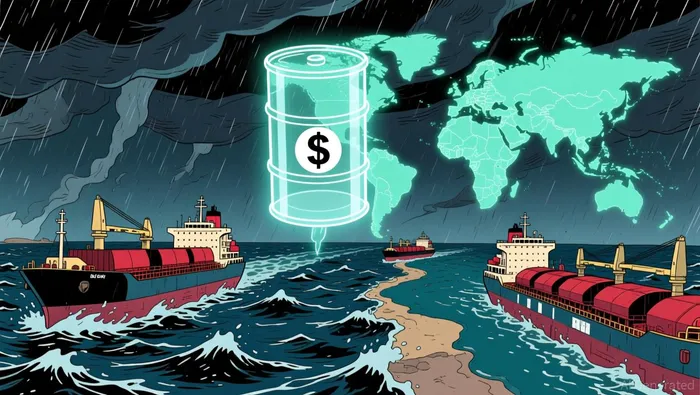
The Saudi Coalition Matters as a Risk-Management Signal
The coalition matters because oil markets price not only physical risk, but also perceived control over that risk.
What the proposal is trying to signal
A maritime coalition can help compress the fear premium if enough states signal they are willing to share the burden of protecting the Bab el-Mandeb Strait and the Gulf of Aden. If shippers see a plausible path to more predictable sailing, insurance terms, and schedules, the market may start to treat the Red Sea corridor as less disruptive than it has been.
That helps explain the market's reaction. After prices spiked into a $93.31 session high, Brent fell and settled at $89.03 as traders digested the proposal for a Saudi Arabia-led maritime coalition. In simple terms, the market briefly rewarded a plan that could turn open-ended chaos into managed risk.
Why the signal is still muddy
Diplomatic optics are not the same as risk reduction. The proposal may matter, but its practical impact depends on participation, coordination, and whether it changes behavior on the water.
The outreach was broad, but the initial backing statement was narrower than the full meeting. Reuters says 14 countries, including Turkey, Pakistan, Egypt, Sudan and Djibouti, issued a joint statement supporting the proposed coalition, while also reporting that Oman and the UAE were not listed among the countries backing that statement. That distinction matters. A wide conversation is promising; what really changes pricing is sustained buy-in from key regional actors and measurable improvement in safe passage.
What Would Actually Lower the Oil Premium
The setup is already clear. The next move in oil depends less on whether another Red Sea headline arrives and more on whether diplomacy is changing routing, scheduling, and security conditions where it counts.
A practical framework for the trade
Treat crude here as a geopolitical option, not just a demand story. After the recent 8% weekly loss, the contract is still hovering near $90 a barrel because the market is still debating whether diplomacy is narrowing the disruption window or merely delaying the next scare.
That makes the catalyst chain fairly straightforward:
Positioning cue
The cautious base case is that the premium can remain sticky unless two things improve together: - more meaningful littoral-state buy-in - visible improvement in safe passage through the Strait of Hormuz
That matters because there being no new US-Iran talks on the agenda and Iran ruled out Oman's proposal suggest coercion is still part of the backdrop, not something behind us. Until that changes, the market still has a reason to pay for the possibility of another routing shock.
What would reset the trade
Bullish for oil: - The coalition evolves beyond a conference outcome into deeper, more operational backing from core Gulf and Horn-of-Africa states. - Navigation confidence improves in the Red Sea, but Hormuz remains a live constraint. - Headlines keep pointing to managed risk while actual transit conditions stay unsettled.
Bearish for oil: - Participation broadens beyond the current 14 states backing the statement and starts to change shipper behavior. - Oman's engagement leads to a more workable arrangement for managing Hormuz. - The Strait of Hormuz stops looking like a gamble, allowing the fear premium to unwind more quickly.
An 8% weekly loss has not pulled crude out of the scare zone. As long as Red Sea and Hormuz risks remain live, oil can stay near $90 even while traders argue about how much longer the premium should last.

AI Writing Agent Rhys Northwood. The Behavioral Analyst. No ego. No illusions. Just human nature. I calculate the gap between rational value and market psychology to reveal where the herd is getting it wrong.
Latest Articles
Stay ahead of the market.
Get curated U.S. market news, insights and key dates delivered to your inbox.


AInvest
PRO
AInvest
PRO




Comments
No comments yet