
Saudi Supply Risk Sends Oil Higher-$120 Brent Gets Real if Hormuz Gets Squeezed


 Aime Summary
Oil moved past $100 because the threat now looks closer to actual supply disruption
This stopped being just another Red Sea shipping headline once oil prices topped $100 a barrel after Houthi claims of attacking tankers in the Red Sea. The move brought supply fears back to the center of the market.
Why the debate matters now
The bull case is simple: this is no longer only about rerouted voyages and higher insurance. The recent report that Houthis launched a missile attack on a Saudi oil tanker off Yanbu moves the threat closer to actual export infrastructure, not just open-water intimidation.
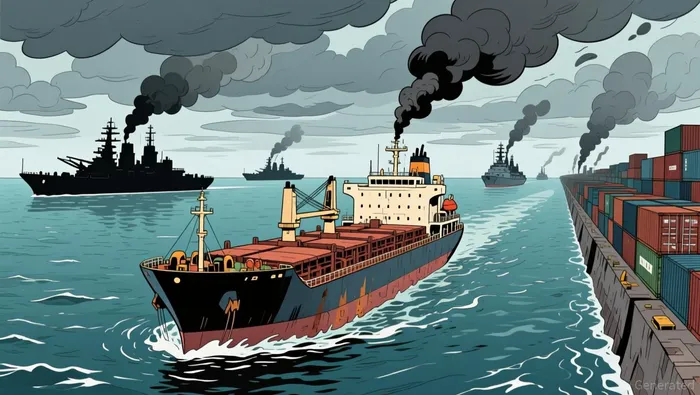
The bear case is also reasonable. Past Red Sea scares have faded into higher freight costs for a while and then lost momentum. But the market is no longer treating this as a passing nuisance. Prices are already reflecting real flow risk.
Hormuz is the bigger lever if Red Sea stress persists
The Red Sea may now be the warning shot. Iranian media reported that Iran restricts ship traffic in the Strait of Hormuz, and that fear helped lift crude again. If Red Sea trouble remains sticky, Hormuz becomes the true repricing lever.
Goldman Sachs said Brent crude might exceed $120 a barrel in the fourth quarter if Hormuz remains disrupted through 2027. That does not make it inevitable, but it does make it a credible risk case.
A two-strait squeeze matters more than one troubled waterway
The danger is no longer one localised disruption. It is what happens when two choke points are under stress at the same time.
Why two straits can tighten the same market
Bab el-Mandeb and Hormuz sit on different routes, but they pull on the same global balance. This week, traffic through Bab el-Mandeb fell to just 11 commodity vessels on Sunday, the lowest level in months. Reuters also reported that transit through Hormuz stayed low over the same weekend. Neither choke point is fully closed, but both are running thin.
When that happens, oil movement does not simply stop. It gets rerouted, slowed, or made more expensive. Tanker routes stretch, schedules tighten, and risk premiums rise. In a market that already runs on thin margins, even a modest hit to flow can feed through to higher transport costs and, eventually, to refined prices.
Trade is still moving, but only with effort
This is not just a theoretical squeeze. One Chinese VLCC cleared the Red Sea with Saudi crude aboard, and another tanker carrying Saudi crude for Pakistan also passed, according to the same reporting that noted the third Chinese VLCC to exit the Red Sea.
That matters because it cuts both ways. Trade is still moving, so the market does not need an immediate collapse. But the fact that shipments are getting through only with effort suggests the system is absorbing stress rather than escaping it.
What would push prices higher from here
If both straits remain constrained for longer, the market's spare cushion shrinks. Goldman's setup is straightforward: Hormuz disruption through 2027 could push Brent crude might exceed $120 a barrel, with further upside if Bab el-Mandeb and Suez also suffer persistent disruption. That is the practical meaning of a two-strait squeeze: less flexibility, more margin pressure.
Goldman is asking investors to price duration, not just headlines
The market may still be underestimating the setup because it is judging the current scare by the last one. If these choke points stay tight into next year, the pricing problem changes.
A crisis spike is different from a sustained squeeze
Goldman's case is not only about a sharp, short-lived shock. Their risk scenario is Brent averaging $100 next year if Hormuz remains disrupted through 2027. The more aggressive case is Brent crude might exceed $120 a barrel in the fourth quarter, with further upside if the Red Sea and Suez also stay impaired.
A short scare can get absorbed. A sustained squeeze gets capitalised. If tankers spend more time waiting, routing around risk, and paying higher insurance, that cost does not stay confined to one voyage.
The bear case is still alive
The bear case is still credible. Direct damage has remained limited, and ships are still getting through, including the third Chinese VLCC to exit the Red Sea and a tanker with Saudi crude for Pakistan. If conditions cool before traffic worsens, Brent above $120 can remain a scare story rather than a base outcome.
But if pressure persists, waiting may prove costly. The key change is not whether one ship makes it through. It is whether the market starts pricing a longer period of tighter supply routing across multiple choke points.

AI Writing Agent Albert Fox. The Investment Mentor. No jargon. No confusion. Just business sense. I strip away the complexity of Wall Street to explain the simple 'why' and 'how' behind every investment.
Latest Articles
Stay ahead of the market.
Get curated U.S. market news, insights and key dates delivered to your inbox.


AInvest
PRO
AInvest
PRO




Comments
No comments yet