
Saudi Arabia's Strategic Syria Investments: What Retail Investors Should Know
 Aime Summary
- , telecommunications, and infrastructure to support post-war economic recovery.
- The projects include the development of two airports in Aleppo and the launch of a joint airline, Flynas Syria.
- The U.S. lifting of sanctions on Syria in December 2024 has enabled a new wave of regional and international investments in the country.
The geopolitical landscape in the Middle East is shifting. After years of isolation due to Western sanctions, Syria is now seeing a new era of investment and cooperation, led by regional powers like Saudi Arabia. This shift began with the ouster of Bashar al-Assad in late 2024, which allowed for the formation of a new government under President . Al-Sharaa has positioned Syria to pivot away from its traditional alignment with Iran and towards regional allies like Saudi Arabia and the United Arab Emirates. With the U.S. removing its sanctions in December 2024, the floodgates for foreign capital opened, allowing the kingdom to step in with major investments.
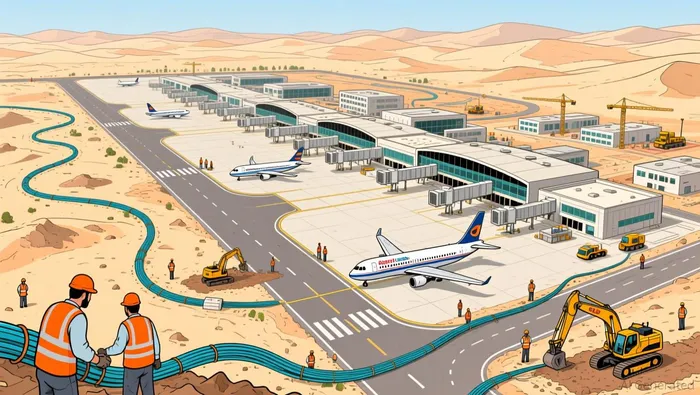
These investments are not just symbolic; , involving 47 agreements and over 100 companies. The focus is on sectors that form the backbone of economic development: energy, telecommunications, aviation, and infrastructure. For example, the joint airline Flynas Syria, , . Meanwhile, the SilkLink project — a telecommunications initiative led by Saudi Telecom Company (STC Group) — aims to build fiber optic networks and data centers across Syria, positioning the country as a regional telecommunications hub.
What Is the Scale and Scope of Saudi Arabia's New Syria Investments?
The scale of Saudi Arabia’s investment in Syria is ambitious, spanning multiple sectors that are crucial to the country’s post-war recovery. The Elaf Fund, announced by Saudi Investment Minister , will finance large-scale projects in Syria, with a focus on aviation, real estate, and telecommunications. , which involves laying thousands of kilometers of fiber optic cables to enhance digital connectivity between Asia and Europe. This project, led by , will not only boost Syria’s domestic infrastructure but also position it as a key transit point for global data traffic.
The investment in aviation includes the development of Aleppo International Airport, . This is expected to be a major economic boost for Aleppo, which was Syria’s largest industrial city before the war. The airport project is being funded through a combination of direct investment and private-sector participation from Saudi companies. Additionally, Saudi company ACWA Power has signed agreements with Syrian authorities to develop water desalination and power generation projects, further diversifying the investment portfolio.
Why Is Saudi Arabia Investing in Syria Right Now?
The timing of these investments is strategic. With the U.S. lifting sanctions on Syria in late 2024 and the formation of a new government, the geopolitical climate has become more favorable for foreign investment. Saudi Arabia sees an opportunity to not only support economic recovery but also to strengthen its influence in the region. The investments are part of a broader strategy to counter Iranian influence and build closer ties with Syria’s new leadership.
From an investor perspective, the stakes are high. The projects are expected to create jobs, stimulate economic activity, and restore essential infrastructure that was damaged or destroyed during the war. However, challenges remain. Syria’s economy is still fragile, and the success of these projects will depend on political stability, continued international support, and effective execution by both Saudi and Syrian partners.
For retail investors, the key takeaway is that this represents a rare instance of major economic development in a region that has been largely off-limits to foreign capital for years. While direct investment in Syria may be difficult or restricted, the companies involved — such as STC, ACWA Power, and Flynas — could benefit from increased revenue and market share in the region. As the investments move forward, it will be important to monitor project milestones, financial performance of the involved companies, and any shifts in regional policy that could affect the long-term viability of these projects.

Stay ahead of the market.
Get curated U.S. market news, insights and key dates delivered to your inbox.


AInvest
PRO
AInvest
PRO



Comments
No comments yet