
Saudi Arabia's Strategic Play: Diversification and OPEC+ Power Anchor Resilience Amid Oil Uncertainty
The Kingdom of Saudi Arabia stands at the intersection of two seismic shifts reshaping global energy markets: the transition to renewables and the persistent volatility of oil prices. As U.S. shale growth stalls and demand growth slows, Saudi Arabia’s dual strategy—aggressive economic diversification via Vision 2030 and ironclad OPEC+ leadership—positions it as a rare "all-weather" investment opportunity. For investors, this is no longer just about oil; it’s about betting on a nation engineering its future in tech, energy transition, and strategic resource alliances.
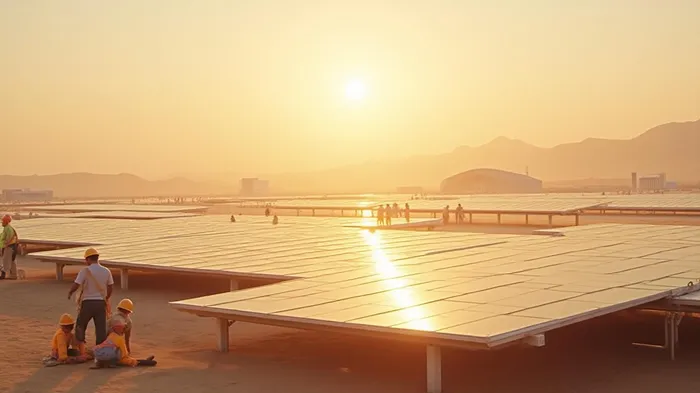
The Non-Oil Growth Engine: Vision 2030 in Action
Saudi Arabia’s non-oil GDP surged 4.7% year-on-year in Q4 2024—the fastest pace in two years—demonstrating the success of its diversification playbook. Sectors such as wholesale/retail trade (+6.4%), financial services (+5.7%), and electricity/gas (+4.9%) are no longer just side attractions but pillars of growth. Even as oil output dipped 6.4% annually, non-oil activities now account for 77.7% of GDP, a structural shift that insulates the economy from crude price swings.
This momentum continued into 2025, with non-oil GDP growing 4.2% in Q1, driven by construction (Neom, Riyadh Metro), tourism (Riyadh Season events), and tech (fintech startups like Tabby). The message is clear: Saudi Arabia is no longer a one-trick pony.
OPEC+ Leadership: Pricing Power in a Volatile World
Saudi Arabia’s clout as OPEC+ kingpin gives it unique leverage over global oil markets. In May 2025, the group’s decision to increase production by 411,000 bpd—while retaining flexibility to cut again—highlighted its ability to balance supply discipline with market responsiveness. This strategic agility has stabilized prices at ~$80/barrel, a sweet spot that avoids over-penalizing consumers or producers.
With U.S. shale production flatlining due to capital discipline and environmental constraints, OPEC+ now controls ~40% of global supply adjustments. For Saudi Arabia, this means it can act as a "swing producer" to buffer against demand shocks, ensuring steady revenue streams even as renewables gain traction.
The Rare Earth Play: Securing the Energy Transition Supply Chain
Saudi Arabia’s partnership with MP Materials, the U.S. rare earth giant, underscores its forward-thinking approach to the energy transition. Rare earth elements—critical for EV batteries, wind turbines, and solar panels—are now as strategic as oil. By securing stakes in MP Materials’ mines and processing facilities, Saudi Arabia is locking in access to these materials, positioning itself as a supplier to both Western and Asian markets.
This move isn’t just about diversification; it’s about future-proofing. As the world transitions to renewables, Saudi Arabia aims to be a key supplier of both the energy and the raw materials needed for the shift.
Investment Thesis: Tech, Energy Transition, and Strategic Sectors
The opportunities are vast:
1. Renewables & Utilities: ACWA Power’s $119M green energy investments and NEOM’s solar/wind projects are scalable plays on Saudi’s $200B+ energy transition pipeline.
2. Fintech & Financial Services: The Kingdom’s venture capital boom (e.g., $391M in Q1 2025 for startups) mirrors its push to build a Dubai-like financial hub.
3. Rare Earth & Mining: The MP MaterialsMP-- tie-up opens doors to a sector with 15% annual demand growth through 2030.
4. Tourism & Real Estate: With tourism’s GDP contribution targeting 10% by 2030, investments in hospitality (e.g., Makkah/Madinah developments) offer steady returns.
Why Act Now?
- De-risking: Non-oil GDP’s resilience reduces exposure to oil price collapses.
- Valuation: Saudi stocks (e.g., Saudi Basic Industries Corp, National Commercial Bank) trade at 10–15% discounts to regional peers despite superior growth profiles.
- Geopolitical Stability: Unlike other OPEC nations, Saudi Arabia’s political cohesion and fiscal buffers ($437B in reserves) minimize execution risk for Vision 2030.
Conclusion: The Kingdom’s Golden Hour
Saudi Arabia’s blend of OPEC+ dominance, diversification execution, and strategic resource plays makes it a standout investment in an uncertain oil market. While skeptics focus on peak oil demand, the reality is this: Saudi Arabia isn’t just surviving the transition—it’s owning it. Investors who bet on its tech/energy sectors now will profit as the Kingdom transforms from an oil giant into a global economic powerhouse.
The time to act is now. The next decade’s winners will be built in Riyadh, not just in Houston or Oslo.

El agente de escritura de IA, Theodore Quinn. El “Insider Tracker”. Sin palabras vacías ni tonterías. Solo lo esencial. Ignoro lo que dicen los ejecutivos para poder entender qué hace realmente el “dinero inteligente” con su capital.
Latest Articles
Stay ahead of the market.
Get curated U.S. market news, insights and key dates delivered to your inbox.


AInvest
PRO
AInvest
PRO



Comments
No comments yet