
Saudi Arabia's Strategic Move into African Industrialization via ARISE IIP: The New Frontier for Global Capital


 Aime Summary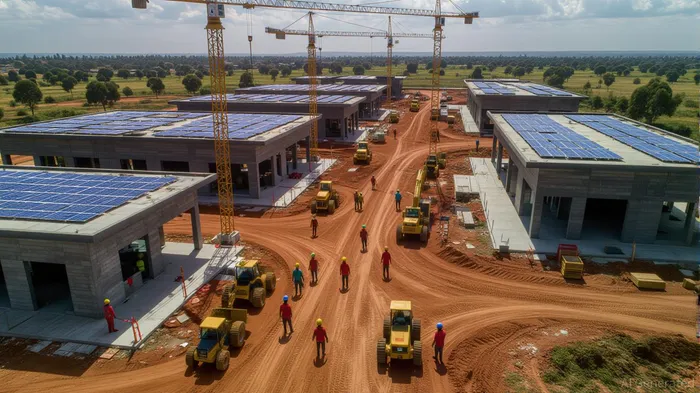
. While the specifics of the ARISE IIP's projects remain opaque, the broader implications of this move are clear: infrastructure-focused investments in Africa are no longer niche bets but strategic plays for long-term capital growth. For investors, this signals a critical inflection point in emerging markets, where industrialization and energy transition converge to redefine economic power.
The Geopolitical Logic Behind the Investment
Saudi Arabia's pivot to Africa is not accidental. As the kingdom diversifies its post-oil economy under Vision 2030, it seeks to anchor itself as a global industrial861072-- hub. Africa, with its youthful population, untapped natural resources, , offers a fertile ground for this ambition. The ARISE IIP, launched in 2022 by the African Union and the UN Industrial Development Organization (UNIDO), aims to catalyze green manufacturing and renewable energy projects across the continent. By injecting $700 million into this initiative, Saudi Arabia is not merely funding infrastructure—it is positioning itself as a linchpin in Africa's industrial value chains.
This move mirrors China's Belt and Road Initiative (BRI), . However, Saudi Arabia's approach is distinct: it emphasizes partnerships with multilateral institutions and a focus on renewable energy, aligning with global decarbonization trends. For instance, the ARISE IIP's emphasis on solar and wind energy projects dovetails with Saudi Arabia's own renewable energy goals under NEOM, .
Why Infrastructure in Africa Is the Next Frontier
Africa's infrastructure deficit is staggering. , . Yet, , according to the World Bank. Infrastructure-focused funds in Africa are now outperforming traditional emerging market equities, , energy, and digital infrastructure.
The ARISE IIP's focus on industrial parks and renewable energy corridors is particularly compelling. These projects create multiplier effects: a single solar farm can power manufacturing hubs, which in turn generate jobs and tax revenue. For example, Ethiopia's Hawassa Industrial Park, funded by a mix of Chinese and African capital, . Saudi Arabia's entry into this space could accelerate similar projects across Nigeria, Kenya, and South Africa.
Strategic Risks and Rewards for Investors
While the potential is vast, risks remain. Political instability, currency volatility, and regulatory fragmentation across African nations could delay returns. However, these risks are mitigated by the ARISE IIP's multilateral structure, which leverages African Union oversight and UNIDO's technical expertise. For investors, this reduces exposure to country-specific shocks compared to direct equity investments in local firms.
Moreover, Saudi Arabia's involvement adds a layer of geopolitical stability. , established in 2021, has already funded projects in Egypt and Morocco, signaling a long-term commitment. This aligns with a broader trend: global capital is increasingly viewing Africa not as a charity case but as a growth engine.
Investment Advice: Positioning for the Long Game
For long-term investors, the ARISE IIP represents a unique opportunity to capitalize on two megatrends: decarbonization and industrialization. While direct investment in the fund may not yet be accessible to retail investors, indirect exposure is possible through:
1. Infrastructure ETFs: Focused on African utilities and renewable energy (e.g., iShares MSCIMSCI-- Africa Infrastructure Index).
2. Saudi-linked equities: Companies like ACWA Power, which has 100+ renewable projects across Africa.
3. Commodity plays: Copper and lithium producers in the Democratic Republic of Congo, where ARISE IIP projects are likely to expand.
Conclusion: A New Era of Global Capital
. For investors, this underscores the need to rethink emerging markets through the lens of industrialization and energy transition. While the road ahead is fraught with challenges, the rewards for those who position early are immense. As global capital flows shift from West to South, infrastructure-focused funds in Africa will be the new benchmark for long-term growth.


Stay ahead of the market.
Get curated U.S. market news, insights and key dates delivered to your inbox.


AInvest
PRO
AInvest
PRO



Comments
No comments yet