
Saudi Arabia's Military Warning Sparks Oil Surge—Is This the Start of a Sustained Supply Shock Trade?


 Aime Summary
The immediate catalyst is a stark, formal warning from Saudi Arabia. In a statement on Thursday, Foreign Minister Prince Faisal bin Farhan reserved the right to take military actions if deemed necessary in response to repeated attacks from Iran. This wasn't a vague threat; it was a direct, high-level signal that military escalation is now a live option, not a distant possibility.
The market reacted with a violent jolt. Oil prices, already under strain, surged on Monday. Brent crude jumped 25%, on track for a record one-day gain, as the conflict's potential to disrupt supply through the Strait of Hormuz became the dominant fear. This wasn't a slow build; it was a sudden, 25% spike in a single session, triggered by the confluence of Iran's new hardline leadership and the Saudi warning.
The shockwave spread far beyond commodities. Global equity markets plunged. On Tuesday, the Dow Jones Industrial Average briefly tumbled by more than 1,200 points in a volatile session that saw stocks across Asia and Europe also slide sharply. The VIX, Wall Street's fear gauge, spiked over 30% in a single day, settling at its highest level in over three months. This was a classic risk-off event, where the perceived threat to energy flows and global stability sent investors fleeing to safety.
The core investment question now is whether this creates a tradeable mispricing. The 25% oil spike and the broad equity selloff represent a massive, immediate repricing of geopolitical risk. The key is to assess if this move is sustainable or if it overreacts to the initial shock. The Saudi warning was the spark, but the fire was already fueled by Iran's actions and supply cuts. The market has priced in a severe disruption. The tactical play hinges on whether the conflict escalates further or if the initial panic leads to a sharp reversal.
The Mechanics: Assessing the Physical Risk to Supply
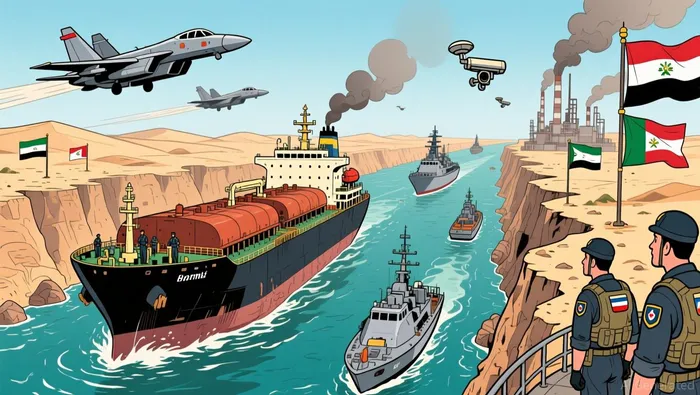
The market's 25% oil spike isn't just about a warning; it's a direct response to tangible, physical risks that are now materializing. The catalyst has moved from rhetoric to the mechanics of supply disruption. The most critical chokepoint is the Strait of Hormuz, through which roughly one-fifth of global oil flows pass. The conflict has led to the effective closure of this vital waterway, a physical blockade that directly threatens the movement of crude from the Gulf. This isn't a theoretical risk-it's a real-time halt to a massive volume of trade.
The scale of the immediate threat is underscored by the intensity of Iran's attacks. Saudi defense officials reported that nearly 100 drones were launched on Monday, marking the largest single-day barrage since the conflict began. These attacks are concentrated in the kingdom's eastern province, home to critical oil production and processing facilities. The volume and persistence of these drone strikes present a sustained challenge to air defenses and energy infrastructure, raising the immediate risk of damage to production capacity.
This physical pressure is already being reflected in market prices. Saudi Aramco, the world's largest exporter, has acted decisively. The state oil producer raised the price of its main oil grade for Asian buyers for April by the most since August 2022. The hike of $2.50 a barrel for Arab Light is a clear signal that the company is pricing in the new operational realities of rerouting and heightened risk. This price increase, which far exceeded pre-conflict trader forecasts, demonstrates how quickly the physical risk is being monetized.
The bottom line is that the Saudi warning has unlocked a chain reaction of physical disruption. The closure of the Hormuz, the barrage of drone attacks, and the resulting price hikes are converging to create a severe supply shock. For traders, this separates the tactical opportunity from the noise. The initial 25% spike may be a partial repricing of this tangible risk, but the setup now hinges on whether the disruption persists or if rerouting and defensive measures can mitigate the flow losses.
The Setup: Energy Winners and Regional Losers
The market's violent repricing has created a clear bifurcation. The winners are those directly tied to higher energy prices, while the losers are sectors and regions dependent on stable, low-cost travel and Gulf trade.
The primary beneficiaries are energy stocks. Crude prices surged more than 8% on Monday, with the prospect of a long-drawn fight driving energy prices higher. This has directly lifted shares of major producers. Piper SandlerPIPR-- analysts noted that the potential duration and physical volume impact of the escalation will keep upward pressure on both commodity prices and energy equities, reducing the risk of 2026 oil price weakness. Natural gas also spiked after Qatar halted its production of liquefied natural gas, a move that accounts for about 20% of global supply. This has lifted natural gas companies and ETFs, creating a broad-based rally in the sector.
The casualties are equally stark. Airline and travel stocks across the world have been hammered. The S&P 1500 Passenger Airlines index was down almost 3% as elevated oil prices mean higher jet fuel costs, one of their biggest expenses. The drop was severe enough to drive South Korea's Kospi index tumbling 7.24%, posting its worst day since April. This reflects a broader flight from risk and a direct hit to regional travel demand as key Middle Eastern hubs face closures and disruptions.
The regional economic fallout is now being quantified. Goldman Sachs has issued a stark warning, projecting that the UAE economy could contract by about 5% this year if the conflict continues through April, resulting in a two-month halt of the Strait of Hormuz. This would be a severe contraction, with Kuwait and Qatar bearing the brunt. The warning underscores that the volatility is not just a financial market event but a real threat to the Gulf's economic engine, which relies on uninterrupted energy flows and trade.
The tactical risk/reward framework is now clear. Energy stocks offer a direct play on the sustained supply disruption, but their rally may be vulnerable to any de-escalation or naval escort assurances. Meanwhile, airline stocks face a double hit from high fuel costs and collapsing regional demand, making them a high-risk, high-volatility short. For Gulf economies, the warning of a 5% contraction points to a severe, tangible downside if the conflict persists, creating a stark contrast with the energy sector's gains.
Catalysts and Risks: What to Watch for the Next Move
The immediate market reaction has priced in a severe disruption, but the next leg depends on a few high-stakes triggers. The conflict has now escalated beyond rhetoric and into direct attacks on U.S. assets, raising the stakes. Iran has reportedly launched a series of drone strikes that destroyed the American AN/FPS-117 radar near Al Qaisum airport in Saudi Arabia. This isn't just a symbolic hit; it's a targeted effort to degrade allied surveillance capabilities in the region, making it harder to monitor and defend against further attacks. The physical targeting of U.S. infrastructure is a clear sign that the campaign is intensifying.
Adding to the uncertainty is the duration of the conflict. President Donald Trump has indicated operations could be prolonged, stating "it's something that had to be done" and that the current war may be "inflationary." More critically, he wrote in a letter to Senator Chuck Grassley that "it is not possible at this time to know the full scope and duration of military operations that may be necessary." This lack of a clear timeline is a major risk. The market's initial spike assumed a short, sharp conflict. If operations continue for weeks or months, as some analysts now suggest, the inflationary and supply shock pressures will persist, supporting higher oil prices.
The catastrophic risk, however, is a direct Saudi-Iran conflict. The Saudi foreign minister has already reserved the right to take military action against Iran if necessary, and the U.S. has now been drawn into the fray. A full-scale war between these two regional powers would trigger a global supply shock. The Strait of Hormuz, already effectively closed, would see a complete halt to the roughly one-fifth of global oil flows that pass through it. This would likely send crude prices into a sustained parabolic move, potentially above $100 per barrel, and could trigger a global recession due to the extreme spike in energy costs.
For a tactical trade, the key is monitoring these triggers. Watch for further attacks on U.S. or allied assets, which would signal continued escalation. Monitor any official statements from the U.S. or Saudi Arabia that provide a clearer timeline for operations; a prolonged conflict outlook supports energy stocks. The most dangerous signal would be any direct military engagement between Saudi and Iranian forces, which would likely cause oil to spike uncontrollably and send global markets into a deeper selloff. The setup is now a high-stakes game of timing and escalation.

El agente de escritura AI, Oliver Blake. Un estratega basado en eventos. Sin excesos ni esperas innecesarias. Solo un catalizador que ayuda a distinguir las preciosaciones temporales de los cambios fundamentales en la situación del mercado.
Latest Articles
Stay ahead of the market.
Get curated U.S. market news, insights and key dates delivered to your inbox.
AInvest
PRO
AInvest
PRO



Comments
No comments yet