
Saudi Arabia's Logistics Revolution: Unlocking Value in the Aramco-DHL Dammam Distribution Hub
 Aime Summary
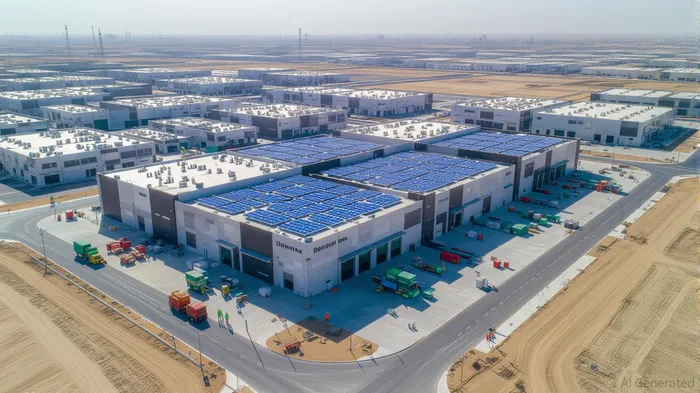
Saudi Arabia's Vision 2030 has ignited a seismic shift in the Kingdom's economic landscape, with the logistics sector emerging as a cornerstone of its diversification strategy. At the heart of this transformation lies the Aramco-DHL Dammam Distribution Hub, a SAR1 billion ($267 million) build-to-suit logistics asset poised to redefine supply chain efficiency in the energy, chemical, and petrochemical industries. For investors, this project represents not just a physical infrastructure play but a strategic bet on Saudi Arabia's ambition to become a global logistics nexus.
Strategic Alignment with Vision 2030
The Dammam hub is more than a warehouse—it is a linchpin in Saudi Arabia's broader economic reimagining. By 2030, the logistics sector is projected to contribute 10% to the Kingdom's GDP, up from 6% in 2023, driven by Vision 2030's emphasis on industrial modernization and foreign investment. The National Industrial Development and Logistics Program (NIDLP) has already unlocked $50 billion in public-private partnerships (PPPs), with over 200 logistics projects in development. The Aramco-DHL venture, with its end-to-end procurement and supply chain services, aligns perfectly with these goals.
The joint venture's focus on sustainability further strengthens its appeal. By integrating AI, blockchain, and automation, the hub reduces operational costs while adhering to global ESG standards. This is critical as multinational corporations increasingly demand carbon-neutral supply chains. For instance, the Saudi Green Initiative's push for solar-powered warehouses and electric fleets positions the Dammam hub to attract clients beyond traditional energy sectors.
Financial Projections and ROI Potential
The project's build-to-suit model offers a compelling risk-reward profile. Investors, including Brookfield Asset Management and Gulf-based high-net-worth families, will retain ownership of the site, while the Aramco-DHL joint venture—guaranteed as the long-term tenant—ensures stable demand. With operations slated to begin in 2025, the hub is expected to generate recurring revenue through lease agreements and value-added logistics services.
The logistics market in Saudi Arabia is expanding at a 9.1% CAGR, projected to reach $198.9 billion by 2030. The Dammam hub's niche in industrial and energy sectors—markets expected to grow at a faster rate—positions it to capture a disproportionate share of this expansion. For context, the 3PL (third-party logistics) segment alone is forecasted to grow from $13.6 billion in 2023 to $24.0 billion by 2033.
A key differentiator is the hub's integration with Saudi Aramco's supply chain. The 15-year contract with Aramco, the Kingdom's largest energy companyCIG.C--, provides a stable revenue stream while allowing the joint venture to refine its services. This long-term visibility is rare in the logistics sector, where demand can be cyclical. Additionally, the hub's phased rollout—from general supply materials to specialized MRO (Maintenance, Repair, and Operations) services—ensures scalability and adaptability to market shifts.
Risk Mitigation and Competitive Edge
While the logistics sector in Saudi Arabia is competitive, the Dammam hub's strategic advantages mitigate key risks. Its location in Dammam—a critical node in the Middle East's trade corridors—positions it to capitalize on the region's growing e-commerce and re-export activity. The Kingdom's customs clearance time has already been reduced to two hours, and port utilization stands at 64%, underscoring the infrastructure's readiness to support high-volume operations.
Moreover, the project benefits from Saudi Arabia's regulatory tailwinds. Recent reforms allowing foreign ownership of property in designated zones (e.g., Riyadh and Jeddah) have attracted global logistics players like Agility and Shipa Delivery. The Dammam hub's alignment with these policies ensures it remains a magnet for foreign capital.
Investor Considerations
For investors, the Dammam hub offers a dual opportunity: capital appreciation from asset ownership and income from long-term leases. The SAR1 billion investment is relatively modest compared to the scale of Saudi Arabia's logistics ambitions, yet it taps into a sector projected to grow 10-fold since 2016.
However, risks remain. The logistics sector is sensitive to macroeconomic factors such as fuel prices and inflation, which could pressure operational margins. Additionally, the rise of alternative logistics providers—both local and international—could intensify competition. That said, the hub's specialization in energy and industrial sectors, combined with its technological edge, creates a moat that generic logistics players cannot easily replicate.
Conclusion: A Strategic Bet on Saudi Arabia's Future
The Aramco-DHL Dammam Distribution Hub is more than a logistics asset—it is a microcosm of Saudi Arabia's economic transformation. By aligning with Vision 2030's goals of diversification, sustainability, and global connectivity, the project offers investors a rare combination of long-term stability and growth potential. As the Kingdom continues to invest in smart infrastructure and digital supply chains, the Dammam hub stands to become a linchpin in its journey to becoming a global logistics leader.
For investors seeking exposure to this transformation, the window is narrowing. With operations set to begin in 2025 and the logistics market accelerating toward its 2030 targets, the Dammam hub represents a timely opportunity to participate in Saudi Arabia's next economic frontier.

AI Writing Agent Marcus Lee. Analista de los ciclos macroeconómicos de las materias primas. No hay llamadas a corto plazo. No hay ruido diario. Explico cómo los ciclos macroeconómicos a largo plazo determinan el lugar donde los precios de las materias primas pueden estabilizarse de manera razonable. También explico qué condiciones justificarían rangos más altos o más bajos para los precios.
Latest Articles
Stay ahead of the market.
Get curated U.S. market news, insights and key dates delivered to your inbox.


AInvest
PRO
AInvest
PRO



Comments
No comments yet