
U.S.-Saudi AI Pact Unveils 500-MW Data Center to Fuel Economic Revival


 Aime Summary
Elon Musk's xAI has secured a landmark partnership with Saudi Arabia's state-backed AI firm Humain to build a 500-megawatt data center, a project that underscores the kingdom's ambition to become a global AI hub and aligns with President Donald Trump's push to anchor the U.S. economy in artificial intelligence. The announcement, made during Saudi Crown Prince Mohammed bin Salman's U.S. visit, follows a broader $1 trillion investment pledge from Saudi Arabia to American companies, a figure Trump has already pressed the crown prince to raise to $1.5 trillion.
The data center, powered by Nvidia's cutting-edge Blackwell chips, will be xAI's largest outside the U.S., rivaling its Memphis-based Colossus 1 facility, which operates at 300 megawatts. Musk, who recently reconciled with Trump after a public feud over fiscal policy, emphasized AI's transformative potential during a Kennedy Center forum, declaring that humanoid robots will "make everyone wealthy" and eliminate poverty. The event, attended by Trump, NvidiaNVDA-- CEO Jensen Huang, and other tech leaders, highlighted a strategic alignment between U.S. innovation and Saudi energy resources.
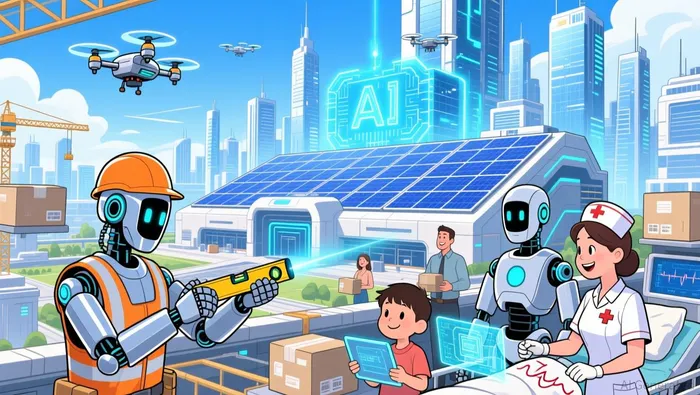
Trump's economic agenda increasingly hinges on AI-driven growth, as evidenced by his assertion that the sector has fueled record stock market gains this year. However, the administration faces risks, including rising utility costs and unmet job creation promises, as AI infrastructure demands strain energy grids and debt-funded expansions raise concerns about market sustainability. Oxford Economics noted that AI investments have offset economic uncertainty caused by Trump's tariffs, though the sector's reliance on debt could signal fragility in 2026.
The U.S.-Saudi collaboration extends beyond AI. Aramco finalized $30 billion in agreements with U.S. firms, including partnerships for liquefied natural gas and oilfield services. Meanwhile, Humain's expansion includes deals with AMD, Cisco, and Luma AI, a generative video startup backed by a $900 million funding round led by the Saudi firm. Nvidia's Huang praised Humain's rapid growth, calling it "off the charts," while also committing to train advanced robots and build supercomputers in the kingdom.
Musk's return to the White House, his first public appearance there since a contentious departure from the DOGE Office, marked a thaw in relations with Trump. The two leaders, who previously clashed over electric vehicle subsidies and fiscal policy, now appear united in championing AI as a cornerstone of economic revival. During the forum, Trump quipped that he had asked the crown prince to increase his investment pledge "while we were taking the picture," signaling a blend of political theater and economic strategy.
The strategic AI Memorandum of Understanding between the U.S. and Saudi Arabia, announced earlier in the week, emphasizes technology sharing while safeguarding U.S. intellectual property. This framework, coupled with Saudi oil and U.S. tech, positions both nations to lead the next phase of the AI race. As Musk envisioned a future of solar-powered AI satellites and optional human labor, Huang offered a more cautious outlook, noting that "everybody's jobs will be different".

Stay ahead of the market.
Get curated U.S. market news, insights and key dates delivered to your inbox.
AInvest
PRO
AInvest
PRO



Comments
No comments yet