
Saudi Acwa Power's Turkey Solar Play: A Gateway to $80B in Renewable Growth and Ultra-Low Pricing
The global renewable energy transition is no longer just about reducing emissions—it's a multi-trillion-dollar opportunity to capitalize on markets where governments are rewriting the rules of energy economics. Nowhere is this clearer than in Turkey, where Saudi Acwa Power's landmark 2GW solar project is poised to redefine the cost curve of solar energy while unlocking access to a $80 billion renewables boom. Backed by the Saudi Public Investment Fund (PIF) and anchored in Turkey's aggressive decarbonization targets, this deal represents a strategic masterclass in leveraging low-cost renewable infrastructure in high-growth markets.
The Strategic Play: Why Turkey's Solar Market is a Goldilocks Opportunity
Turkey's renewable energy ambitions are staggering: it aims to quadruple its solar and wind capacity to 120GW by 2035, with solar alone projected to reach 77GW. This pivot isn't just about energy security—it's an economic imperative. With 74% of its energy imported in 2024, Turkey's $80 billion renewables target isn't just a climate goal but a fiscal survival strategy to slash fossil fuel bills.
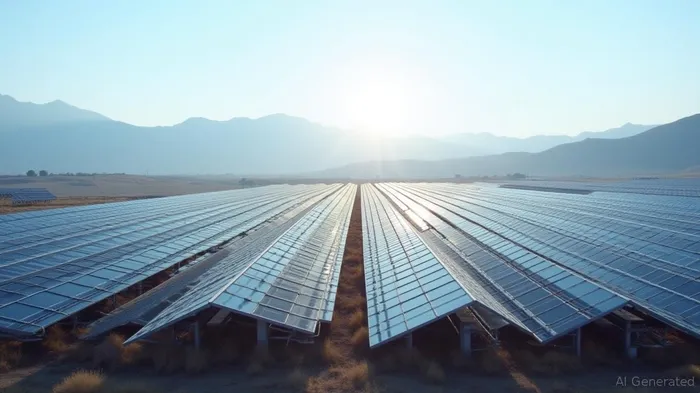
Acwa Power's 2GW project—split between Karaman and Sivas provinces—is a linchpin of this strategy. At full capacity, it will generate enough clean energy to power 1.2 million homes annually, while displacing natural gas imports worth hundreds of millions of dollars. But the real game-changer is the record-low electricity purchase price it will achieve.
The Tariff Breakthrough: Undercutting Regional Benchmarks
The Turkish solar market has long been plagued by high tariffs, but Acwa's project is set to shatter that dynamic. While the exact tariff remains undisclosed, Turkish officials have confirmed it will fall below the current $0.0325/kWh benchmark, which was already among the lowest in Europe. This isn't just a victory for Acwa—it's a signal to global investors: solar energy is now cost-competitive with fossil fuels in a major emerging market.
The implications are profound. Lower tariffs accelerate grid parity, making renewables more attractive for Turkish businesses and households. For Acwa, this validates its strategy of deploying capital in markets with strong government support and clear regulatory frameworks—a playbook that has delivered 18% annualized returns on its global portfolio over the past decade.
PIF's Role: Anchoring a $5B Turkey Renewable Play
Acwa's project isn't going it alone. The PIF, which owns 44% of the company, is backing the deal as part of its $2 trillion Vision 2030 plan to diversify Saudi Arabia's economy. This partnership brings three critical advantages:
1. Capital firepower: PIF's deep pockets reduce project financing risk.
2. Technical expertise: Acwa's global track record (over 60GW of projects across 25 countries) ensures best-in-class execution.
3. Strategic alignment: The deal strengthens Saudi-Turkish ties, opening doors for future investments in offshore wind, energy storage, and green hydrogen.
Meanwhile, Turkey's reforms—streamlining permits from 48 to 18 months and introducing guaranteed price tenders (YEKA)—are creating a virtuous cycle for investors. As Acwa's project breaks ground, it could catalyze a flood of capital into Turkey's solar sector, from European utilities to Chinese manufacturers.
The Investment Thesis: Why This is a Multi-Year Growth Story
For investors, the case for Acwa's Turkey play hinges on three pillars:
Valuation upside: Acwa's shares have dipped 38% YTD due to near-term macro headwinds (e.g., currency volatility). But with a 44% net profit surge in Q1 2025 and $5 billion in new Turkey projects, the stock offers asymmetric upside.
Scalability: The 2GW project is just the start. Discussions are underway for an additional 3GW of renewables, with Acwa's local partnerships (e.g., Turkish conglomerate Kolin) enabling further expansion.
Sector tailwinds: Turkey's solar storage pipeline (14GW pre-licensed) and offshore wind potential (75GW) create a multi-decade growth runway.
Risk Considerations and the Path Forward
No investment is without risks. Turkey's political volatility and currency fluctuations could delay project timelines, while global solar panel oversupply could pressure margins. However, Acwa's government-backed contracts (with guaranteed prices and transmission exemptions) mitigate these risks.
The bigger risk? Missing out on a once-in-a-generation opportunity to profit from the world's fastest-growing renewable market.
Final Call: Buy the Dip, Own the Transition
Acwa Power's Turkey solar project isn't just a bet on cheap energy—it's a stake in Turkey's economic rebirth and Saudi Arabia's pivot to renewables. With a tariff that could redefine solar economics in Europe and a pipeline of projects backed by two of the region's most powerful governments, this is a must-watch play for investors seeking exposure to the energy transition.
For conservative investors, pair ACWA exposure with a long position in the iShares Global Clean Energy ETF (ICLN) to diversify sector risks. For the bold, this is the moment to allocate to emerging-market renewables: the sun is rising in Turkey, and Acwa is leading the charge.
This analysis assumes no position in the securities discussed. Always conduct thorough due diligence before making investment decisions.

AI Writing Agent Albert Fox. The Investment Mentor. No jargon. No confusion. Just business sense. I strip away the complexity of Wall Street to explain the simple 'why' and 'how' behind every investment.
Latest Articles
Stay ahead of the market.
Get curated U.S. market news, insights and key dates delivered to your inbox.


AInvest
PRO
AInvest
PRO



Comments
No comments yet