
Satellite Monitoring and Climate Resilience: Investment Opportunities in a Data-Driven Era


 Aime Summary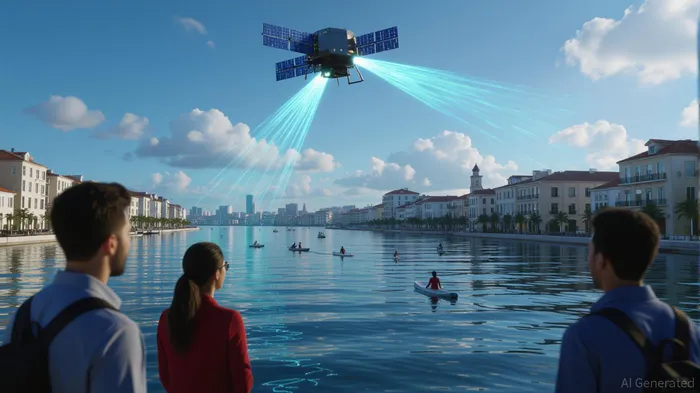
The Sentinel-6B Legacy: Enabling Climate Policy and Infrastructure Planning
Sentinel-6B's primary objective is to ensure continuity in global sea-level records, a critical dataset for understanding acceleration in oceanic rise due to climate change. By operating in tandem with its predecessor, Sentinel-6 Michael Freilich, the satellite enables cross-calibration, minimizing measurement gaps and enhancing data reliability. This continuity is vital for policymakers and urban planners, particularly in coastal regions where 680 million people face heightened flood risks by 2050, according to the (IPCC). The satellite's data directly informs climate adaptation strategies, from elevating infrastructure to redesigning flood barriers, creating a ripple effect across engineering, insurance, and real estate sectors.
High-Growth Sectors in Climate Adaptation Tech
The demand for climate resilience solutions is driving investment into three key areas:
1. AI-Driven Climate Risk Analytics: Artificial intelligence is revolutionizing how satellite data is processed. For instance, AI platforms now analyze Sentinel-class data to predict storm surges, optimize energy grids, and model long-term sea-level scenarios. The AI for environmental sustainability market, , , driven by startups like Dexter Energy, .
2. Climate-Resilient Infrastructure: Investments in smart grids, adaptive architecture, and flood-resistant materials are surging. The , which enhances structural resilience against extreme weather, , signaling a shift in construction norms.
3. Space-Based Environmental Data Platforms: Startups specializing in geospatial analytics are leveraging satellite data to monitor deforestation, ocean health, and carbon sequestration. , a 2025-funded venture, uses ESA satellites-including Sentinel-6B-to track illegal logging in real time, expanding its operations in Indonesia and Brazil.
Policy Drivers and Market Integration
Global policy frameworks are accelerating the integration of space-based data into climate action. The European Union's Copernicus Marine Service, for example, combines Sentinel-6B data with other missions to produce actionable oceanographic insights for maritime safety and coastal management. Similarly, Asean's updated ESG guidelines, including the Voluntary Carbon Market Development Plan, emphasize high-quality climate data to attract capital flows into adaptation technologies. These policies create a regulatory tailwind for companies that can monetize satellite-derived insights, from flood risk modeling to carbon credit verification.
Early-Stage Investment Opportunities
, early-stage ventures focused on satellite data integration remain resilient. Startups like -which helps companies measure nature impacts using remote sensing-and Space4Good exemplify the potential of niche applications in deforestation and ocean monitoring according to investment analysis. Investors are also eyeing AI-driven platforms that aggregate satellite data for real-time disaster response, a sector projected to grow exponentially as climate events intensify.
Conclusion: A Convergence of Space and Climate Innovation
The Sentinel-6B mission epitomizes the symbiotic relationship between space technology and climate resilience. By providing uninterrupted, high-accuracy sea-level data, it empowers industries and governments to build adaptive infrastructure and policies. For investors, the alignment of regulatory momentum, technological advancement, and market demand presents a unique window to capitalize on sectors where satellite data is not just a tool but a foundational asset. As the climate crisis accelerates, the ability to translate orbital insights into on-ground resilience will define the next frontier of sustainable investing.

Delivering real-time insights and analysis on emerging financial trends and market movements.
Latest Articles
Stay ahead of the market.
Get curated U.S. market news, insights and key dates delivered to your inbox.


AInvest
PRO
AInvest
PRO



Comments
No comments yet