
Satellite Climate Monitoring as a High-Growth Investment Sector: SpaceTech's Role in Climate Data Infrastructure and Long-Term Value Creation


 Aime Summary
Sentinel-6B: A Case Study in Climate Data Infrastructure
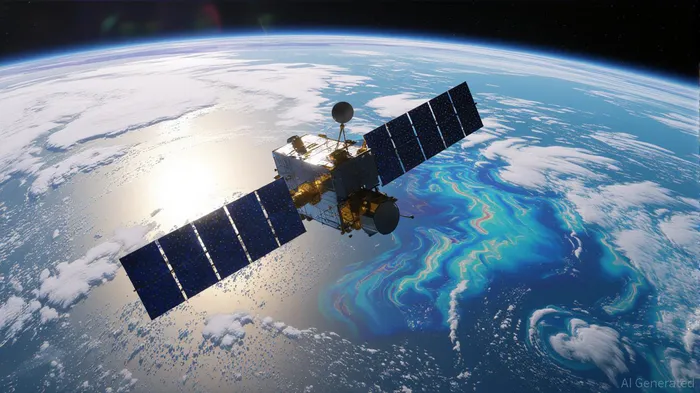
On 17 November 2025, SpaceX's Falcon 9 rocket delivered the Sentinel-6B satellite into orbit, marking a pivotal moment in global climate monitoring. Developed through a cross-Atlantic partnership involving the European Commission, ESA, EUMETSAT, NASA, and NOAA, Sentinel-6B is designed to measure sea-surface height, wave height, and wind speeds with millimeter-level precision according to satellite data. Its mission extends the legacy of its predecessor, Sentinel-6 Michael Freilich, ensuring uninterrupted data continuity for at least a decade. This continuity is critical: sea-level rise, a key indicator of climate change, has accelerated to 4.8 mm per year since 2006, according to the IPCC.
The satellite's advanced radar altimetry and microwave radiometry technologies underscore the role of SpaceTech in building resilient climate data infrastructure. By operating in tandem with its predecessor during its first year, Sentinel-6B enables cross-calibration, minimizing measurement errors and enhancing the reliability of long-term datasets. The UK's contribution-Airbus Defence and Space UK's development of the satellite's hydrazine propulsion system-highlights the growing geopolitical and industrial stakes in this sector as reported by industry sources.
Market Dynamics: From Niche to Mainstream
The broader space technology market, valued at $466.1 billion in 2024, is projected to reach $769.7 billion by 2030, driven by advancements in Earth observation and remote sensing. Within this, satellite climate monitoring is emerging as a high-growth sub-sector. The global satellite data services market, which includes climate monitoring, is expected to grow at a CAGR of 20.3% through 2029, reaching $26.64 billion. This growth is fueled by the proliferation of high-resolution imaging, hyperspectral sensors, and AI-driven analytics.
Private investment is accelerating this trajectory. Startups like Trishul Space in India, which recently secured Rs 4 crore to develop reusable rocket engines, and Chloris Geospatial, which raised $8.5 million to scale forest carbon monitoring, are emblematic of a sector attracting both venture capital and strategic partnerships according to financial reports and in a separate announcement. Meanwhile, institutional investors are pivoting toward infrastructure-focused funds. BlackRock's Global Infrastructure Partners and Pentagreen Capital, for instance, are expanding their portfolios to include sustainable energy and climate-resilient projects in Asia, reflecting a broader trend of capital aligning with the UN's Sustainable Development Goals.
Strategic Convergence: AI, Policy, and Scalability
The integration of artificial intelligence (AI) into satellite data processing is a game-changer. The AI in environmental sustainability market, valued at $16.55 billion in 2024, is projected to grow at a staggering 19.8% CAGR through 2033 according to market analysis. Startups like PanoAI and SkySpecs are leveraging machine learning to predict climate risks and optimize disaster response, demonstrating the tangible value of space-derived data. The UK, which allocates 9.7% of its climate tech investments to AI-related ventures, is leading this charge as detailed in industry reports.
Policy tailwinds further reinforce the sector's appeal. The EU's Copernicus program, NASA's Earth Observing System, and initiatives like the UK Space Agency's £1.5 million funding for climate projects illustrate the scale of public-private collaboration as reported by government sources. Meanwhile, the economic imperative is clear: climate-related disasters cost $162 billion in the first half of 2025 alone, spurring demand for predictive analytics and mitigation tools.
The Path Forward: Long-Term Value Creation
For investors, the key lies in identifying platforms that combine technological innovation with scalable infrastructure. Satellite climate monitoring is no longer a niche endeavor; it is a foundational element of the global response to climate change. The Sentinel-6B mission, with its multi-decade data continuity, and the rise of AI-driven analytics underscore the sector's potential to generate both environmental and financial returns.
As the market matures, early movers in propulsion systems, data processing, and AI integration will capture disproportionate value. For now, the data speaks for itself: the space tech climate monitoring sector is not just growing-it is accelerating.

Delivering real-time insights and analysis on emerging financial trends and market movements.
Latest Articles
Stay ahead of the market.
Get curated U.S. market news, insights and key dates delivered to your inbox.


AInvest
PRO
AInvest
PRO



Comments
No comments yet