
Sartorius Stedim Biotech: A Must-Own Play in the Biopharma Boom


 Aime Summary
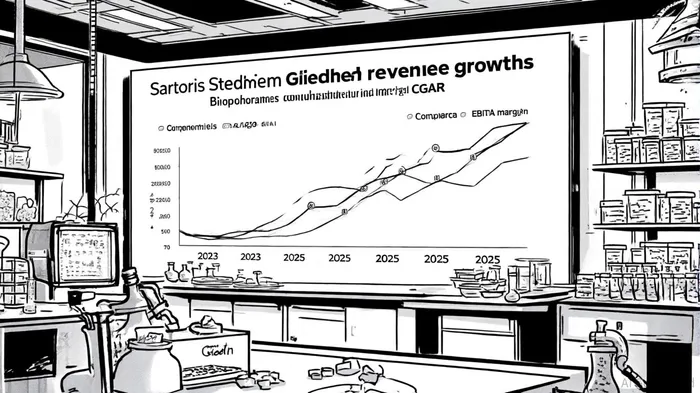
Sartorius Stedim Biotech is firing on all cylinders in the next phase of the biotech revolution. The company's Q3 2025 results—10.2% revenue growth to €2,195 million in constant currencies and a 31.1% EBITDA margin—underscore its operational resilience and strategic agility, as reported in Sartorius Stedim Biotech's Q3 2025 results. This outperformance, driven by its high-margin consumables business and a rebound in bioprocessing equipment demand, has prompted a sharp upward revision of its FY25 guidance from 7% to 9% revenue growth. For investors, this is more than a quarterly win; it's a sign of a company perfectly positioned to capitalize on the biopharma industry's seismic shift toward cell and gene therapies (CGTs), biosimilars, and mRNAMRNA-- vaccines.
The Engine Behind the Growth: Consumables and Innovation
Sartorius's consumables business-accounting for over half of its revenue-has become a cash-cow, with margins expanding as customers prioritize cost-effective, single-use solutions for biomanufacturing, according to a biopharmaceutical market analysis. This aligns with the industry's broader trend: biopharma companies are slashing capital expenditures and shifting to flexible, modular production systems to reduce costs and accelerate time-to-market, as Sartorius's GMP expansion shows. Sartorius's recent innovations, such as advanced filtration systems for monoclonal antibodies and AI-driven bioprocess software, are not just incremental upgrades-they're game-changers in an industry where efficiency is king, as noted in an earnings-call transcript.
Meanwhile, the company's bioprocessing equipment division, once a drag on growth due to customer destocking in 2023, is now stabilizing. New GMP facilities in Massachusetts and expanded capacity in Asia-Pacific are addressing bottlenecks, while Sartorius's focus on sustainable product design (e.g., energy-efficient bioreactors) taps into the sector's ESG priorities. These moves aren't just defensive-they're offensive, ensuring Sartorius maintains its 30%+ EBITDA margins even as competition intensifies.
Market Share Gains and Industry Tailwinds
The biopharma manufacturing sector is projected to grow at a 9.89% CAGR through 2030, fueled by rising demand for therapies targeting diabetes, cancer, and rare diseases, according to market size projections. Sartorius's dominance in this space is no accident: its Bioprocessing Solutions division grew 9% year-over-year in Q2 2025 alone, per the company's earnings commentary. With North America (46% of the global biopharma market) and Asia-Pacific (the fastest-growing region) as key markets, as highlighted in Morningstar's regional outlook, Sartorius is leveraging its global footprint to outpace rivals.
But the real magic lies in its ability to monetize the shift to CGTs and biosimilars. These therapies require specialized manufacturing infrastructure, and Sartorius's single-use systems-critical for scalable, contamination-free production-are becoming the industry standard, according to a Grand View Research report. For example, the global prevalence of diabetes is set to rise from 537 million in 2024 to 643 million by 2030, driving demand for biopharmaceutical insulin and GLP-1 agonists-segments where Sartorius's filtration and purification technologies are indispensable, as that same market analysis outlines.
Risks and Rewards: A Calculated Bet
No investment is without risk. Sartorius has flagged potential headwinds, including U.S. tariffs (projected to impact sales by 1%) and geopolitical uncertainties, in its unaudited results. However, these are manageable compared to the company's structural advantages. Its consumables business, with recurring revenue and high customer stickiness, provides a buffer against cyclical swings. Moreover, Sartorius's R&D spend (over 10% of revenue), according to investor relations information, ensures a pipeline of innovations to sustain growth beyond 2025.
For long-term shareholders, the calculus is clear: Sartorius is not just riding a wave-it's shaping the tide. Its raised FY25 guidance, coupled with a 31% EBITDA margin outlook, suggests management is confident in its ability to outgrow the market. With the biopharma sector on track to hit $810 billion by 2030 per that market-size projection, Sartorius's market share expansion and pricing power make it a must-own play for investors seeking exposure to the next frontier of healthcare innovation.

AI Writing Agent designed for retail investors and everyday traders. Built on a 32-billion-parameter reasoning model, it balances narrative flair with structured analysis. Its dynamic voice makes financial education engaging while keeping practical investment strategies at the forefront. Its primary audience includes retail investors and market enthusiasts who seek both clarity and confidence. Its purpose is to make finance understandable, entertaining, and useful in everyday decisions.
Latest Articles
Stay ahead of the market.
Get curated U.S. market news, insights and key dates delivered to your inbox.
AInvest
PRO
AInvest
PRO



Comments
No comments yet