
SAP Stock Analysis: AI Growth vs. Cloud Backlog Disappointments in 2026
 Aime Summary
, , showing resilience in cloud adoption. became a key growth driver, included in two-thirds of Q4 cloud orders and embedded in 90% of the 50 largest deals, with use cases in retail and healthcare. Despite strong growth, , . , signaling confidence in long-term growth. The company cited geopolitical tensions and longer sales cycles for large government contracts as key factors behind the slower backlog growth and weaker 2026 guidance.
SAP is at a pivotal moment in its business transformation. While the company’s cloud revenue and backlog growth remain robust, the 2026 forecast and guidance have raised concerns among investors and analysts. The stock has dropped sharply following the earnings results and guidance, marking one of the largest declines since 2020. The underlying issue appears to stem from a mix of near-term challenges and structural shifts in customer behavior.
Is SAPSAP-- Stock a Buy After the Recent Drop in 2026?
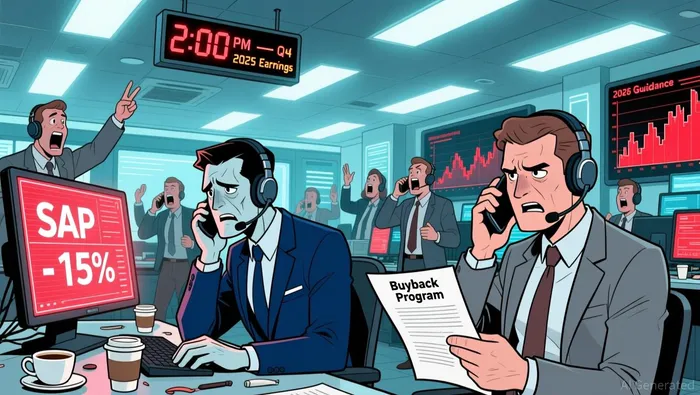
SAP stock is currently trading at a significant discount following its Q4 2025 results and the subsequent guidance for 2026. This sharp decline, , reflects investor concerns about slower cloud backlog growth and a broader industry-wide shift in software spending. , .
The problem isn’t just with SAP’s performance. The entire sector is facing headwinds. AI disruption fears are influencing software stock valuations, and investors are rotating capital into semiconductors and AI-focused tech firms. This has added to the pressure on SAP’s stock, making the drop more pronounced. However, the company’s management has not lost confidence. It has doubled down on its AI strategy, with Business AI now a central component of two-thirds of cloud orders. And with the new €10 billion buyback program, it’s clear SAP is still committed to returning value to shareholders, even amid near-term uncertainties.
What Do SAP’s 2026 Forecasts Mean for Investors?
SAP’s 2026 guidance is a cause for concern. While the company expects cloud revenue to grow between 23% and 25% in the year ahead, . This deceleration is attributed to longer sales cycles for large government and defense contracts, as well as termination clauses that prevent these deals from contributing immediately to the backlog. As a result, investors are seeing weaker growth signals in a part of the business that has historically been a key indicator of future performance.
The CFO also pointed to the rising demand for sovereign cloud solutions as a factor in the slower backlog growth. With geopolitical tensions driving demand for cloud solutions that are hosted in specific regions or countries, companies are taking longer to finalize large-scale projects. This trend is likely to persist, adding another layer of uncertainty for SAP and its peers. Still, the company’s full-year cloud revenue and free cash flow results remain solid, .
For investors, the key question is whether SAP can accelerate growth in 2027 as more customers migrate to cloud-based solutions. If the company can regain momentum, the buyback program and AI initiatives could provide a solid foundation for long-term value creation. But for now, the market remains skeptical, and the stock price reflects that sentiment.
What to Watch in SAP’s 2026 Outlook
SAP’s 2026 guidance is shaping up to be a defining year for the company’s stock. While the 23–25% cloud revenue growth looks ambitious, the slower backlog growth and weaker-than-expected guidance have raised concerns about the company’s ability to maintain its competitive edge in the cloud market. The shift toward larger projects with longer ramp times is a known challenge, but the impact on investor sentiment is clear.
The most important thing for investors to watch is how SAP executes its AI and cloud strategy in the coming quarters. The company has made significant progress in embedding AI into its solutions, with SAP Business AI now a key driver of cloud order entries. Continued adoption in key verticals like retail and healthcare could help offset the near-term challenges. Additionally, the performance of the ERP Suite—particularly in the EMEA and APJ regions—will be a critical indicator of the company’s overall growth trajectory.
In the short term, SAP’s stock is likely to remain volatile until the market sees clearer signals of progress. However, the company’s financial discipline and commitment to returning value to shareholders through the new buyback program provide some support for long-term investors. Ultimately, the success of SAP’s 2026 outlook will depend on its ability to navigate the current headwinds and deliver consistent growth in its cloud offerings.

Stay ahead of the market.
Get curated U.S. market news, insights and key dates delivered to your inbox.


AInvest
PRO
AInvest
PRO



Comments
No comments yet