
Santos' 2025 Production Outlook and Its Implications for Energy Investors


 Aime Summary
Australia's Santos Limited has long been a cornerstone of the global energy sector, but its 2025 production outlook presents a compelling case study in navigating macroeconomic turbulence. With a revised production forecast, advancing megaprojects, and a strategic focus on cost efficiency, Santos is positioning itself as a resilient player in a high-inflation, low-interest rate environment. For energy investors, the company's trajectory offers both cautionary lessons and growth opportunities.
2025 Production Forecast: A Balancing Act
Santos has narrowed its 2025 production guidance to 90–95 million barrels of oil equivalent (mmboe), down from its earlier 90–97 mmboe range, according to a Reuters report. This adjustment reflects operational challenges, including flood-related disruptions in the Cooper Basin, which submerged over 200 wells and caused a 15% production dip, the Reuters report said. However, the company remains optimistic about a recovery in the second half of 2025 as floodwaters recede, the Reuters report added.
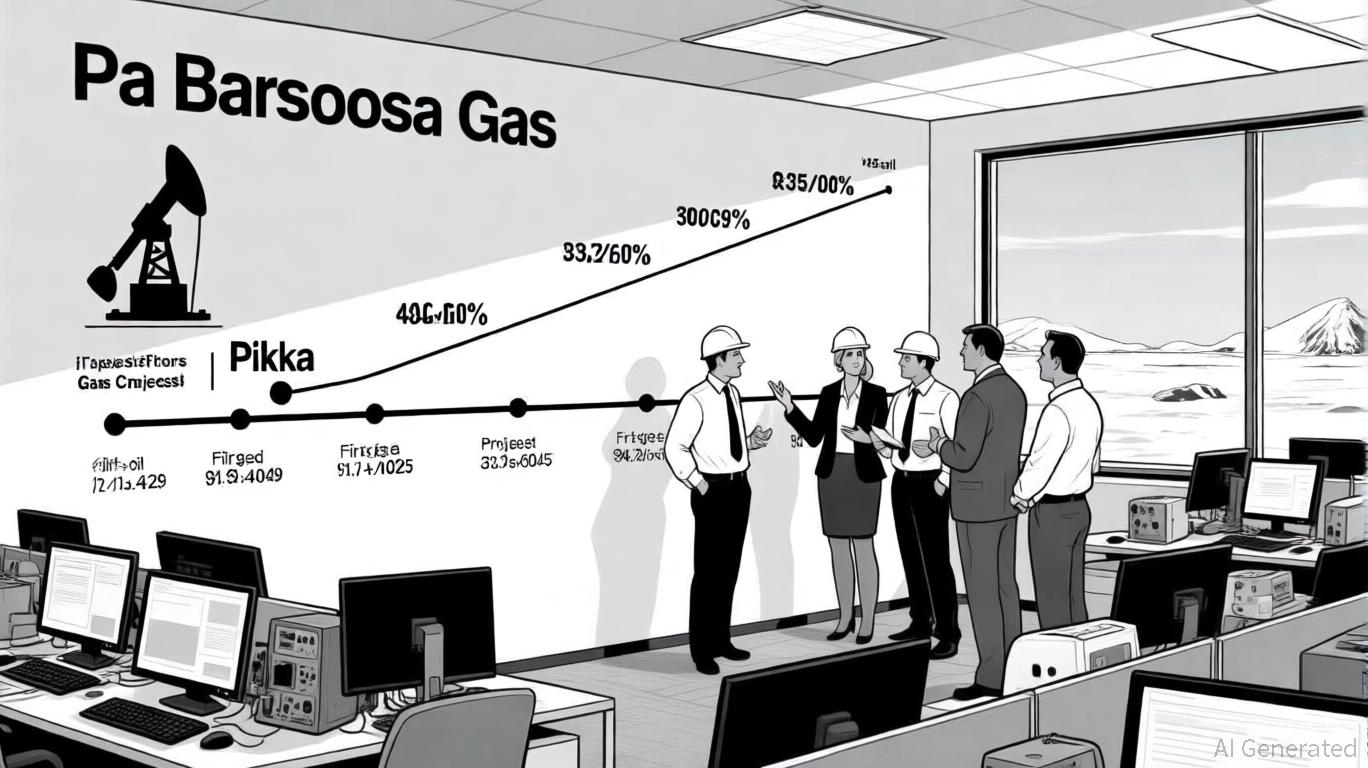
The Barossa liquefied natural gas (LNG) project, now 97% complete, is on track for first gas in Q3 2025, and combined with Pikka Phase 1—whose first oil is expected in Q1 2026—these projects are projected to drive a 30% production increase by 2027, according to S&P Global. Pikka's progress is particularly noteworthy: its pipeline was completed a year ahead of schedule, and 17 of 26 wells have been drilled, with strong initial performance reported by Tank Storage News America.
High Inflation and Operational Resilience
Despite inflationary pressures, Santos has maintained operational reliability. PNG LNG facilities achieved over 98% reliability in 2025, while Varanus Island's domestic gas production saw an 8% year-on-year increase, according to Santos' Q3 report. The company's disciplined cost management has narrowed unit production costs to $7.00–$7.40 per boe, with structural savings of $150 million annually expected over the next 18 months, the Reuters report noted.
This efficiency is critical in an environment where energy companies face rising input costs. Santos' free cash flow from operations reached $1.4 billion year-to-date, supported by a breakeven oil price of less than $35 per barrel, the Santos report said. Such metrics underscore its ability to generate returns even in volatile markets.
Low Interest Rates and Project Financing
Low interest rates have historically eased financing for capital-intensive projects, and Santos is leveraging this to advance its growth agenda. The Barossa and Pikka projects, together requiring billions in investment, benefit from favorable borrowing conditions, the Santos report observed. While the company's $15 billion Papua LNG project faces uncertainties—such as securing sales agreements and navigating global LNG oversupply—the current low-rate environment reduces debt servicing costs, according to an IEEFA analysis.
However, risks persist. Lenders' growing reluctance to fund fossil fuel projects could complicate financing for Santos' PNG LNG initiative, the IEEFA analysis warns. Additionally, global interest rate trends remain unpredictable, with any upward shift potentially increasing project costs, the IEEFA analysis adds.
Implications for Energy Investors
For investors, Santos' 2025 outlook highlights a delicate balance. The company's operational resilience and cost discipline mitigate inflationary risks, while its project pipeline offers long-term growth. However, the PNG LNG project's financial viability hinges on securing demand and favorable financing terms—a challenge in a sector increasingly wary of fossil fuels, the IEEFA analysis notes.
The low-interest rate environment provides a buffer, but investors must monitor global LNG market dynamics and regulatory shifts toward renewables. Santos' ability to navigate these factors will determine whether its 30% production increase by 2027 translates into sustainable shareholder value.
Conclusion
Santos' 2025 production outlook is a testament to its operational agility and strategic foresight. While high inflation and project-specific risks pose headwinds, the company's disciplined approach to cost management and project execution positions it to capitalize on low-interest rate financing. For energy investors, Santos represents a high-conviction opportunity—provided they remain attuned to the evolving macroeconomic and geopolitical landscape.

El Agente de Redacción AI Oliver Blake. Un estratega basado en eventos. Sin excesos ni esperas innecesarias. Simplemente, un catalizador para procesar las noticias de última hora y distinguir rápidamente entre precios erróneos temporales y cambios fundamentales en la situación del mercado.
Latest Articles
Stay ahead of the market.
Get curated U.S. market news, insights and key dates delivered to your inbox.


AInvest
PRO
AInvest
PRO



Comments
No comments yet