
The Santa Claus Rally: Understanding This Festive Stock Market Phenomenon
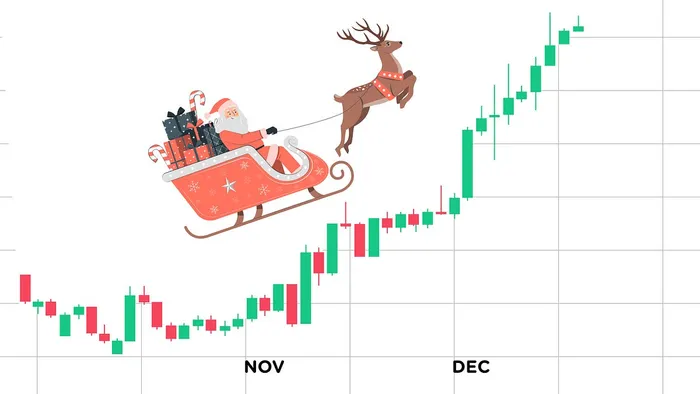
- The Santa Claus Rally refers to a historical tendency for US stock markets, particularly the S&P 500, to rise during the last five trading days of December and the first two of January, with an average gain of about 1.3% since 1950.
- This seasonal effect occurs around 76-79% of the time, driven by factors like holiday optimism, tax-loss harvesting, and lower trading volumes from institutional investors.
- While it's a reliable pattern, it doesn't happen every year—economic uncertainty, high volatility, or policy changes can derail it.
- For 2025, some analysts predict a potential absence or muted rally due to Fed policy shifts, AI market adjustments, and rising volatility, though broader optimism for 2026 remains.
- Investors should view it as a probabilistic trend rather than a guarantee, using it to inform but not dictate strategies, while managing risks like overexposure to volatile sectors.
The Santa Claus Rally is one of the most intriguing seasonal patterns in the US stock market, often bringing a touch of holiday cheer to investors' portfolios. Coined by Yale Hirsch in 1972, it describes the tendency for stock prices to climb during a specific seven-day window: the last five trading days of December and the first two of January. This phenomenon has been observed in major indices like the S&P 500, where it has historically delivered positive returns in about 76% of years since the mid-20th century. But what causes this rally, when might it fail to appear, and how can everyday investors navigate it? This evergreen guide explores the rally's mechanics, backed by data from reliable sources, to help demystify this market quirk.
What Is the Santa Claus Rally?
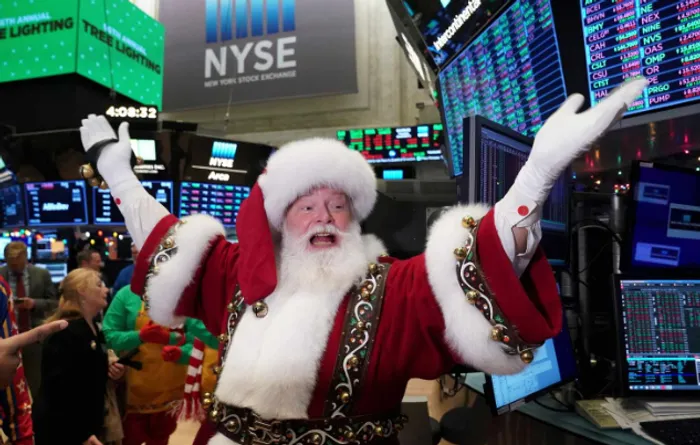
At its core, the Santa Claus Rally is a calendar effect—a predictable seasonal anomaly in financial markets where stocks tend to perform better during certain periods without a clear fundamental reason. Unlike broader trends like the "January Effect," which involves small-cap stocks rebounding after year-end tax selling, the Santa Rally is more narrowly focused on that end-of-year window.
Experts from Investopedia explain that the rally often manifests as a sustained increase in stock prices around Christmas, potentially adding a modest but consistent boost to year-end returns. For instance, Reuters has noted that the S&P 500 typically gains about 1.3% during this period, making it a statistically significant pattern over decades. TradingView analyses further highlight how this rally can influence not just equities but also related assets like cryptocurrencies during the holiday season.
Historical Performance of the Santa Claus Rally
To appreciate the rally's reliability, it's helpful to look at past data. Since 1950, the S&P 500 has shown positive returns during the Santa Claus period in roughly 79% of cases, with an average gain of 1.3%. MarketWatch reports that even in volatile years, the pattern holds up more often than not, though it's not foolproof. Bloomberg's reviews of recent years underscore that while the rally delivered strong Christmas Eve performances in some instances, like a notable surge in 2024, it can vary based on broader market conditions.
Here's a summary of historical S&P 500 performance during select Santa Claus Rally periods, drawn from analyses by Investopedia and LPL Financial:
This table illustrates the rally's consistency while highlighting years when economic headwinds intervened.
Factors That Drive the Santa Claus Rally
Several theories explain why stocks often perk up during this time. Investopedia points to increased holiday shopping boosting consumer stocks, seasonal optimism lifting investor sentiment, and tax considerations where investors harvest losses earlier in December, paving the way for January buying. Reuters adds that lower trading volumes— as many institutional investors take holidays—can amplify positive moves from retail traders.
MarketWatch and Bloomberg emphasize psychological factors, like end-of-year bonuses being reinvested or a general "festive spirit" encouraging risk-taking. Additionally, the Wall Street Journal notes that in election years or periods of policy stability, the rally tends to be stronger.
When Might We Not See a Santa Claus Rally?
Not every year delivers gifts from Santa. The rally can falter under certain conditions, such as high economic uncertainty, rising interest rates, or geopolitical tensions. For example, during the 2008 financial crisis or the dot-com bust, the S&P 500 posted losses during this period. Reuters and MarketWatch have reported that thin year-end trading can sometimes lead to profit-taking instead of buying, especially if earlier gains were substantial.
In 2025, analysts are mixed. Yahoo Finance and Fortune suggest we might not see a full rally this year due to Fed policy uncertainty, AI sector volatility, and shifting market dynamics post-election. However, some optimism persists, with predictions from Goldman Sachs via MSN forecasting a potential year-end bounce if recession risks stay low. TradingView echoes this caution, noting that while seasonal trends favor a rally, external factors like crypto market influences could disrupt it.
FAQs: Beginner-Friendly Guide to the Santa Claus Rally
Here are some common questions for those new to investing, with practical tips on spotting opportunities and avoiding pitfalls.
What should I watch for to anticipate a Santa Claus Rally?
Look at early December indicators like consumer spending reports (e.g., retail sales data) and market sentiment indexes. If holiday shopping is strong and volatility (VIX) is low, the odds improve. Use tools like TradingView charts to track S&P 500 trends in mid-December.
How can I position my portfolio to capture a potential rally?
Consider adding exposure to consumer discretionary or broad-market ETFs like SPY during early December, but only with money you can afford to risk. Diversify across sectors to avoid over-reliance on tech, which can be volatile. Start small—perhaps 5-10% of your portfolio—and set stop-loss orders at 5% below entry to protect gains.
What risks should I be aware of if expecting a rally?
The biggest risk is assuming it will happen; in down years, you could face losses from unexpected events like Fed announcements. High valuations or inflation can mute gains, so monitor news from sources like Reuters. Always maintain a balanced portfolio and avoid leverage, which amplifies losses.
Is the Santa Rally relevant for international investors?
Yes, but it's primarily a US phenomenon. Global markets can see spillover effects, especially in correlated assets like European stocks. Check Bloomberg for cross-market analyses.
Should I sell if the rally doesn't materialize?
Not necessarily—focus on long-term goals. If markets dip, it could be a buying opportunity for January. Use WSJ insights to gauge if it's a short-term blip or broader trend.
In summary, the Santa Claus Rally remains a fascinating blend of psychology and market mechanics, offering lessons in seasonal investing. While it's no guarantee, understanding its drivers can enhance your strategy. Always consult financial advisors and stay informed through trusted sources.

The AInvest News Editorial Team consists of experienced financial journalists and editors who oversee all published content. While our newsroom leverages advanced AI tools to assist in data gathering and draft generation, every article is reviewed, fact-checked, and approved by human editors to ensure accuracy, clarity, and transparency.
Latest Articles
Stay ahead of the market.
Get curated U.S. market news, insights and key dates delivered to your inbox.


AInvest
PRO
AInvest
PRO



Comments
No comments yet