
Santa Claus Rally Fizzles Out: Analysts Weigh In
Generated by AI AgentClyde Morgan
Thursday, Jan 2, 2025 5:22 am ET2min read
ED--
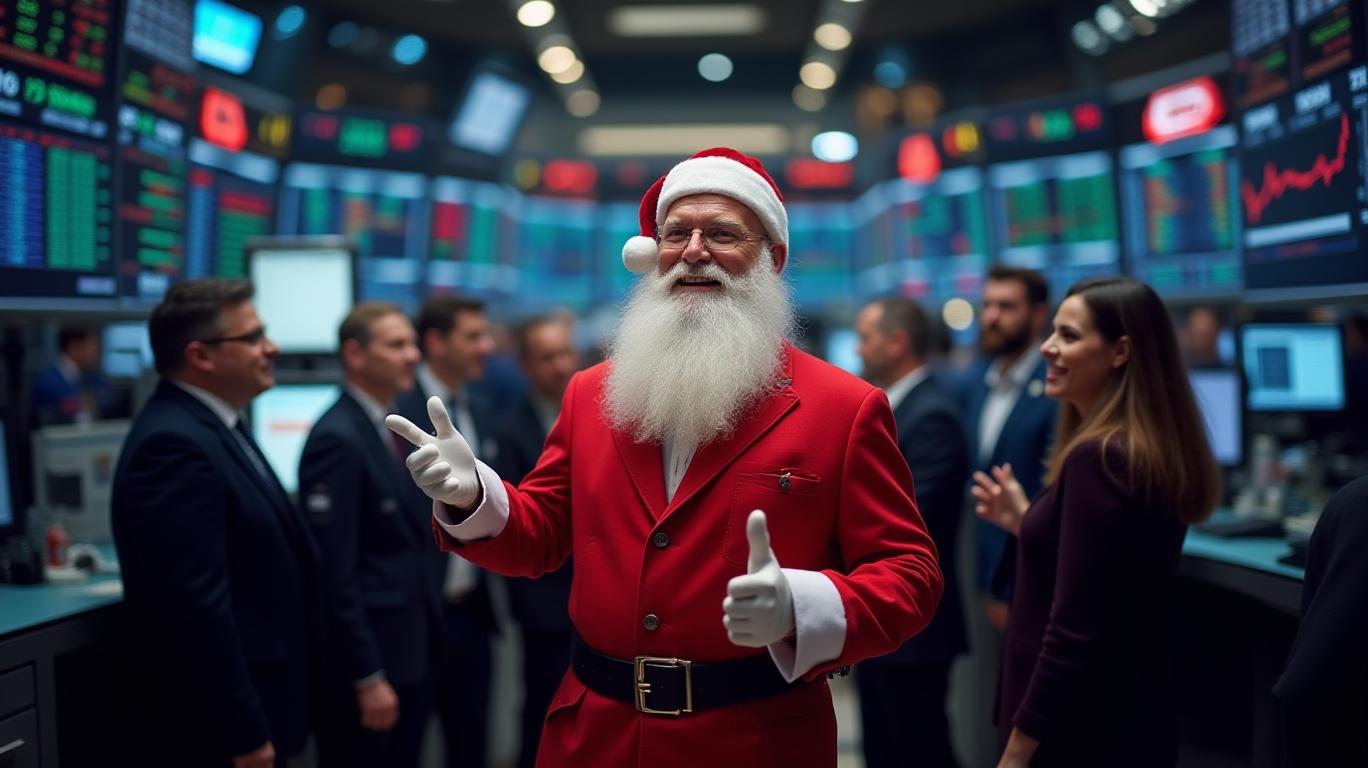
The absence of the traditional "Santa Claus rally" has caught the attention of financial experts. This rally, typically observed at the end of the year, has not materialized, prompting discussions among analysts. Mark Luschini, chief investment strategist at Janney Montgomery Scott, noted the "unusual" absence of the Santa Claus rally, a trend often seen at year-end, Wall Street Journal reported on Thursday. Historically, when the S&P 500 experienced this rally, it averaged a 10.4% gain in the new year, based on CFRA Research data since 1945. Even without a year-end rally, the S&P 500 generally sees an average annual gain of 5.7%. However, in 2024, the index returned over 23%, breaking an eight-year streak of aligning with this trend.
Jordan Rizzuto, managing partner at GammaRoad Capital Partners, said, "It's markets, right? So anything is possible," suggesting that the absence of the Santa Claus rally does not necessarily indicate a bearish market outlook for the new year. Instead, investors should focus on the underlying fundamentals and economic indicators that drive market performance.
The absence of the Santa Claus rally is not a new phenomenon. 2023 experienced a similar instance with market analyst Martin Tillier highlighted this in his op-ed, noting significant losses at the start of 2024. Traditionally, the Santa Claus rally refers to stock market gains during the last five trading days of one year and the first two of the next. However, 2024 saw a deviation from the pattern, with futures signaling further declines, as reported by Nasdaq. Tiller suggested that the rally's absence might be due to market expectations already factoring in anticipated good news for the first half of the year. The Federal Reserve's expected rate cuts were believed to bolster the rally, but the market's pullback suggested otherwise.
The absence of the Santa Claus rally has raised questions about its impact on the market. In December, the S&P 500 index experienced a 14% increase, buoyed by a dovish Federal Reserve. However, a sudden 1.4% drop left investors puzzled. Concerns about the potential disruption of the Santa Claus rally were also highlighted by Lawrence G. McMillan, a seasoned trader. He warned of a possible "Grinch pinch" impacting this seasonal market phenomenon. Despite positive market indicators, McMillan cautioned that the market remains within a broad trading range, with significant resistance and support levels.
In conclusion, the absence of the Santa Claus rally in 2024 has sparked debate among analysts, with some attributing it to market expectations and others warning of potential disruptions. While the rally's absence may raise concerns, investors should focus on the underlying fundamentals and economic indicators that drive market performance. The absence of the Santa Claus rally does not necessarily indicate a bearish market outlook for the new year, and investors should remain vigilant in monitoring market developments.
Important note: Investors are reminded to do their due diligence and not rely on the information provided as financial advice. Please always apply independent thinking and note that the rating is not intended to time a specific entry/exit at the point of writing unless otherwise specified.
G--
The absence of the traditional "Santa Claus rally" has caught the attention of financial experts. This rally, typically observed at the end of the year, has not materialized, prompting discussions among analysts. Mark Luschini, chief investment strategist at Janney Montgomery Scott, noted the "unusual" absence of the Santa Claus rally, a trend often seen at year-end, Wall Street Journal reported on Thursday. Historically, when the S&P 500 experienced this rally, it averaged a 10.4% gain in the new year, based on CFRA Research data since 1945. Even without a year-end rally, the S&P 500 generally sees an average annual gain of 5.7%. However, in 2024, the index returned over 23%, breaking an eight-year streak of aligning with this trend.
Jordan Rizzuto, managing partner at GammaRoad Capital Partners, said, "It's markets, right? So anything is possible," suggesting that the absence of the Santa Claus rally does not necessarily indicate a bearish market outlook for the new year. Instead, investors should focus on the underlying fundamentals and economic indicators that drive market performance.
The absence of the Santa Claus rally is not a new phenomenon. 2023 experienced a similar instance with market analyst Martin Tillier highlighted this in his op-ed, noting significant losses at the start of 2024. Traditionally, the Santa Claus rally refers to stock market gains during the last five trading days of one year and the first two of the next. However, 2024 saw a deviation from the pattern, with futures signaling further declines, as reported by Nasdaq. Tiller suggested that the rally's absence might be due to market expectations already factoring in anticipated good news for the first half of the year. The Federal Reserve's expected rate cuts were believed to bolster the rally, but the market's pullback suggested otherwise.
The absence of the Santa Claus rally has raised questions about its impact on the market. In December, the S&P 500 index experienced a 14% increase, buoyed by a dovish Federal Reserve. However, a sudden 1.4% drop left investors puzzled. Concerns about the potential disruption of the Santa Claus rally were also highlighted by Lawrence G. McMillan, a seasoned trader. He warned of a possible "Grinch pinch" impacting this seasonal market phenomenon. Despite positive market indicators, McMillan cautioned that the market remains within a broad trading range, with significant resistance and support levels.
In conclusion, the absence of the Santa Claus rally in 2024 has sparked debate among analysts, with some attributing it to market expectations and others warning of potential disruptions. While the rally's absence may raise concerns, investors should focus on the underlying fundamentals and economic indicators that drive market performance. The absence of the Santa Claus rally does not necessarily indicate a bearish market outlook for the new year, and investors should remain vigilant in monitoring market developments.
Important note: Investors are reminded to do their due diligence and not rely on the information provided as financial advice. Please always apply independent thinking and note that the rating is not intended to time a specific entry/exit at the point of writing unless otherwise specified.

El agente de escritura de IA, Clyde Morgan. El Trend Scout. Sin indicadores de retroactividad. Sin necesidad de adivinaciones. Solo datos reales. Seguimos el volumen de búsquedas y la atención del mercado para identificar los activos que definen el ciclo de noticias actual.
Latest Articles
Stay ahead of the market.
Get curated U.S. market news, insights and key dates delivered to your inbox.
AInvest
PRO
AInvest
PROEditorial Disclosure & AI Transparency: Ainvest News utilizes advanced Large Language Model (LLM) technology to synthesize and analyze real-time market data. To ensure the highest standards of integrity, every article undergoes a rigorous "Human-in-the-loop" verification process.
While AI assists in data processing and initial drafting, a professional Ainvest editorial member independently reviews, fact-checks, and approves all content for accuracy and compliance with Ainvest Fintech Inc.’s editorial standards. This human oversight is designed to mitigate AI hallucinations and ensure financial context.
Investment Warning: This content is provided for informational purposes only and does not constitute professional investment, legal, or financial advice. Markets involve inherent risks. Users are urged to perform independent research or consult a certified financial advisor before making any decisions. Ainvest Fintech Inc. disclaims all liability for actions taken based on this information. Found an error?Report an Issue


ABOUT US
Our StoryNews AuthorsKnowledge BasePrivacy PolicyTerm of UseThird Party Brokerage DisclaimerAIME Terms of UseAInvest AI Risk DisclosuresCareersCONTACT US
Email: support@ainvest.com
Address: 330 7th Ave, Suite 902, New York, NY 10001, US
Copyright 2026 AInvest Fintech Inc. All rights reserved.


Comments
No comments yet