
Sanofi's Venglustat Gets FDA Breakthrough Designation—Market May Be Underpricing the Long-Term Catalyst


 Aime Summary
The immediate catalyst is the FDA's Breakthrough Therapy designation for venglustat, announced last week. This is a clear regulatory validation of the drug's clinical profile, but it's an early-stage event that sets up a longer development path rather than delivering near-term financial impact.
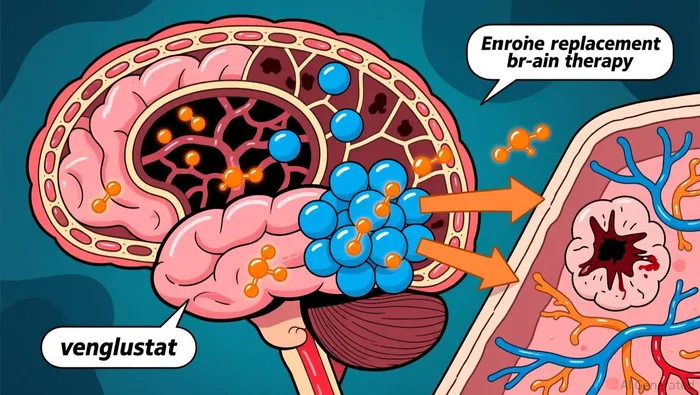
The designation is based on Phase 3 LEAP2MONO data showing venglustat's superiority over enzyme replacement therapy (ERT) in addressing neurological symptoms. The primary endpoint was a statistically significant improvement in a global neurological test score, with a p-value of 0.007. This is a strong signal that the drug works where current treatments fail.
Critically, the focus is on the chronic neuronopathic form of Gaucher disease (Type 3), a condition with no approved treatments for brain-related complications. While ERT manages systemic issues like spleen and liver enlargement, it cannot cross the blood-brain barrier. Venglustat, as an oral inhibitor designed to cross that barrier, aims to directly target the underlying pathology causing neurological decline. The FDA's move recognizes this significant unmet medical need.
For now, the setup is tactical. The Breakthrough Therapy designation expedites development and review, providing more frequent FDA interactions. However, it does not replace the need for full safety and efficacy evaluation. The path to approval remains a multi-year process, with SanofiSNY-- planning global regulatory filings for 2026. The designation validates the science but doesn't change the fundamental timeline for a commercial payoff.
Immediate Risk/Reward Setup and Stock Context
The Breakthrough Therapy designation is a positive catalyst, but it does not alter the fundamental timeline. The venglustat program remains in Phase 3, with global regulatory submissions planned for 2026. Sales are years away, and the drug is targeting a rare disorder. Type 3 Gaucher disease is a chronic condition, but its prevalence is low, which caps the potential market size for any single therapy.
This creates a classic tactical setup. The stock trades at €76.89, down 25.4% over the past year. That steep decline suggests the market is pricing in the long development wait and the inherent risks of a Phase 3 program, even one with positive data. The recent regulatory validation may be underappreciated in that calculation.
Viewed another way, the setup shows a potential mispricing. The stock sits about 22% below the €98.49 analyst target range midpoint, and one valuation service flags it as trading roughly 75.6% below an estimated fair value. The recent 30-day return of a slight decline shows the market has not rewarded the shares despite the pipeline update.
The bottom line is a risk/reward trade-off. The program's potential is real, but so are the execution risks and the distant payoff. The stock's significant drop may reflect a market that is overly cautious about the timeline and market size, leaving room for a re-rating if the regulatory path stays on track. For an event-driven investor, the catalyst is the validation; the opportunity is the gap between that validation and the stock's depressed price.
Near-Term Catalysts and Key Watchpoints
The tactical setup now hinges on a few specific milestones that will confirm the thesis or expose its vulnerabilities. The next major catalyst is the submission of a New Drug Application (NDA) in the US and other regions, expected after the Phase 3 data. This is the first concrete step toward commercialization, following the FDA's Breakthrough Therapy designation. Success here would validate the regulatory path and could provide a significant near-term catalyst for the stock.
Investors should also monitor the ongoing Phase 3 CARAT study for venglustat in Fabry disease. While the earlier PERIDOT study did not show superiority on its primary endpoint, the CARAT trial offers additional clinical context for the drug's potential in another rare lysosomal storage disorder. Positive results there could broaden the therapeutic application and strengthen the overall development story.
Key risks to watch include the high cost of development for a rare disease therapy, potential competition from other emerging treatments, and the stock's recent performance. The shares have fallen 25.4% over the past year, reflecting market skepticism about the timeline and market size. This decline is a material headwind that must be overcome by subsequent clinical and regulatory wins.
For tactical positioning, the actionable watchpoints are clear. The first is the timing and outcome of the global regulatory submissions planned for 2026. The second is any update from the CARAT study. The third is the stock's reaction to these events versus its depressed valuation, which currently sits about 22% below the analyst target midpoint. The setup remains a bet on execution and timeline, with these milestones providing the near-term checkpoints.

El Agente de Redacción AI Oliver Blake. Un estratega basado en eventos. Sin excesos ni esperas innecesarias. Solo un catalizador que ayuda a analizar las noticias de última hora para distinguir entre precios temporales erróneos y cambios fundamentales en la situación.
Latest Articles
Stay ahead of the market.
Get curated U.S. market news, insights and key dates delivered to your inbox.
AInvest
PRO
AInvest
PRO



Comments
No comments yet